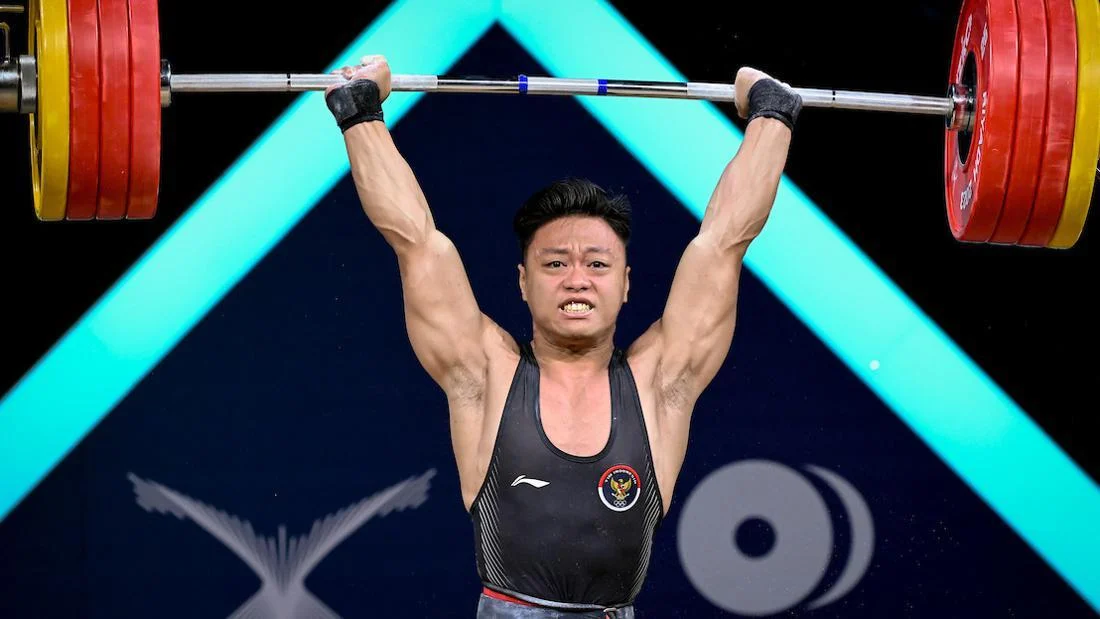
Nagoya, Japan — The Nagoya City Trade and Industry Center became the stage for a spectacular display of athletic dominance on Saturday, September 26, 2026, as Indonesian weightlifter Rahmat Erwin Abdullah clinched the gold medal in the men’s 75kg category at the 2026 Asian Games. In a performance defined by tactical precision and unwavering composure, Abdullah outperformed a world-class field, cementing his status as one of the preeminent figures in international weightlifting.
This victory marks the second gold medal for the Indonesian contingent at the 2026 Asian Games, serving as a significant morale booster for the nation’s athletes as they compete against the continent’s best. The atmosphere in the venue was electric, with the tension mounting throughout the final rounds as the top three competitors remained separated by mere margins, keeping the audience in suspense until the final lift.
A Masterclass in Strength and Strategy
The competition was characterized by an intense rivalry, particularly between Abdullah and his closest challenger, Weeraphon Wichuma of Thailand. From the outset, the session was defined by high-intensity competition. In the snatch phase, Abdullah demonstrated technical proficiency, clearing 160kg. This placed him in a strong position heading into the clean and jerk, the phase where he has historically excelled.
When the competition shifted to the clean and jerk, the tactical maneuvering began. Abdullah’s final successful lift of 206kg pushed his total to an impressive 366kg. This total was just enough to edge out Wichuma, who finished with a total of 365kg (160kg snatch, 205kg clean and jerk). The one-kilogram difference highlights the narrow margins at the elite level of the sport, where every gram of weight and every millisecond of technique determines the color of the medal.
The bronze medal was claimed by Ri Song-chong of North Korea. Despite an aggressive start that included a 162kg snatch—the highest in the category—Ri’s clean and jerk of 195kg left him with a total of 357kg. His performance underscored the depth of the field, as the top three competitors pushed each other to record-breaking intensities.
Chronology of the Final Session
The events of Saturday unfolded with a clear progression of skill and endurance. The snatch phase began with early attempts by several regional competitors, but the focus quickly narrowed to the trio of Abdullah, Wichuma, and Ri. By the midway point of the competition, it became clear that the gold would be a direct contest between the Indonesian and the Thai lifters.
During the clean and jerk, the strategy became paramount. Both Abdullah and Wichuma opted for conservative opening weights to ensure a successful lift before escalating the bar to chase the gold. When Wichuma successfully cleared 205kg, the pressure shifted entirely to Abdullah. In a moment of calm under immense pressure, Abdullah approached the platform for his final attempt. His lift of 206kg was executed with technical fluidity, securing the winning total and silencing the opposition. The venue erupted as the judges confirmed the lift, marking a pivotal moment in the 2026 Asian Games.
The Broader Context: Indonesia’s Performance
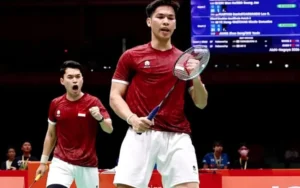
This gold medal represents a crucial milestone for Indonesia’s sports delegation. Before Abdullah’s victory, the Indonesian team had been working to maintain momentum following the gold medal secured by the men’s badminton team. The weightlifting squad, in particular, has been a pillar of consistency for the nation. Earlier in the tournament, Luluk Diana Tri Wijayana added to the country’s tally by securing a bronze medal in the women’s 49kg category, demonstrating the versatility and depth of Indonesia’s weightlifting program.
Weightlifting has long been a core sport for Indonesia in the Asian Games and Olympic cycles. The investment in high-performance training centers, both domestically and through international exchange programs, has begun to pay dividends. Officials from the Indonesian Weightlifting Association (PABSI) have previously noted that the goal for the 2026 Games was to diversify the medal count across different weight classes, and the success of both Wijayana and Abdullah serves as validation of this strategic shift.
Tactical Analysis: Why Precision Matters
In modern weightlifting, the gap between gold and silver is rarely decided by brute strength alone. It is a sport of physics, timing, and nervous system management. Analysts observing the 75kg category noted that Abdullah’s success was rooted in his ability to maintain his technical form under extreme physical fatigue.
The comparison with Wichuma is particularly telling. While the Thai lifter possessed the capacity to match Abdullah in the snatch, the clean and jerk requires a different set of explosive power and stability. Abdullah’s ability to recover from the initial pull and stabilize the bar overhead in his final lift was the decisive factor. This specific technical skill has been the hallmark of his training regimen, allowing him to peak at the right moment during major international competitions.
Reactions and Official Statements
While formal press conferences were ongoing, early reactions from the Indonesian delegation were filled with pride. Team officials emphasized that this medal is the result of years of preparation, including specific training camps focused on managing the humidity and environment of the Nagoya venue.
"Rahmat has demonstrated not only his physical power but his mental fortitude," stated one team representative. "He knew exactly what was required to surpass his opponents, and he executed the plan with professional precision. This is a proud moment for the entire Indonesian sporting community."
The international weightlifting community has also acknowledged the result, noting that the rise of athletes like Abdullah and Wichuma signals a shifting landscape in the sport, with Southeast Asian nations becoming a dominant force on the global stage.
Implications for the 2026 Asian Games and Beyond
For Indonesia, this victory serves as a springboard for the remainder of the Asian Games. With the men’s badminton team and now Rahmat Erwin Abdullah securing gold, the nation is well-positioned to meet or exceed its medal projections.
Beyond the immediate celebrations, the implications for the sport of weightlifting in the region are significant. The high level of competition seen in the 75kg class indicates that the 2028 Olympic qualification cycle will be fiercely contested. Athletes who performed well in Nagoya are now looking ahead to the World Championships and the subsequent Olympic qualifiers. For Abdullah, this gold medal is more than just a victory in Japan; it is a statement of intent to the rest of the world.
Furthermore, the success of these athletes serves as a catalyst for grassroots development. The Indonesian government has historically utilized the success of individual athletes to advocate for increased funding and infrastructure for sports at the youth level. By highlighting the dedication and discipline required to stand on an Asian Games podium, the hope is to inspire a new generation of lifters to take up the sport.
Looking Ahead
As the 2026 Asian Games continue, all eyes remain on the remaining weightlifting categories. The success of the Indonesian team in these events has created a heightened level of expectation for the coming days. The pressure on athletes to perform is immense, but the results from Saturday prove that the current training methodologies are yielding world-class results.
In conclusion, Rahmat Erwin Abdullah’s victory in Nagoya is a testament to the intersection of talent, rigorous training, and mental resilience. By securing the gold with a total of 366kg, he has etched his name into the annals of Indonesian sports history. As the Games progress, the legacy of this performance will undoubtedly influence the strategic planning and expectations for Indonesian athletes on the international stage for years to come. The victory is not merely a triumph of the individual, but a collective success for the coaches, support staff, and the sporting infrastructure that enabled this achievement to take place on one of the world’s most prestigious athletic stages.