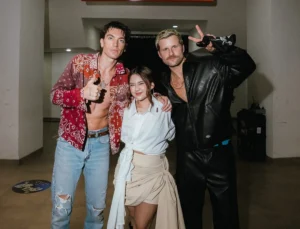
Indonesian artist and professional racing driver Sabrina Sameh has garnered widespread public attention and admiration following her recent announcement to register as a formal corneal tissue donor. Known traditionally for her prowess on the automotive racing circuit and her contributions to the domestic entertainment industry, Sameh utilized her social media platform to share a deeply personal milestone. The decision, which marks a significant commitment to humanitarianism, originated not from an extensive medical seminar or a formal health campaign, but from a casual, yet profound, dialogue with fellow musician and public figure Eddi Brokoli.
The announcement, made via her official and verified Instagram account @sabrinasameh, featured photographic evidence of her newly acquired prospective corneal donor card. Issued officially by the Cicendo Eye Hospital located in Bandung, West Java, the documentation serves as a legal and medical testament to her explicit willingness to donate both of her corneas upon her eventual passing. According to medical protocols established within the region, the harvested corneal tissue will be systematically processed and distributed through the West Java Eye Bank affiliated with the Indonesian Association for the Prevention of Blindness (PPMTI). The initiative is designed to directly assist individuals suffering from corneal blindness or severe visual impairments, offering them a renewed chance at sight.
Breaking Down Mental Barriers: From Apprehension to Advocacy
In the detailed captions accompanying her social media disclosure, Sameh, who is the sister of fellow public figure Susan Sameh, candidly addressed her historical reservations regarding anatomical donation. She admitted that prior to her enlightening exchange with Eddi Brokoli, she shared a common societal misconception—viewing the concept of eye donation with a degree of apprehension, fear, and psychological discomfort. For many individuals, the thought of post-mortem tissue harvesting evokes unsettling imagery, largely driven by a lack of comprehensive public education and cultural stigmas surrounding bodily integrity after death.
However, Sameh’s perspective underwent a radical transformation following her encounter with Eddi Brokoli, an artist well-known for his distinctive appearance and active involvement in various social causes. Through their conversation, Brokoli provided clarity, demystified the medical procedures involved, and highlighted the profound societal impact that such a straightforward decision can achieve. This pivotal dialogue dismantled Sameh’s initial fears, replacing them with a sense of civic responsibility and deep empathy for those living with preventable blindness. Inspired by this new understanding, she took immediate action, undergoing the necessary administrative and medical evaluations to secure her status as a registered donor.
Understanding Corneal Blindness and the Critical Need for Donors
To fully contextualize the significance of Sabrina Sameh’s public declaration, it is essential to examine the broader medical landscape surrounding corneal blindness in Indonesia and globally. The cornea—the transparent, dome-shaped surface that covers the front of the eye—plays a critical role in focusing light. When the cornea becomes scarred, diseased, or damaged due to trauma, infections, or hereditary conditions such as keratoconus, vision becomes severely impaired or entirely lost.
Medical experts note that while many forms of blindness are permanent, corneal blindness is uniquely treatable through a surgical procedure known as a corneal transplant or keratoplasty. During this procedure, damaged corneal tissue is replaced with healthy donor tissue, successfully restoring functional vision for the recipient. Despite the high success rate of these procedures, healthcare systems worldwide face a persistent shortage of viable donor tissue. Cultural beliefs, religious misconceptions, complex bureaucratic procedures, and a general lack of public awareness continue to hinder donor registration rates.
In Indonesia, organizations such as the Eye Banks operating under the PPMTI framework work tirelessly to bridge the gap between willing donors and patients awaiting sight-restoring surgeries. Public figures like Sabrina Sameh leveraging their visibility to promote organ and tissue donation represent a vital catalyst for change. By normalizing discussions around post-mortem donation, celebrities can effectively dismantle lingering stigmas and encourage a cultural shift toward proactive humanitarianism.
The Role of Public Figures in Health Advocacy
The influence of celebrity advocacy in public health campaigns is a well-documented phenomenon within sociological and media studies. When high-profile individuals share personal health commitments—whether related to organ donation, mental health awareness, or preventative screenings—they possess the unique capacity to reach demographics that traditional public service announcements often fail to engage.

Sameh’s transition from a hesitant observer to an active advocate highlights the power of peer influence and grassroots communication. Her transparency regarding her initial fears makes her narrative relatable to the general public. By acknowledging that apprehension is a normal initial reaction, she validates the concerns of her followers while simultaneously demonstrating that education and open dialogue can successfully overcome such barriers. Industry analysts and public health advocates have praised her approach, noting that authentic, experience-based storytelling is far more effective in driving behavioral change than clinical directives alone.
The Operational Framework of Eye Banks in West Java
The institutional backbone of Sameh’s pledge relies on the operational efficiency of specialized medical facilities such as the Cicendo Eye Hospital and the West Java Eye Bank (Bank Mata Jabar). These institutions operate under strict medical, ethical, and legal guidelines to ensure that tissue harvesting and distribution processes maintain the highest standards of integrity, safety, and respect for the donor and their grieving family members.
Prospective donors who complete the registration process, much like Sameh, sign formal declarations indicating their consent. However, medical professionals emphasize that in the event of a donor’s passing, the cooperation and final consent of the immediate family remain paramount. Consequently, health authorities consistently advise registered donors to communicate their intentions clearly to their families to ensure a smooth and friction-free process when the time comes.
The West Java Eye Bank coordinates evaluations, preservation techniques, and recipient matching to ensure that donated corneas are utilized with maximum efficacy. Because corneal tissue must be harvested and processed within specific timeframes post-mortem, public awareness and rapid institutional coordination are critical operational priorities.
Broader Implications and Future Outlook

Sabrina Sameh’s decision to become a corneal donor is expected to generate a positive ripple effect, often referred to by public relations and health communication experts as the "Sameh Effect." Anecdotal evidence from similar high-profile announcements in the past suggests a measurable spike in donor card inquiries and online registrations immediately following media coverage.
As digital platforms continue to dominate modern information consumption, the integration of personal lifestyle narratives with vital health messaging proves to be an effective strategy for societal betterment. Sameh’s journey from a casual conversation in Bandung to national news headlines underscores the reality that transformative social movements often begin with simple, human interactions.
Ultimately, Sameh’s public endorsement serves as a poignant reminder of the legacy an individual can leave behind. By choosing to donate her corneas, she ensures that her physical journey contributes directly to the illumination of another person’s world, transforming an inevitable personal ending into an enduring source of new beginnings for those waiting in the dark.