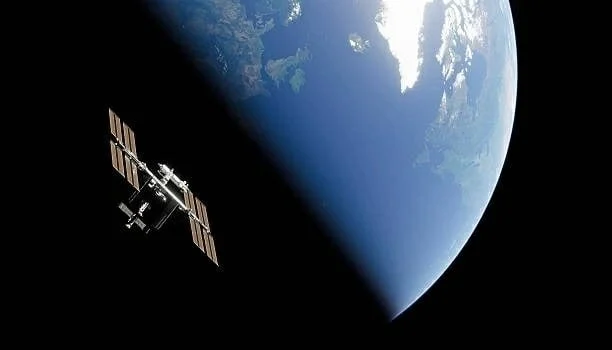
The democratic process in the United States extended beyond the terrestrial boundaries of the nation during the recent midterm elections, as three American astronauts cast their ballots from the International Space Station (ISS). This event, which took place on November 3, underscores the commitment of the National Aeronautics and Space Administration (NASA) to ensure that its personnel, regardless of their orbital altitude, retain their fundamental right to participate in the democratic process. Astronauts Anil Menon, Luke Delaney, and Jessica Watkins successfully utilized secure electronic communication systems to transmit their votes from low Earth orbit back to their home jurisdiction in Texas, bridging the gap between cutting-edge space exploration and civic responsibility.
The Logistics of Orbital Voting
For the average citizen, the act of voting involves visiting a polling precinct, marking a paper ballot, or utilizing a local electronic voting machine. For astronauts aboard the ISS, the process is significantly more complex, requiring a high degree of digital security and logistical coordination. The ballots cast by Menon, Delaney, and Watkins were processed through Harris County, Texas. This selection of jurisdiction is not arbitrary; the majority of NASA’s astronaut corps are residents of the Houston area, home to the Lyndon B. Johnson Space Center.
The technical infrastructure enabling this feat relies on the same robust communication network that NASA utilizes for mission-critical operations. The process begins with the transmission of an encrypted electronic ballot from the county clerk’s office to the ISS via NASA’s Near Space Network. Once the astronaut receives the ballot, they complete it on a secure computer terminal. The encrypted file is then transmitted back to Earth, where it is routed through the Mission Control Center in Houston and finally delivered to the Harris County Clerk’s office to be officially tallied.
NASA’s systems are designed with layers of redundancy and cybersecurity protocols to ensure that no unauthorized parties can intercept or alter the ballots. The process ensures that the sanctity of the vote—the secrecy and integrity of the individual’s choice—remains intact despite the hundreds of miles separating the voter from the ballot box.
Historical Context and Evolution of Space Voting
The ability to vote from space is not a recent innovation, but rather the culmination of over two decades of legislative and technological advancement. The legislative framework for this process was established in 1997, when the Texas Legislature passed a bill specifically designed to allow astronauts to vote while in orbit. The bill, signed into law, recognized that the nature of space exploration often requires long-duration missions that might coincide with federal or state election cycles.
The first American to exercise this right was David Wolf, who voted while aboard the Russian Mir space station in 1997. Since then, the procedure has been refined and standardized. Kate Rubins, a NASA astronaut, garnered significant public attention during the 2020 presidential election when she cast her ballot from the ISS, highlighting the accessibility of the system. The successful participation of Menon, Delaney, and Watkins in the recent midterm elections serves as a continuation of this established precedent, reinforcing the idea that geographic location does not invalidate the civic duty of a U.S. citizen.
Chronology of the Mission and Election Participation
The participation of the three astronauts occurred against the backdrop of a busy operational schedule on the ISS. The timeline for their voting process was integrated into their daily work cycle to ensure that mission objectives, such as biological research and station maintenance, were not compromised.
- Pre-Election Period: Astronauts assigned to missions overlapping with election dates receive absentee ballot materials well in advance. They are provided with secure credentials to access their specific ballot through the encrypted downlink.
- Election Day (November 3): The astronauts dedicated time within their shift to access the secure portal. Anil Menon, in a social media communication, provided a brief, 29-second video glimpse into this process. He jokingly referred to his personal crew quarters—a small, private cabin on the ISS—as his "polling place," effectively turning a space station module into a unique democratic precinct.
- Transmission Phase: Following the completion of the electronic ballot, the data was queued for transmission. Because the ISS travels at approximately 17,500 miles per hour, the timing of data transmission must be synchronized with the station’s passes over the Tracking and Data Relay Satellite (TDRS) network.
- Verification: Once the data reached the Mission Control Center, it was decrypted and forwarded to the Harris County Clerk’s office. The county officials processed the ballot as an electronic absentee submission, ensuring it met all state requirements for valid registration and residency.
Official Responses and Institutional Support
NASA has consistently maintained that supporting the voting rights of its employees is a priority. While the agency is a non-partisan federal entity, it facilitates the process as a matter of individual rights. A NASA spokesperson noted that the agency provides the necessary communication links as a service, mirroring the support provided to federal employees stationed overseas or in remote environments.
The Harris County Clerk’s office has also expressed its cooperation in the matter. By creating a standardized workflow for these ballots, local election officials have ensured that the votes of astronauts are treated with the same scrutiny and validity as those of residents casting ballots in person. This collaboration between a federal scientific agency and a local government body represents a functional example of inter-agency cooperation in the name of democratic participation.
The Broader Impact: Democracy in the New Space Age
The implications of voting from space extend beyond the novelty of the event. As the commercial space sector expands and private missions—such as those organized by SpaceX, Axiom Space, and Blue Origin—become more frequent, the question of how to handle civic participation for long-term space residents will become increasingly relevant.
Current laws are largely tethered to residency requirements in specific states. However, as humanity looks toward long-duration missions to the Moon and eventually Mars, the legal framework for voting may require significant updates. If a mission to Mars takes several years, the current absentee ballot structure—which relies on relatively rapid electronic transmission and predictable residency—might need to evolve into a more robust, interplanetary system.
Furthermore, the act of voting from the ISS serves as a powerful symbol of the continuity of American democratic values. For many, seeing an astronaut perform a civic duty from orbit reinforces the concept that the principles of self-governance are not merely terrestrial constructs but are portable values that citizens carry with them, regardless of where they are in the solar system.
Analytical Perspective: Challenges and Future Requirements
While the current system is effective, it is not without challenges. The primary hurdle remains the reliance on high-bandwidth, secure satellite links. Any disruption to the TDRS network could theoretically delay the transmission of a ballot, potentially risking a missed deadline. Additionally, as the number of Americans living and working in space increases, the administrative burden on counties like Harris County to manage these specialized ballots will grow.
There is also the consideration of "digital equity." The voting process in space is highly dependent on specialized technology that is not available to the general public. While this is necessary for security reasons in an extreme environment, it highlights the gap between space-based operations and the standard voting experience.
From an analytical standpoint, the success of this election cycle proves that the infrastructure is scalable. By utilizing existing, hardened military-grade communication channels, NASA has effectively mitigated the risks of voter fraud or tampering. Moving forward, the focus will likely remain on ensuring that the ballot-casting process remains as seamless as possible, even as the distance between the voter and the ballot box increases.
Conclusion
The participation of Anil Menon, Luke Delaney, and Jessica Watkins in the midterm elections serves as a testament to the resilience of the American electoral system. By successfully casting their votes from the International Space Station, these astronauts have demonstrated that the logistical constraints of space flight do not outweigh the importance of civic engagement. As the United States continues to lead in space exploration, the normalization of voting from orbit serves as a reminder that the democratic process is capable of adapting to the most challenging frontiers, ensuring that those who represent the nation among the stars remain connected to the society they serve on Earth. The event is a unique intersection of high-technology, legal foresight, and individual commitment, solidifying the idea that the right to vote is a fundamental aspect of the human experience, whether on the ground or in the silent vacuum of space.