
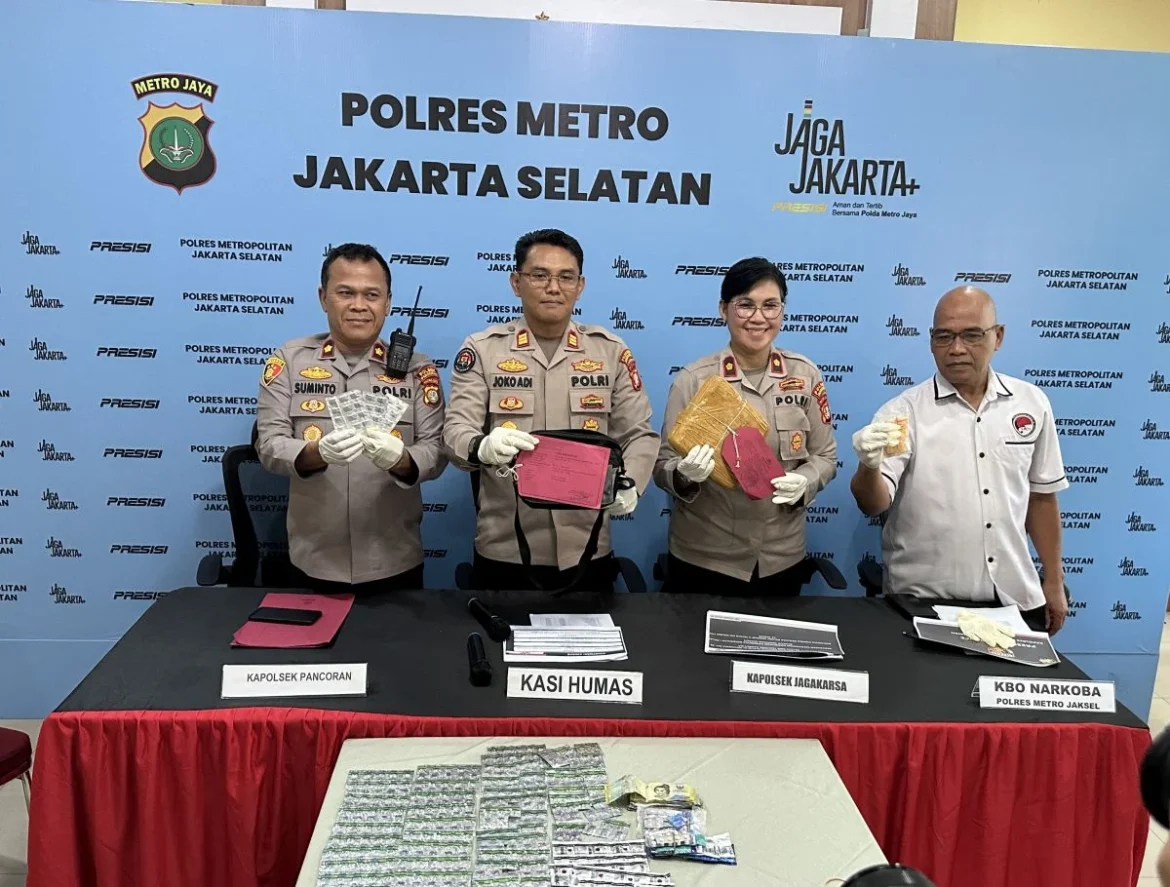
In a significant crackdown on narcotics distribution within the Indonesian capital, law enforcement authorities under the umbrella of the 2026 Nila Jaya Operation have successfully apprehended two suspects linked to the illicit trade of marijuana and controlled substances in the South Jakarta area. The arrests of the individuals, identified by their initials AK (31) and RS (38), mark a pivotal moment in the ongoing efforts by the Jakarta Metropolitan Police to curb the proliferation of illegal drugs that threaten public safety and social stability.
The operation, which is part of a wider provincial initiative to disrupt narcotics supply chains, was spearheaded by the Jagakarsa Sector Police. The successful apprehension of these suspects highlights the critical role of community intelligence in modern policing, as well as the evolving tactics used by drug traffickers to bypass law enforcement through the use of courier services and residential hideouts.
Chronology of the Investigation and Arrests
The operation that led to the detention of the suspects began with a series of reports from residents in the Jagakarsa district of South Jakarta. Local citizens had observed suspicious activities related to the sale of marijuana, prompting the Jagakarsa Sector Police to initiate a comprehensive surveillance and investigative operation.
According to statements provided by the Chief of Jagakarsa Sector Police, Commissioner Nurma Dewi, the primary breakthrough occurred on Wednesday, September 16, 2026. After days of tracking, officers successfully pinpointed the location of the suspect identified as AK. The suspect was found residing in a rented house in the Bedahan area of Sawangan, Depok, a suburban satellite city that often serves as a transit point for illicit goods entering the Jakarta metropolitan area.
Upon raiding the premises, investigators recovered approximately 955 grams of high-grade marijuana. During the subsequent interrogation, AK revealed that he was not acting entirely alone. He confessed that the illicit cargo was intended for shipment to Maluku, a province in Eastern Indonesia. AK had been instructed by an individual identified only by the initial "S" to hold the narcotics at his residence until a logistical arrangement for shipment via an express courier service could be finalized. The timely intervention of the police prevented the narcotics from leaving the island of Java, effectively neutralizing a potential long-distance distribution network.
Narcotics Trends in the Jakarta Metropolitan Area
The arrest of AK and RS takes place against a backdrop of increasing concern regarding the distribution of narcotics in Jakarta. Despite rigorous law enforcement, urban centers remain primary targets for drug syndicates due to high demand and the complexity of logistics networks.
Data from the Indonesian National Police and the National Narcotics Agency (BNN) suggest that the misuse of marijuana and pharmaceutical-grade hard drugs—often referred to as "obat keras"—has seen a shift in distribution methods. Traffickers are increasingly utilizing legitimate courier and expedition services to transport prohibited substances across provincial borders, hoping to exploit the high volume of daily shipments to hide illegal contraband.
The 2026 Nila Jaya Operation serves as a strategic response to these trends. By focusing on localized distribution points in areas like Jagakarsa, the police aim to choke the supply chain at the retail level. Furthermore, the inclusion of "obat keras" in the scope of this operation reflects a broader mandate to combat the abuse of prescription drugs, which are frequently diverted into the black market for non-medical purposes, posing a severe risk to the youth population in South Jakarta.
Official Responses and Legal Implications
Commissioner Nurma Dewi emphasized that the arrest of AK and his associate is only the beginning of a larger investigation. The focus has now shifted to identifying the individual known as "S," who is suspected of being a higher-level operative within the network. The police are currently analyzing communications and financial records seized during the raid to map out the hierarchy of this specific trafficking cell.
"We are committed to following the evidence wherever it leads," Commissioner Dewi stated during a press briefing on September 21, 2026. "The distribution of 955 grams of marijuana is a serious offense that carries heavy penalties under Indonesian law. Our priority is to dismantle the entire network, from the suppliers to the distributors, to ensure that these substances do not reach the public."
Under the Indonesian Law No. 35 of 2009 on Narcotics, individuals convicted of distributing or trafficking illegal substances face severe legal consequences, ranging from long-term imprisonment to life sentences, depending on the volume and classification of the drugs involved. The use of courier services to facilitate drug distribution does not provide a legal shield; rather, it often serves as evidence of a premeditated and organized criminal enterprise, which can lead to more stringent sentencing.
The Broader Impact on Public Safety
The presence of drug distribution hubs in residential areas, such as the rental home used by AK in Sawangan, represents a significant nuisance and safety concern for local communities. Narcotics-related activities often attract secondary criminal behaviors, including theft and localized violence, as buyers and sellers interact in proximity to residential neighborhoods.
Sociologists specializing in urban crime have noted that law enforcement operations like the Nila Jaya Operation provide a necessary sense of security for residents. By removing nearly a kilogram of marijuana from the streets, the police have not only prevented the harm associated with the consumption of that specific supply but have also disrupted the economic cycle that encourages traffickers to return to those neighborhoods.
However, the challenge remains significant. As law enforcement tightens controls in urban centers, traffickers often migrate to peripheral areas like Depok, leveraging the porous nature of the borders between administrative regions. The coordination between the South Jakarta Police and their counterparts in the surrounding jurisdictions is therefore essential. The successful arrest of AK underscores the necessity of inter-regional cooperation in maintaining the integrity of the capital’s security perimeter.
Future Outlook and Preventive Measures
As the 2026 Nila Jaya Operation continues, the Jakarta Metropolitan Police have signaled their intent to increase the frequency of inspections at logistics hubs and courier companies. This preventative approach aims to make it increasingly difficult for traffickers to utilize standard shipping channels for the transport of narcotics.
Furthermore, the police are calling for increased vigilance from the public. The initial lead in this case, which originated from community reports, reinforces the importance of the "Community Policing" model. When residents remain proactive in reporting suspicious activities—such as frequent, unusual courier visits to residential homes or high traffic of unknown individuals—the ability of law enforcement to intervene before a crime occurs increases exponentially.
Moving forward, the authorities are also expected to collaborate with local health agencies to address the demand side of the narcotics crisis. While arrests and seizures are critical, the long-term solution involves reducing the number of active users through rehabilitation and education programs. The combination of punitive measures against dealers and preventive efforts for the community is the cornerstone of the government’s strategy to address the narcotics crisis in Indonesia.
As the legal proceedings against AK and RS progress, the case will likely serve as a benchmark for how local law enforcement handles cases involving inter-island drug trafficking. The public, meanwhile, continues to monitor the situation, awaiting further developments on the identification and apprehension of the remaining suspects associated with the ring. The message from the police remains clear: the crackdown on narcotics in South Jakarta is not a one-time event, but a sustained campaign to ensure the safety and health of the metropolitan community.
