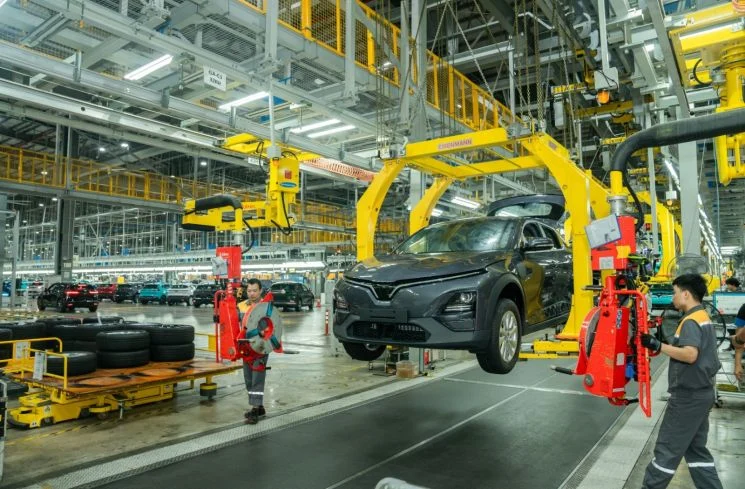
The global automotive landscape is currently undergoing its most significant transformation since the invention of the internal combustion engine. As legacy automakers and aggressive startups engage in a brutal "price war" to capture market share in the electric vehicle (EV) sector, Vietnamese manufacturer VinFast has charted a divergent path. Rather than participating in the race to the bottom through aggressive discounting, the company is pivoting toward a long-term strategy centered on building consumer trust and removing the primary financial barriers that have traditionally hindered widespread EV adoption.
This strategic shift represents a fundamental change in the relationship between manufacturer and consumer. While competitors focus on thin-margin sales to meet quarterly targets, VinFast is attempting to reshape the ownership model of personal transportation. The core of this strategy lies in the decoupling of the vehicle chassis from its most expensive component: the lithium-ion battery. By treating the battery as a service rather than a depreciating asset, the company aims to make the transition to sustainable energy not just a moral choice, but a financially sound one for the middle-class consumer.
The Financial Architecture of the Battery-as-a-Service Model
At the heart of the EV cost structure, the battery pack typically accounts for 30% to 40% of the total vehicle price. By isolating this cost, VinFast allows customers to purchase the vehicle at a significantly lower entry point. Under the company’s "Battery-as-a-Service" (BaaS) subscription model, the consumer effectively leases the power source, shifting the burden of long-term maintenance and performance risks from the owner to the manufacturer.
In the Indonesian market, where this strategy is currently being piloted, subscription fees range from approximately IDR 253,000 to IDR 1 million per month. This structure is designed to be competitive with the monthly fuel costs of traditional gasoline vehicles, providing an immediate economic incentive for switching to electric. Furthermore, the model includes a lifetime battery warranty. If the battery’s capacity falls below 70% of its original state of health, VinFast commits to replacing it at no additional cost to the owner. This policy directly addresses the "range anxiety" and "battery longevity anxiety" that have long been cited as the top two obstacles to EV adoption in emerging markets.
Chronology of the Strategic Shift
The evolution of VinFast’s strategy did not happen in a vacuum. Since its inception, the company has operated with an aggressive international expansion timeline:
- 2017: VinFast is established in Vietnam, setting the stage for domestic manufacturing dominance.
- 2021: The company launches its first electric vehicle, the VF e34, exclusively for the Vietnamese market, marking its transition from a traditional manufacturer to a pure-play EV player.
- 2023: VinFast initiates its global expansion, with a heavy emphasis on Southeast Asian markets including Indonesia, Thailand, and the Philippines, recognizing the region’s massive potential for green mobility.
- 2024-2025: Facing stiff competition from Chinese EV manufacturers who are flooding markets with low-cost, full-purchase vehicles, VinFast refines its subscription model to differentiate itself through "total cost of ownership" (TCO) transparency rather than just sticker price.
Market Implications and Data Analysis
The impact of this model on the retail market is profound. For instance, the VinFast VF 3 is positioned at a price point of approximately IDR 156 million when paired with the battery subscription. For the VF e34, the savings compared to an equivalent model with an integrated battery can reach as high as IDR 112 million.
In a credit-dependent market like Indonesia, the ripple effects of this lower initial capital expenditure are significant. Lower vehicle prices translate into smaller down payments and reduced interest payments over the life of a loan. Industry analysts suggest that this creates a "democratization effect." By lowering the threshold to entry, VinFast is effectively expanding the total addressable market for EVs beyond early adopters and luxury buyers to include the broader mass-market demographic.
Michael Vousden, an automotive analyst at GlobalData, notes that the model is a calculated risk that could redefine industry standards. "The separation of the battery from the vehicle is a masterstroke in de-risking the ownership experience," Vousden says. "It acknowledges that for the average consumer, the car is an asset, but the battery is a consumable technology that evolves rapidly. By taking on the residual value risk of the battery, VinFast is signaling a high level of confidence in their own technology while simultaneously lowering the friction for the consumer."
Addressing the Trust Deficit
Beyond the financial mechanics, VinFast is aggressively tackling the psychological barriers associated with new technology. The automotive industry is built on decades of tradition, and the shift to electrification requires a leap of faith from consumers. To mitigate this, the company has established three pillars of trust:
- Technological Transparency: Providing clear data on battery degradation and performance standards.
- Service Continuity: Ensuring that the subscription model does not lead to service delays; rather, it incentivizes the manufacturer to maintain the fleet’s battery health to minimize replacement costs.
- Financial Predictability: Offering fixed, predictable monthly costs that shield owners from the volatility of fuel prices and the unpredictable costs of major engine repairs.
These pillars are supported by an expanding network of charging infrastructure and service centers. In the Indonesian context, where infrastructure is currently the most cited hurdle for potential EV buyers, the subscription model acts as a bridge. It allows owners to participate in the EV ecosystem without feeling like they are "trapped" with obsolete technology should battery chemistry evolve significantly in the next five years.
The Broader Impact on the Automotive Industry
The "price war" currently defining the global EV market has led to concerns regarding the sustainability of manufacturing practices. Some manufacturers have been accused of sacrificing build quality to lower prices. VinFast’s strategy, by contrast, focuses on the value proposition of the service layer.
This approach has caught the attention of policy makers and environmental advocacy groups. In Southeast Asia, where governments are striving to meet carbon reduction targets, the adoption of private vehicles remains a sticking point. By making EVs affordable, VinFast is inadvertently supporting regional environmental goals. The shift is not merely commercial; it is a vital component of the region’s green energy transition.
However, the strategy is not without challenges. The financial burden of maintaining a massive fleet of leased batteries requires significant capital reserves and sophisticated logistics. VinFast must ensure that its backend operations—specifically the recycling and refurbishing of returned batteries—are as efficient as its front-end sales. If the company can achieve economies of scale in battery lifecycle management, it will possess a competitive advantage that traditional "sell and forget" manufacturers cannot replicate.
Looking Toward a Sustainable Future
As the global automotive market continues to consolidate, the definition of a "successful" car company is changing. It is no longer enough to produce high-performance vehicles; a manufacturer must now be a provider of energy and mobility solutions. VinFast’s decision to prioritize long-term consumer relationships over short-term sales spikes demonstrates a maturation of the company’s business model.
By treating the vehicle as a platform and the battery as a service, VinFast is positioning itself as a leader in the next phase of the electric transition. The success of this model will likely be monitored closely by major automakers in Europe and the United States, where similar subscription-based models have struggled due to cultural resistance and existing regulatory frameworks.
Ultimately, the transition to a sustainable, low-carbon transport system requires more than just innovative engineering; it requires an innovative financial framework. VinFast has identified that the primary friction in the EV market is not a lack of interest, but a misalignment of financial risk. By absorbing that risk, the company is proving that the future of mobility can be both green and accessible. As they move forward, their ability to maintain these high standards of service while scaling operations will be the true test of whether this bold strategy can truly reshape the global automotive landscape. Whether the market follows their lead or continues to chase the thin margins of the price war, VinFast has already successfully shifted the conversation from "what does it cost to buy" to "what does it cost to drive," a distinction that may well define the next decade of automotive success.