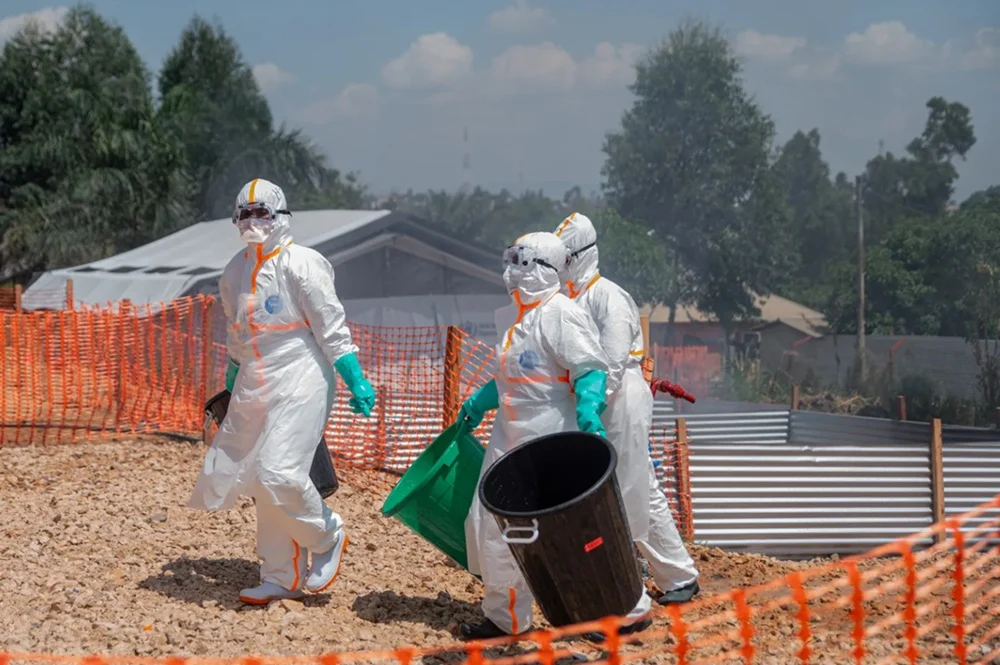
KINSHASA – The devastating Ebola outbreak, first declared in May, has now claimed the lives of over 1,000 individuals across the Democratic Republic of Congo (DR Congo) and neighboring Uganda. According to data released by the World Health Organization (WHO) on Wednesday, July 22, 2026, the grim milestone underscores the persistent challenges in containing the highly virulent disease in a region grappling with insecurity, humanitarian crises, and a fragile healthcare infrastructure. The latest official figures from both nations, reviewed by the global health body, indicate a total of 2,473 confirmed cases of the deadly virus in DR Congo, resulting in 999 fatalities. In Uganda, which shares a porous border with DR Congo, 20 cases have been recorded, leading to two deaths, predominantly among Congolese nationals who crossed into the country.
The Spreading Scourge: A Deep Dive into the Numbers
The current outbreak, marking the 17th such event in DR Congo’s history, was officially announced on May 15, 2026, following a cluster of unexplained deaths in the mineral-rich Ituri province. This northeastern region has long been a flashpoint for various armed groups, complicating public health interventions and exacerbating the crisis. The confirmed caseload in DR Congo, standing at 2,473, translates to a crude case fatality rate (CFR) of approximately 40.4%, a figure consistent with the severe nature of Ebola virus disease, particularly the Zaire ebolavirus strain, which is typically responsible for outbreaks in the region. While the CFR in Uganda appears lower at 10% (2 deaths out of 20 cases), this can be attributed to early detection, robust contact tracing, and the immediate isolation of cases, many of whom were individuals seeking care after crossing the border, allowing for quicker intervention.
Beyond Ituri, the virus has also been identified in four other provinces within DR Congo, highlighting the challenges of containing a disease that spreads through close contact and infected bodily fluids in a highly mobile population. The specific provinces involved beyond the initial epicenter are crucial to understanding the geographical spread and the complexities of the response. Historically, North Kivu and South Kivu provinces have also been severely affected in previous outbreaks, sharing similar characteristics of high population density, conflict, and cross-border movements, making them vulnerable to resurgence or secondary spread. A critical concern for public health officials remains the potential for healthcare workers to contract the virus; while specific numbers for this outbreak are still being compiled, past outbreaks have tragically seen a significant number of doctors, nurses, and support staff fall victim to the disease, further crippling already strained health systems.
A History of Recurrence: Ebola in the DRC
The Democratic Republic of Congo has a long and tragic history with Ebola, having experienced more outbreaks than any other nation. The current event is its 17th documented outbreak since the virus was first identified near the Ebola River in what was then Zaire in 1976. This recurring pattern is not coincidental but rather a consequence of a confluence of factors unique to the region. DR Congo is home to the natural reservoir of the Ebola virus – believed to be fruit bats – which occasionally spill over into human populations, often through contact with infected bushmeat. The country’s vast rainforests and biodiversity increase the likelihood of such zoonotic transmission.
Moreover, the eastern provinces, particularly Ituri, North Kivu, and South Kivu, are characterized by chronic political instability, protracted armed conflict, and large-scale displacement of populations. These conditions severely impede public health efforts, making it difficult to access affected communities, conduct contact tracing, implement safe burials, and deploy vaccination teams effectively. The 2018-2020 Ebola outbreak in North Kivu and Ituri, for example, was the second-deadliest in history, claiming over 2,200 lives, and its prolonged duration was largely attributed to the pervasive insecurity and community mistrust. The current outbreak, emerging in a similar volatile context, continues to face many of these entrenched obstacles, making each response a complex humanitarian and logistical undertaking. Weak health infrastructure, limited access to clean water and sanitation, and a general lack of resources further compound the nation’s vulnerability, ensuring that when an outbreak occurs, it is often difficult to contain quickly.
Chronology of an Escalating Crisis
The timeline of this specific Ebola outbreak illustrates the rapid and insidious nature of the virus, alongside the determined efforts to counter its spread.
- Early Warning Signs (Late April – Early May 2026): Reports begin to surface of a cluster of unexplained deaths in isolated villages within Ituri province, DR Congo. Symptoms align with hemorrhagic fever, prompting local health authorities to dispatch investigation teams and collect samples for laboratory testing.
- May 15, 2026: Official Declaration: Following laboratory confirmation of Ebola virus in several samples, the Ministry of Health of the Democratic Republic of Congo, in conjunction with the WHO, officially declares the 17th Ebola outbreak in the country. Initial reports confirm a handful of cases and deaths, primarily centered around the Mambasa health zone in Ituri. Emergency response protocols are immediately activated, including the deployment of rapid response teams, commencement of contact tracing, and establishment of Ebola Treatment Centers (ETCs).
- Late May – Early June 2026: Initial Response and Escalation: The outbreak quickly expands beyond the initial epicenters within Ituri province. The geographical spread is challenging due to population movements, often driven by trade, family visits, or displacement from conflict. Vaccination efforts are initiated using the established rVSV-ZEBOV vaccine.
- June 2026: Cross-Border Spread to Uganda: The first confirmed cases of Ebola are reported in Uganda. These cases are predominantly identified among Congolese nationals who had recently crossed the border, either seeking refuge, visiting family, or attempting to access healthcare. Uganda’s Ministry of Health activates its emergency preparedness plan, implementing stringent border surveillance, isolating confirmed cases, and initiating targeted vaccination campaigns in border communities. This cross-border transmission immediately elevates the crisis to a regional concern.
- July 22, 2026: WHO Update and Grim Milestone: The World Health Organization releases its latest review of official data from both DR Congo and Uganda, confirming that the cumulative death toll has surpassed 1,000 individuals. This update serves as a stark reminder of the outbreak’s severity and the ongoing need for sustained international support and robust local response efforts. Uganda reports that it has managed to go three weeks without recording new cases, indicating effective containment measures in the immediate border areas, though vigilance remains paramount.
The Response on the Ground: Vaccines, Treatments, and Challenges
The global health community and national governments have mobilized significant resources to combat this outbreak, leveraging lessons learned from previous epidemics. The cornerstone of the public health response has been multi-pronged, integrating advanced medical interventions with robust community engagement strategies.
Vaccination Efforts: The rVSV-ZEBOV vaccine, developed by Merck, has been the primary prophylactic tool deployed. This highly effective single-dose vaccine has proven instrumental in controlling previous outbreaks. The strategy primarily employed is "ring vaccination," where all contacts of confirmed Ebola patients, and contacts of those contacts, are identified and vaccinated. This creates a protective "ring" around known cases, limiting further spread. Thousands of individuals have been vaccinated in both DR Congo and Uganda, targeting high-risk populations, including healthcare workers, frontline responders, and residents in affected zones. However, the logistical challenges are immense, ranging from maintaining the vaccine’s cold chain in remote, infrastructure-poor areas to overcoming community resistance and ensuring safe access for vaccination teams in conflict zones.
Therapeutic Advances: Beyond prevention, significant strides have been made in treating Ebola. This outbreak benefits from the availability of monoclonal antibody treatments such as mAb114 (marketed as Ebanga) and REGN-EB3 (marketed as Inmazeb). These treatments, approved by regulatory bodies, have demonstrated considerable efficacy in reducing mortality rates when administered early in the disease course. They are deployed in specialized Ebola Treatment Centers (ETCs), which are crucial facilities providing isolation, supportive care, and these advanced therapeutics. Establishing and securing ETCs in volatile areas, however, presents ongoing challenges.
International Aid and Coordination: The WHO leads the international coordination efforts, working closely with the DR Congo and Ugandan Ministries of Health. A consortium of international partners, including Médecins Sans Frontières (MSF), UNICEF, the U.S. Centers for Disease Control and Prevention (CDC), and various other non-governmental organizations, provide critical support. This support encompasses financial aid, technical expertise, logistical assistance, and direct implementation of health interventions on the ground. Despite these concerted efforts, funding appeals often fall short, creating gaps in the response and hindering the ability to scale up operations to meet the evolving demands of the outbreak.
Statements from Key Stakeholders
The severity and complexity of the current Ebola outbreak have prompted strong reactions and calls for sustained action from various international and national leaders.
Dr. Tedros Adhanom Ghebreyesus, WHO Director-General, has repeatedly emphasized the critical need for continued vigilance and international solidarity. "The surpassing of 1,000 deaths is a tragic reminder of Ebola’s devastating power and the immense challenges faced by communities in eastern DR Congo and across the border in Uganda," Dr. Tedros stated. "Our focus must remain on strengthening surveillance, ensuring rapid case identification, and accelerating safe and effective vaccination and treatment. But most importantly, we must continue to engage with communities, build trust, and address the underlying drivers of this persistent crisis." He has also reiterated WHO’s commitment to supporting national governments in their response efforts.
Officials from the DR Congo Ministry of Health have acknowledged the profound difficulties in controlling the outbreak amidst the prevailing insecurity. A spokesperson for the Ministry stated, "Our health workers are on the front lines, risking their lives every day to contain this virus. The presence of armed groups and the displacement of populations make our work incredibly challenging, hindering contact tracing and safe burials. We appeal to the international community for greater support, not just in terms of resources, but also in helping to stabilize the region so our public health teams can operate without fear."
The Ugandan Ministry of Health has been commended for its swift and decisive response to the initial cross-border cases. Dr. Jane Ruth Aceng, Uganda’s Minister of Health, highlighted the country’s robust preparedness. "Our experience with previous outbreaks and our commitment to border surveillance allowed us to rapidly identify and isolate cases, preventing wider community transmission," Dr. Aceng explained. "The fact that we have gone three weeks without new cases is a testament to the dedication of our health teams and the cooperation of our communities. However, the threat from across the border remains, and we must maintain our heightened state of alert and preparedness."
Humanitarian organizations, such as Médecins Sans Frontières (MSF) and UNICEF, have consistently voiced concerns regarding the broader humanitarian impact. MSF representatives have highlighted the critical importance of protecting health workers and ensuring unhindered access to affected areas. UNICEF has focused on the particular vulnerability of children, who are often disproportionately affected by outbreaks and the breakdown of health services. "Children are not just at risk of contracting Ebola; they also face severe disruptions to their education, nutrition, and access to routine immunizations due to the ongoing crisis," a UNICEF spokesperson noted, calling for integrated humanitarian responses that address the holistic needs of affected populations.
Broader Implications: Conflict, Trust, and Global Health Security
The Ebola outbreak in DR Congo and Uganda is not merely a public health crisis; it is deeply intertwined with complex socio-political dynamics, posing significant broader implications for regional stability and global health security.
Impact of Insecurity: The eastern provinces of DR Congo are perpetually destabilized by the presence and activities of numerous armed groups, including the Allied Democratic Forces (ADF), remnants of the M23 rebellion, and various Mai-Mai militias. These groups not only directly attack health workers and facilities, creating a climate of fear and insecurity, but also disrupt the very fabric of communities. Attacks on Ebola Treatment Centers and ambushes on response teams have been tragically common, forcing health workers to withdraw from high-risk areas. The resulting "shadow outbreaks" in inaccessible zones make it impossible to track the virus accurately, leading to unchecked transmission. Furthermore, conflict-induced displacement leads to large-scale population movements, pushing people into overcrowded camps where disease can spread rapidly, and making contact tracing a near-impossible task.
Community Mistrust and Misinformation: A pervasive lack of trust in governmental authorities and, at times, in international aid organizations, continues to be a major impediment to the Ebola response. Decades of conflict, political grievances, and historical exploitation have bred deep-seated suspicion among local populations. Misinformation and conspiracy theories about Ebola and the response efforts often circulate, leading to resistance against vaccination, safe burial practices, and even seeking treatment at ETCs. Cultural beliefs and traditional healing practices, while vital to communities, can sometimes clash with public health imperatives, requiring sensitive and respectful engagement to bridge these divides. Without genuine community buy-in and active participation, containment efforts are severely hampered.
Regional and Global Health Security: The cross-border transmission of Ebola into Uganda underscores the regional threat posed by the outbreak. Porous borders, coupled with significant cross-border trade and population movement, mean that an outbreak in one country can quickly become a regional crisis. This necessitates robust regional coordination, shared surveillance data, and harmonized response strategies. From a global health security perspective, uncontrolled outbreaks, especially in volatile regions, pose a risk of international spread, particularly through air travel, though this remains less likely for Ebola due to its mode of transmission compared to respiratory viruses. However, the sheer scale and persistence of the outbreaks in DR Congo serve as a constant reminder of the need for strong global preparedness, rapid response capacity, and sustained investment in strengthening health systems in vulnerable nations to prevent future pandemics.
Looking Ahead: Sustained Effort and Resilience
Bringing the current Ebola outbreak to a definitive end will require a sustained, multi-faceted commitment that extends beyond immediate emergency response. Long-term investment in strengthening the basic health infrastructure of DR Congo and its neighbors is paramount. This includes building resilient primary healthcare systems, enhancing laboratory diagnostic capabilities, improving surveillance networks, and ensuring a well-trained and adequately equipped health workforce. Addressing the root causes of vulnerability, such as poverty, food insecurity, and ongoing conflict, is also crucial, as these factors create fertile ground for disease outbreaks and hinder effective responses.
The fight against Ebola in this region is not merely a battle against a virus; it is a battle for peace, stability, and human dignity. As the world acknowledges the grim milestone of over 1,000 deaths, the international community’s resolve will be tested in its ability to provide comprehensive support that tackles not only the immediate health crisis but also the deeper humanitarian and socio-political challenges that continue to fuel such devastating outbreaks. The resilience of the affected communities, coupled with sustained global solidarity, remains the best hope for overcoming this persistent public health threat.