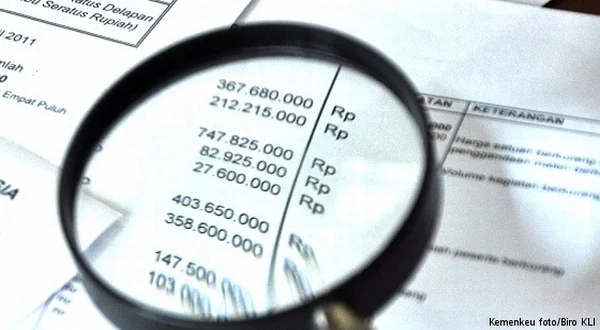
The Government of Indonesia officially presented the Draft Law on the Accountability for the Execution of the 2013 State Budget (RUU APBN 2013) during a plenary session at the House of Representatives (DPR RI) in Jakarta. The presentation marked a critical step in the nation’s legislative and financial oversight calendar, offering lawmakers and the public a comprehensive review of how state funds were allocated, managed, and executed during a volatile fiscal year.
During the parliamentary address, then-Minister of Finance Muhammad Chatib Basri delivered the government’s comprehensive report, shedding light on the macroeconomic hurdles faced throughout the fiscal year, policy adjustments implemented to safeguard the economy, and the specific accounting challenges that led the Supreme Audit Agency (BPK) to grant a Qualified Opinion—locally known as Wajar Dengan Pengecualian (WDP)—on the Central Government Financial Report (LKPP) for the 2013 period.
Main Facts and Parliamentary Presentation
The plenary session, held at the Nusantara II Building in the Senayan legislative complex, served as the formal forum for the executive branch to account for its fiscal performance to the representatives of the Indonesian people. The submission of the RUU APBN 2013 is a mandatory constitutional requirement designed to ensure transparency, accountability, and legislative oversight regarding the utilization of public funds.
In his address to the lawmakers, Minister Chatib Basri addressed the elephant in the room: the audit opinion issued by BPK. For the 2013 fiscal year, the state financial report received a WDP status. While a WDP opinion indicates that the financial statements are presented fairly in all material respects—except for the effects of specific matters that are qualified—it falls short of the coveted Unqualified Opinion, or Wajar Tanpa Pengecualian (WTP), which represents the gold standard in public sector financial auditing.
Chatib elaborated that the qualification was not indicative of systemic corruption or catastrophic budget mismanagement, but rather stemmed from complex, lingering technical and administrative accounting issues. Specifically, the BPK highlighted discrepancies and documentation challenges concerning over-lifting receivables, oil and gas sales receivables, legacy credit assets originating from the Indonesian Bank Restructuring Agency (BPPN), and pension fund liabilities.
Despite these accounting caveats, the government defended its overall fiscal execution under immense pressure, navigating a landscape characterized by severe external shocks and internal structural imbalances.
The 2013 Economic Landscape: External Pressures and Internal Vulnerabilities
To fully comprehend the execution of the 2013 State Budget, financial analysts must examine the tumultuous global and domestic economic environment of that year. The Indonesian economy in 2013 was forced to navigate a "perfect storm" of converging negative sentiments that tested the resilience of the nation’s macroeconomic framework.
From an external perspective, the global economy experienced a notable deceleration. International commodity prices, which had served as a primary engine for Indonesia’s export-driven growth during the previous decade, suffered significant corrections. This downturn directly impacted state revenues derived from the natural resource and mining sectors.
Furthermore, global financial markets were rattled by the United States Federal Reserve’s signaling of a potential tapering of its quantitative easing program—widely known as the "tapering off" issue. This monetary policy shift triggered massive capital outflows from emerging markets, including Indonesia, as global investors rushed back to dollar-denominated assets. The resulting sudden stop in foreign portfolio inflows placed unprecedented pressure on domestic liquidity, equity markets, and sovereign bond yields.
Internally, Indonesia faced acute structural challenges. The country’s current account balance slipped into a deep deficit, driven by robust domestic consumption demanding high volumes of imported goods while export earnings stagnated due to falling commodity prices. This external imbalance exerted severe downward pressure on the Indonesian Rupiah, making currency stabilization a paramount, albeit costly, objective for both the Ministry of Finance and Bank Indonesia.
Government Policy Responses and Macroeconomic Adjustments
Faced with these formidable headwinds, the Indonesian government and monetary authorities could not rely on passive fiscal management. The changing macroeconomic landscape necessitated swift policy interventions to prevent a full-blown financial crisis and to steer the economy back toward sustainable growth.
Minister Chatib Basri outlined several key stabilization policies deployed during the 2013 fiscal year. First, the government focused on strengthening the current account balance by curbing non-essential imports and encouraging domestic value-addition through mineral export bans under the landmark Mining Law. Second, fiscal authorities coordinated closely with Bank Indonesia to implement stabilization measures aimed at dampening excessive volatility in the foreign exchange market and restoring confidence in the Rupiah.
Third, and perhaps most politically sensitive, the government enacted a crucial adjustment to subsidized fuel prices. In June 2013, the administration raised the prices of subsidized gasoline (Premium) and diesel (Solar) to alleviate the crushing burden of energy subsidies on the state budget. The fiscal space recovered from this policy adjustment was redirected toward infrastructure development and targeted social safety net programs designed to cushion low-income households from the inflationary shock.
"The internal and external dynamics naturally exerted an impact on changes to basic macroeconomic assumptions, which ultimately affected the implementation and achievement of the 2013 APBN targets," Chatib explained to the assembly.
Understanding the BPK Audit: The Anatomy of WDP Status
The conferral of a Wajar Dengan Pengecualian (WDP) status by the Supreme Audit Agency (BPK) on the 2013 LKPP requires a granular examination of the specific ledger items cited by the state auditor. While the general public often misinterprets audit qualifications as evidence of fraud, public finance experts note that they frequently reflect systemic historical accounting complexities within large government bureaucracies.
The primary factors cited by BPK and reiterated by the Ministry of Finance included:
-
Over-Lifting Receivables: Over-lifting occurs when a production sharing contractor (PSC) lifts a volume of oil or gas exceeding their entitled quota during a specific period. Valuing, recording, and reconciling these operational imbalances across numerous working areas has historically posed significant verification challenges between state auditors, the Ministry of Energy and Mineral Resources, and upstream oil and gas regulators (SKK Migas).
-
Oil and Gas Sales Receivables: Similar to over-lifting, tracking revenues from the state’s share of petroleum sales involves complex multi-party settlements, fluctuating international spot prices, and timing differences in cash receipts, which occasionally lead to unverified balances at the close of the fiscal year.
-
Legacy Credit Assets from BPPN: Following the 1997-1998 Asian Financial Crisis, the Indonesian government, through BPPN, absorbed billions of dollars in non-performing loans (NPLs) from collapsed commercial banks. Managing, restructuring, or liquidating these distressed asset portfolios has spanned decades, resulting in valuation and administrative complexities that persist on government balance sheets.
-
Pension Fund Liabilities: Actuarial valuations of civil servant, military, and police pension obligations involve long-term demographic projections and complex liability calculations. Adjustments in discount rates and wage assumptions frequently trigger valuation gaps that auditors require extensive documentation to clear.
Broader Implications and the Path to Fiscal Reform
The presentation of the RUU APBN 2013 and the accompanying BPK audit findings underscored the ongoing structural evolution of Indonesia’s public financial management system. In the wake of the 1998 reforms, Indonesia decentralized and overhauled its legal framework for state finances, introducing laws such as State Finance Law No. 17/2003 and State Treasury Law No. 1/2004, which mandated independent external auditing of all government accounts by the BPK.
The reception of a WDP opinion for 2013 served as both a reality check and a catalyst for institutional reform within the Ministry of Finance. Financial technocrats recognized that achieving and sustaining a WTP (Unqualified) opinion—which the government eventually secured in subsequent years—required not only political will but also deep investments in digital accounting infrastructure, asset inventory management, and inter-agency data reconciliation.
Furthermore, the 2013 fiscal experience provided vital lessons for macroeconomic shock absorption. The turbulence caused by the Fed’s tapering signals highlighted the perils of maintaining unsustainable current account deficits and heavy reliance on commodity windfalls. Policymakers utilized the insights gained from 2013 to refine fiscal buffers, improve debt management strategies, and enhance coordination between fiscal and monetary authorities—preparations that would prove invaluable during subsequent global crises, including the COVID-19 pandemic.
As the parliamentary debate on the RUU APBN 2013 progressed, lawmakers scrutinized the government’s explanations, debated policy trade-offs, and ultimately worked toward the statutory enactment of the accountability bill. While political friction is a natural component of legislative oversight in a vibrant democracy, the process reaffirmed the resilience of Indonesia’s democratic institutions and their commitment to transparent public financial stewardship.