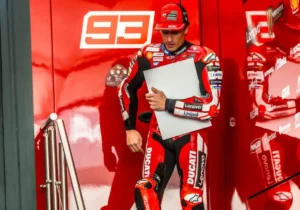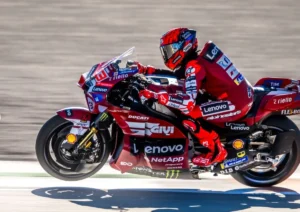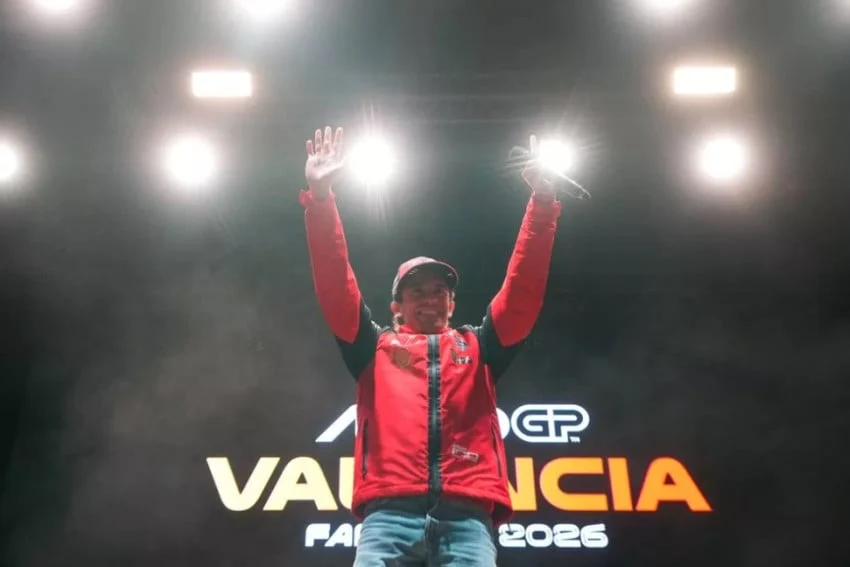
The world of premier motorcycle racing stands at a definitive crossroads following the announcement by Spanish racing icon Marc Marquez that he will retire from MotoGP at the conclusion of the 2026 season. The confirmation came in a poignant and highly choreographed manner on Friday, November 27, 2026, ahead of the first free practice session (FP1) for the Valencia Grand Prix. Marquez, currently riding for the Ducati factory team, utilized a method reminiscent of the iconic cue-card scene from the film "Love Actually" to communicate his departure to his global fanbase, effectively bringing the curtain down on one of the most illustrious careers in the history of motorsport.
The announcement has sent shockwaves through the paddock and the broader sporting world, largely because it preempts his existing contractual obligations. Marquez had signed a multi-year extension with Ducati that was intended to keep him on the grid through the end of 2028. By choosing to step away two years early, the rider has signaled a personal turning point, shifting the focus of the MotoGP landscape and leaving a significant vacancy in the Ducati garage for the 2027 season.
A Career Defined by Records and Resilience
To understand the magnitude of this decision, one must look at the statistical footprint Marquez leaves behind. With eight world championship titles—six of which were secured in the premier MotoGP class—and a total of 10 world titles across all categories, he stands as one of the most successful riders to ever swing a leg over a motorcycle.
His journey began in 2008 in the 125cc class, followed by a meteoric rise through Moto2. Upon his entry into the MotoGP class in 2013 with Repsol Honda, he became the youngest-ever world champion at the time, a record that underlined his immediate impact. Throughout the 2010s, Marquez was the undisputed face of the sport, characterized by a riding style that pushed the limits of physics, often resulting in spectacular saves and unmatched qualifying speed.
However, his career has also been defined by profound adversity. The 2020 Jerez accident, which resulted in a severely broken humerus, initiated a grueling four-year period of surgeries, recovery, and doubts about his ability to return to the top. His decision to leave Honda for Ducati in 2024 was seen as the ultimate gamble to reclaim his crown, a gamble that eventually proved successful in terms of competitive resurgence, even if it ultimately led him to this final decision to retire.
The Chronology of an Era
The timeline of Marc Marquez’s career is a testament to longevity in a sport that is notoriously unforgiving on the human body.
- 2010: Secured his first 125cc World Championship title.
- 2012: Won the Moto2 World Championship, solidifying his status as a future superstar.
- 2013: Made his MotoGP debut with Repsol Honda, winning the World Championship in his rookie year.
- 2014-2019: Dominated the sport, winning five more premier class titles and setting multiple pole position and race win records.
- 2020: Suffered a season-ending injury at the Spanish Grand Prix, marking the start of a long medical hiatus.
- 2021-2023: Struggled with intermittent injury setbacks and inconsistent bike performance, leading to a mutual parting of ways with Honda.
- 2024: Joined the Ducati factory team, marking a new chapter in his career.
- 2026 (November 27): Announced his retirement effective at the end of the Valencia Grand Prix.
Official Reactions and Paddock Sentiment
The news of Marquez’s retirement was met with profound solemnity by his peers, team members, and the governing bodies of the sport. While no official press conference was held by Ducati immediately following the FP1 session, paddock insiders suggest that the team management was aware of his decision in the days leading up to the Valencia weekend.
"Marc has been the benchmark for an entire generation," noted a senior official from the Ducati Corse technical staff. "His ability to analyze data and his raw, instinctive speed are things that cannot be taught. While we are disappointed that he will not fulfill the remainder of his contract, we respect his decision to prioritize his health and his future beyond racing."
Fellow riders, many of whom grew up idolizing the Spaniard, took to social media and post-session interviews to express their gratitude. Even his fiercest rivals, who had battled him for podiums for over a decade, acknowledged that the sport loses a unique talent. The consensus among the riders is that the "Marquez era" brought a level of intensity and marketing visibility to MotoGP that had not been seen since the era of Valentino Rossi.
Implications for the 2027 MotoGP Season
The sudden departure of an eight-time world champion triggers an immediate and intense "silly season" for the 2027 rider market. Ducati, which has spent the last two years centering its development and marketing strategy around the Spaniard, must now pivot rapidly.
1. The Ducati Vacancy
The most immediate impact is the opening in the factory Ducati team. With Marquez’s seat becoming available, speculation will likely turn toward rising stars within the Ducati satellite teams or potential high-profile recruits from rival manufacturers like KTM or Aprilia. The pressure on the Ducati management to find a successor capable of matching the commercial and competitive pull of Marquez will be immense.
2. Competitive Parity
Marquez’s retirement fundamentally alters the competitive landscape. Without the "Marc Marquez factor"—his ability to extract performance from a machine that others might find unrideable—the field may see a shift in the hierarchy. Younger riders who have been testing their limits against him will now have a clearer path to the championship, though they will also lose the opportunity to continue learning from his unique techniques.
3. Commercial and Marketing Impact
MotoGP has relied heavily on the star power of Marc Marquez to maintain its global viewership, particularly in key markets such as Spain and Latin America. The loss of such a recognizable figure poses a challenge for Dorna Sports, the commercial rights holder of the series. The sport will now need to aggressively market its younger talent to ensure that the departure of its biggest draw does not lead to a dip in interest.
A Legacy of Historical Significance
When the chequered flag drops in Valencia for the final time in 2026, it will mark the end of an era that will be studied by historians of the sport for decades. Marquez’s career spanned the transition from the "electronic-heavy" era of MotoGP to the highly aerodynamic and technical machines seen today.
His contribution to the sport goes beyond the trophies in his cabinet. He revolutionized the way bikes are ridden, particularly in the use of front-end grip and the famous "elbow-down" cornering style that has since been adopted by virtually every rider on the grid. His rivalry with other legends of the sport, such as Valentino Rossi and Jorge Lorenzo, provided the narrative tension that helped MotoGP grow its audience significantly during the 2010s.
Furthermore, his return to the top of the podium after the devastating injury in 2020 remains one of the greatest comeback stories in professional sports. It served as a narrative of resilience that transcended the sport of motorcycle racing, offering a message of perseverance to fans worldwide.
Moving Forward
As the MotoGP community prepares for the final race of the 2026 season, the focus will undoubtedly be on celebrating the achievements of a rider who changed the sport forever. While the technical and commercial implications of his retirement will occupy the minds of team principals and promoters throughout the winter, for the fans, the focus remains on the final laps of a legendary career.
Marc Marquez leaves behind a sport that is faster, more technically advanced, and more globally connected than it was when he arrived. While the grid will continue to evolve and new champions will emerge, the departure of the rider from Cervera leaves a void that will not easily be filled. The 2026 Valencia Grand Prix will serve not just as a race, but as a historic capstone to a decade and a half of unparalleled excellence. The question of who will step into the spotlight left vacant by the most dominant figure of his generation remains the most pressing query in the world of grand prix motorcycle racing.