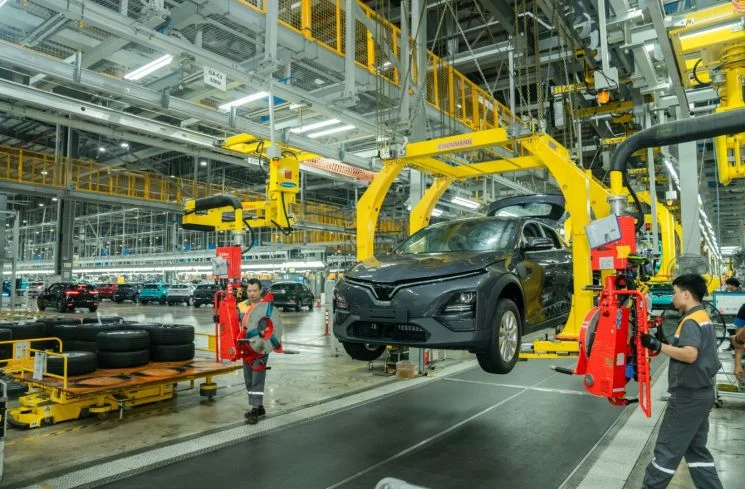
The global automotive landscape is currently undergoing its most significant transformation in a century. As traditional internal combustion engine (ICE) manufacturers and new-age electric vehicle (EV) startups engage in a fierce price war, often characterized by aggressive discounting and margin erosion, the Vietnamese automaker VinFast has charted a distinctly different course. Rather than participating in a "race to the bottom" regarding sticker prices, the company is fundamentally restructuring the financial relationship between the consumer and the vehicle, aiming to build long-term trust and sustainable adoption in the electric mobility sector.
A Paradigm Shift in Automotive Finance
At the core of VinFast’s strategy is the decoupling of the vehicle chassis from the battery pack. In the traditional automotive model, the battery, which accounts for approximately 30% to 40% of an electric vehicle’s total production cost, is bundled into the upfront retail price. This creates a high barrier to entry for the average consumer. By moving to a battery subscription model, VinFast effectively lowers the initial capital outlay for the vehicle, making the technology accessible to a broader demographic.
This strategic move is not merely a pricing tactic; it is an attempt to address the "range anxiety" and "durability anxiety" that still plague the EV market. By retaining ownership of the battery, VinFast assumes the technical and financial risk associated with the most expensive component of the car. This includes maintenance, software updates, and, crucially, the replacement of the battery should its health degrade below a certain threshold.
Historical Context and Strategic Evolution
VinFast, a subsidiary of the multi-industry conglomerate Vingroup, entered the global stage with ambitious goals. Founded in 2017, the company transitioned from producing ICE vehicles to becoming an EV-only manufacturer in a remarkably short period. The decision to pivot fully toward electric mobility was driven by both the global climate agenda and Vietnam’s commitment to achieving net-zero emissions.
Following its expansion into North America and Southeast Asia, VinFast encountered a market dominated by incumbents like Tesla and Chinese manufacturers like BYD, both of which utilize aggressive direct-to-consumer pricing models. Recognizing that simply matching these prices would be unsustainable for a burgeoning brand, VinFast looked toward a service-oriented business model. The introduction of the battery subscription service began as a pilot program in Vietnam before being scaled to international markets, including Indonesia, where the automotive landscape is heavily reliant on installment-based financing.
Data-Driven Accessibility
The economic impact of this model is significant, particularly in markets with high interest rates and cost-sensitive consumers. For instance, the VinFast VF 3, an entry-level compact EV, can be acquired for approximately IDR 156 million (roughly $10,000 USD) under the subscription model. This price point positions the vehicle in direct competition with budget-friendly ICE cars, effectively eliminating the "green premium" that has historically prevented mass-market adoption.
Furthermore, the subscription fees—ranging from IDR 253,000 to IDR 1,000,000 per month depending on the model—are structured to be lower than the average monthly fuel expenditure for a conventional gasoline vehicle. By converting a large, one-time capital expense into a manageable, recurring operational expense, VinFast is aligning the cost of vehicle ownership with the cash flow realities of middle-class households.
Institutional Support and Lifecycle Guarantees
Beyond the financial structure, VinFast has implemented a robust safety net for consumers. Their "lifetime battery warranty" is a cornerstone of this strategy. If the battery capacity drops below 70% of its original state, VinFast guarantees a free replacement. This removes the "residual value risk"—the fear that a used EV will be worthless in five years due to a failing battery—which has been a primary deterrent for potential buyers of used electric vehicles.
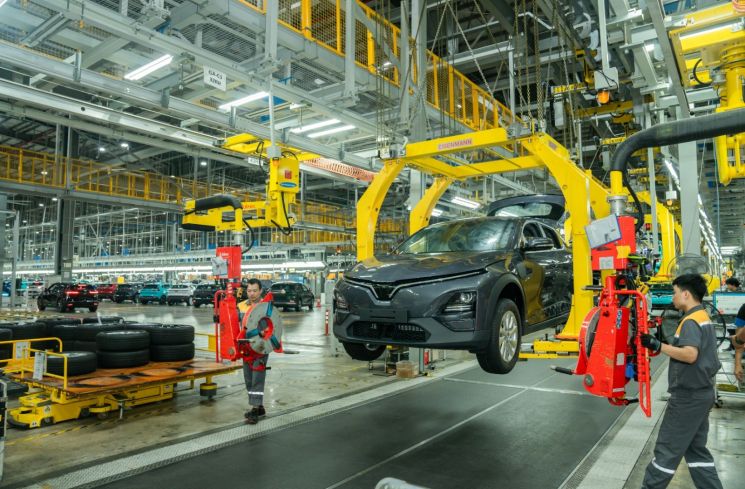
Industry analysts have taken note of this structural innovation. Michael Vousden, an automotive analyst at GlobalData, has described the separation of the battery from the vehicle price as a "calculated masterstroke." By isolating the most volatile and expensive part of the vehicle, the manufacturer provides a level of psychological security that is currently missing from the wider market. This, combined with a commitment to build a dense charging infrastructure, reflects a holistic approach to vehicle ownership.
Global Implications and Market Trends
The automotive industry is watching VinFast’s experiment closely. If successful, it could force other manufacturers to reconsider their own business models. Current market trends show that while EV sales are growing, the rate of adoption has slowed in several Western markets due to price fatigue and charging infrastructure gaps. VinFast’s model addresses both issues simultaneously: it lowers the price barrier and shifts the burden of infrastructure management and component maintenance onto the OEM (Original Equipment Manufacturer).
However, the strategy is not without its risks. For VinFast, maintaining the battery fleet requires significant capital investment and a sophisticated logistics network. The company must prove that it can scale its service operations as quickly as it scales its vehicle production. Failure to provide timely maintenance or support for the subscribed batteries could quickly erode the trust they are working so hard to build.
The Human Element: Building Trust in Technology
The shift toward electric mobility is as much a sociological challenge as it is a technological one. Consumers are accustomed to the reliability of combustion engines developed over a century. Shifting to an EV requires a fundamental change in behavior—learning to charge instead of filling up, and understanding the nuances of software-defined vehicles.
VinFast’s branding strategy emphasizes this partnership model. By framing the consumer as a "partner in the green transition," the company seeks to build brand loyalty that transcends the simple transaction of buying a car. In Indonesia, for example, the local market has shown high receptivity to this model, as it mirrors the "service-as-a-service" trends seen in other sectors, such as telecommunications and digital entertainment.
Future Outlook: Sustainability and Scalability
As we look toward 2030, the success of the EV transition will be measured by the ability of manufacturers to democratize the technology. If electric vehicles remain a luxury item, the impact on global carbon emissions will be negligible. VinFast’s decision to challenge the status quo is a testament to the belief that the future of mobility must be inclusive.
The company’s roadmap includes further expansion into new markets and the diversification of its product portfolio, ranging from micro-cars to high-end SUVs. Each model will likely utilize a variation of the subscription strategy to ensure that the initial barrier to entry remains low.
Conclusion
VinFast is currently acting as a disruptor in an industry that has long been defined by rigid business practices. By questioning the necessity of bundling the battery into the vehicle price, they have unlocked a new pathway for consumer engagement. Whether this model becomes the industry standard or remains a unique niche strategy remains to be seen. However, one thing is certain: by prioritizing affordability, transparency, and consumer protection, VinFast is not just selling cars; they are attempting to rewrite the rulebook for the global automotive sector. In a world that is increasingly conscious of its environmental footprint, such innovation is not only welcome—it is necessary for a sustainable future.