While the precise identity of the first animal to inhabit Earth remains one of the most profound enigmas in evolutionary biology, scientific consensus is gradually crystallizing around the physiological and genetic characteristics of the earliest multicellular life. The quest to identify the "first animal" is not merely a taxonomic exercise; it is a fundamental inquiry into the origins of complexity, multicellular cooperation, and the biological foundations of the modern animal kingdom. By peeling back the layers of deep time—far beyond the familiar era of dinosaurs 230 million years ago—researchers are uncovering a world dominated by ancient, enigmatic organisms that laid the groundwork for all life as we recognize it today.
The Chronology of Life: Tracing the Ancestral Path
To understand the emergence of the first animal, one must first calibrate the timeline of planetary history. Life on Earth emerged approximately 3.7 to 4 billion years ago, initially in the form of simple, single-celled prokaryotes. For billions of years, the planet was essentially a microbial biosphere. The transition to eukaryotes—organisms with complex, membrane-bound organelles—occurred roughly 1.6 to 2.1 billion years ago. However, the true leap toward the animal kingdom, characterized by specialized multicellularity, began in the Cryogenian and Ediacaran periods.
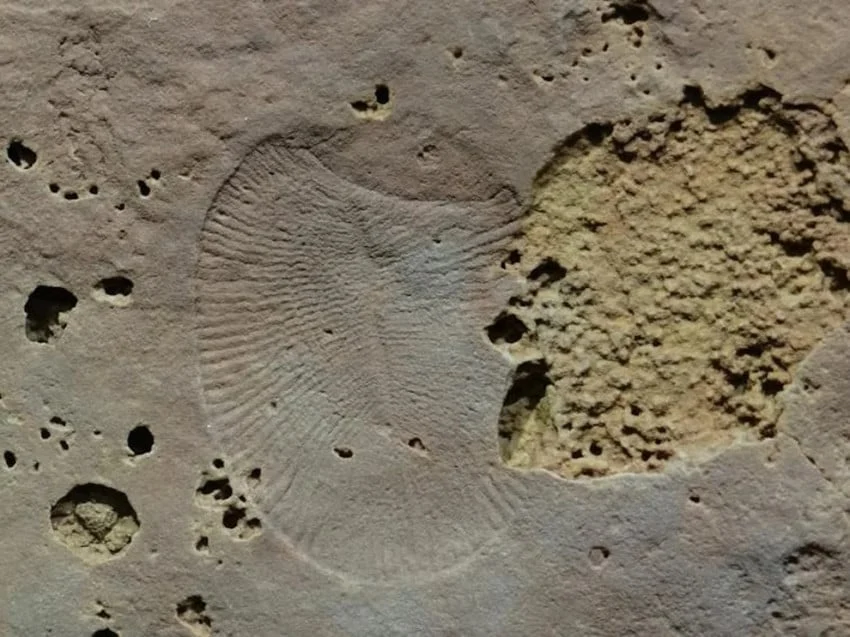
Around 558 million years ago, the fossil record provides clear, undeniable evidence of complex life in the form of Dickinsonia. This organism, which occupied the seafloor, resembled a flattened, oval-shaped pancake. While Dickinsonia is often cited as one of the oldest reliable examples of multicellular life, it represents a relatively late stage in the development of animals. Current molecular clock studies and genomic evidence suggest that the ancestors of modern animals likely diverged from their single-celled progenitors hundreds of millions of years prior, potentially as far back as 700 to 800 million years ago, during the Tonian period.
Defining the Animal: Beyond Motion and Perception
The task of identifying the "first" animal is complicated by the biological definition of what constitutes an animal. In common parlance, animals are defined by their ability to move, hunt, and reproduce. However, these behaviors are not exclusive to the kingdom Animalia. Amoebas, for instance, are single-celled organisms that exhibit active movement and predatory behavior, yet they are not animals.
Biologically, an animal is defined as a multicellular, heterotrophic organism. Unlike plants, which synthesize organic matter through photosynthesis, animals must ingest external organic material. Furthermore, animals possess specialized cells that operate in concert to perform distinct physiological functions. This definition is crucial because it allows scientists to categorize organisms that lack what we traditionally associate with "animal" life: brains, eyes, hearts, or limbs. The first animals were likely simple, sedentary entities that operated through cellular specialization rather than complex organ systems.
The Poriferan Paradigm: The Case of the Sponge
Modern science looks toward sponges—the phylum Porifera—as the primary model for understanding the earliest animal life. Sponges are the simplest extant animals, lacking true tissues, nervous systems, or internal organs. They occupy the ocean floor, anchored in place, and rely on a sophisticated system of pores to filter nutrients from the water.
The physiological architecture of a sponge is a marvel of evolutionary efficiency. Their bodies are composed of various specialized cell types, most notably the choanocytes. These cells feature flagella—hair-like appendages—that beat rhythmically to create a water current through the sponge’s pores. This mechanism allows the organism to filter out organic particles, essentially functioning as a living pump.
The significance of the choanocyte cannot be overstated. These cells bear a striking resemblance to choanoflagellates, a group of single-celled organisms that are widely considered the closest living relatives to animals. This morphological similarity provides a "missing link" of sorts, illustrating how unicellular ancestors may have clustered together to form the first functional, multicellular colonies.
Genomic Analysis and Molecular Clocks
In recent years, the integration of genomic sequencing and molecular clock analysis has revolutionized our understanding of early evolution. Molecular clocks allow scientists to estimate the timing of evolutionary events by measuring the rate of genetic mutations over millions of years. By comparing the DNA of modern sponges, comb jellies (ctenophores), and choanoflagellates, researchers have been able to map the divergence of lineages with increasing precision.
A central debate in contemporary paleobiology is whether the sponge or the comb jelly was the first to branch off from the common animal ancestor. While sponges are anatomically simpler, some genomic studies suggest that comb jellies—which possess complex nerve nets and muscles—might be the true basal lineage. This implies that either complexity was lost in the sponge lineage, or that the "simple" body plan of the sponge was an evolutionary innovation that occurred after the emergence of more complex systems. This debate highlights the fluidity of our understanding and the necessity of further fossil discovery.
Environmental Catalysts: The Oxygenation of Earth
The emergence of animals was not merely a biological accident; it was facilitated by significant shifts in Earth’s environmental chemistry. The transition from the Proterozoic to the Phanerozoic eon was marked by increasing oxygen levels in the oceans. Multicellular life, particularly active predators and filter feeders, requires a higher metabolic rate than single-celled organisms.
Geochemical evidence suggests that the "Great Oxygenation Event" and subsequent pulses of atmospheric oxygen provided the metabolic fuel necessary for the development of complex animal tissues. As oxygen concentrations rose, the energetic cost of maintaining a multicellular body became sustainable. This environmental shift likely acted as an evolutionary bottleneck, favoring organisms that could cooperate at a cellular level to process energy more efficiently.
Scientific Implications and Future Research
The study of the first animal has profound implications for our understanding of life in the universe. If the emergence of animals is a predictable result of environmental oxygenation and the transition to multicellularity, it suggests that complex life may be more common in the cosmos than previously hypothesized. Conversely, if the leap from single-celled life to animal life is a "rare event"—an evolutionary threshold that requires specific genetic mutations alongside environmental triggers—it could imply that complex life is an exceedingly rare phenomenon.
Current research efforts are focused on the "Ediacaran Biota," a period of time that serves as a laboratory for the diversification of early animal life. Paleontologists are utilizing advanced imaging techniques, such as micro-CT scanning and synchrotron radiation, to analyze fossilized impressions in rocks from this era. By visualizing the internal structures of these organisms, researchers hope to identify signatures of cellular differentiation that have remained hidden for half a billion years.
Furthermore, biologists are working to map the "toolkit" genes—regulatory genes that control body patterning—in sponges and choanoflagellates. By identifying which genes were present in the common ancestor of all animals, scientists are reconstructing the "genetic architecture" of the very first animal. This research suggests that the fundamental genetic instructions for multicellularity were present long before the first macroscopic animals appeared in the fossil record.
Conclusion: The Continuing Search
While we may never be able to point to a specific "first" individual organism, the synthesis of paleontology, genomics, and geochemistry is providing a remarkably clear picture of the ancestral animal. We now understand that the first animals were likely simple, filter-feeding colonies that occupied a niche at the intersection of microbial life and complex multicellularity.
The story of the first animal is a testament to the resilience and adaptability of life. It is a story that began in the dark, oxygen-poor depths of ancient oceans and culminated in the vast biodiversity that defines our planet today. As analytical technologies advance and new fossil sites are discovered, the veil of deep time continues to lift, revealing the humble, microscopic origins of the animal kingdom. The search for the first animal is ultimately a search for our own biological heritage—a journey that brings us closer to understanding the mechanisms that transformed a single-celled world into the complex, vibrant biosphere we inhabit today.