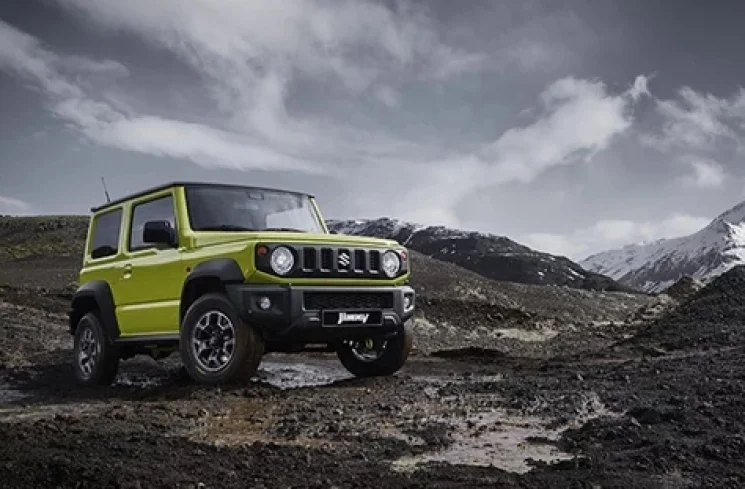
In a decisive move that underscores the prioritization of heritage over industry trends, Suzuki Motor Corporation has officially confirmed that it will not pursue an electric vehicle (EV) variant of its legendary Jimny SUV. Despite the accelerating global transition toward electrification and the imposition of increasingly stringent carbon emission regulations, Suzuki’s leadership maintains that the core identity of the Jimny—a vehicle defined by its mechanical simplicity, lightweight architecture, and raw off-road capability—would be fundamentally compromised by the integration of battery-electric technology.
The announcement, delivered by Toshihiro Suzuki, President of Suzuki Motor Corporation, serves as a definitive end to speculation regarding the electrification of the company’s most iconic nameplate. Speaking on the matter, Suzuki stated, "If you talk about a Jimny EV, I think it would ruin the best part of the Jimny," highlighting a philosophical divergence from many global competitors who are rapidly retrofitting traditional platforms with heavy battery packs and electric motors.
The Engineering Philosophy Behind the Jimny
The Suzuki Jimny, particularly in its current fourth generation introduced in 2018, has achieved a cult-like status in the automotive world. Unlike modern SUVs, which have largely migrated toward unibody construction and sophisticated electronic torque-vectoring systems, the Jimny remains a bastion of traditional off-road engineering. It features a robust ladder-frame chassis, a rigid axle suspension system, and a part-time 4WD system with a low-range transfer case.
The current powertrain—a 1.5-liter naturally aspirated four-cylinder engine—produces 75 kW of power and 130 Nm of torque. While these figures may appear modest by contemporary performance standards, they are optimized for the vehicle’s compact dimensions and off-road geometry. The inclusion of heavy lithium-ion batteries would necessitate significant structural redesigns, likely increasing the vehicle’s weight beyond the point where its current off-road agility could be maintained. For Suzuki, the "pure" driving experience, characterized by mechanical feedback and the ability for enthusiasts to perform repairs in remote locations, is an intrinsic value that electric propulsion cannot replicate.
Navigating the Regulatory Landscape
Suzuki’s decision arrives at a time when the automotive industry is grappling with the implementation of rigorous environmental standards, such as the New Vehicle Efficiency Standard (NVES) 2027 in Australia and the European Union’s Fit for 55 package. These regulations place immense pressure on manufacturers to lower their fleet-wide average CO2 emissions.
The challenge for Suzuki is significant: how to keep an emission-heavy internal combustion engine (ICE) model like the Jimny in production while simultaneously meeting global environmental targets. The strategy adopted by the company is one of portfolio balancing. By expanding the electrification of its high-volume, urban-focused models—such as the Swift, Ignis, and various hybrid offerings—Suzuki aims to offset the emissions profile of the Jimny.
Michael Pachota, General Manager of Automotive at Suzuki Australia, has echoed the sentiments of the global headquarters, confirming that the company remains committed to preserving the Jimny’s status as a pure-bred off-roader. By focusing emissions-reduction efforts on other sectors of the brand’s catalog, Suzuki believes it can sustain the Jimny’s production well into the future without resorting to electrification. This strategy reflects a sophisticated approach to fleet management, where niche, heritage-driven vehicles are subsidized by the carbon-neutral gains of mass-market, electrified commuters.
Chronology of the Jimny Evolution
- 1970: The original Jimny (LJ10) is launched, establishing the foundation for a compact, lightweight 4×4.
- 1981: The second generation (SJ410/413) expands the Jimny’s global footprint, becoming a hallmark of reliability.
- 1998: The third generation introduces a more refined design while maintaining off-road prowess.
- 2018: The fourth generation debuts with a retro-inspired design, triggering unprecedented global demand that consistently outstrips supply.
- 2023-2024: Global discussions regarding EV mandates intensify; industry analysts speculate on a possible hybrid or electric Jimny.
- 2026 (Present): Suzuki officially clarifies its long-term product roadmap, confirming the Jimny will remain a strictly internal combustion vehicle to protect its brand DNA.
Market Implications and Consumer Demand
The decision to forgo an electric Jimny is likely to be met with strong approval from the vehicle’s core demographic. Market data indicates that the Jimny’s appeal is specifically rooted in its "old-school" nature. Unlike many SUVs that are marketed for their tech-forward features, the Jimny is purchased by enthusiasts who prioritize physical mechanical operation.
From an economic perspective, this strategy protects the brand equity of the Jimny. If the vehicle were electrified, its price point would likely skyrocket due to battery costs, potentially alienating the very audience that has fueled its recent sales surge. By keeping the vehicle mechanically consistent, Suzuki avoids the risk of "brand dilution," ensuring that the Jimny remains a unique proposition in a sea of increasingly homogenized electric SUVs.
A Contrarian Approach to Electrification
While global automotive giants are currently engaged in a "race to zero," Suzuki’s stance represents a calculated, contrarian strategy. It acknowledges that not every vehicle category benefits from the immediate transition to battery-electric power. The Jimny occupies a specific, rugged niche where weight, range, and off-road endurance are critical variables. In these scenarios, the energy density of current battery technology is often viewed as a hindrance rather than an asset.
Furthermore, the decision underscores the role of "halo products." For Suzuki, the Jimny is not just a high-volume product; it is a brand-defining vehicle that showcases the company’s engineering heritage. Maintaining the purity of such a model strengthens the overall brand image, even if it requires more creative accounting and efficiency improvements across the rest of the product line to satisfy regulators.
The Future of the Combustion Engine in the Suzuki Catalog
As the industry moves toward 2030 and beyond, the survival of the Jimny will depend on Suzuki’s ability to maintain its efficiency balance. The company has hinted at exploring carbon-neutral fuels (e-fuels) and synthetic alternatives as potential long-term solutions for their ICE engines. Such technologies could allow the Jimny to remain a combustion-powered vehicle while adhering to the net-zero mandates of the coming decades.
In conclusion, Suzuki’s refusal to electrify the Jimny is a rare example of a manufacturer placing product character and heritage above the path of least resistance. It is a gamble that relies on the company’s ability to manage its total fleet emissions through other means. For the automotive enthusiast, this is a welcome reprieve—a promise that one of the most capable, simple, and honest vehicles on the planet will not be transformed by the demands of the digital age, but will instead remain a testament to the enduring power of mechanical design.
By prioritizing the "soul" of the Jimny, Suzuki has reinforced its commitment to its loyal customer base, proving that in a rapidly changing world, there is still a place for the traditional, off-road, combustion-powered icon. As long as regulatory compliance can be managed through strategic fleet balancing, the Jimny will continue to traverse the world’s most challenging terrains as it always has—powered by gasoline, driven by gears, and defined by a legacy that refuses to be tethered to a charging cable.