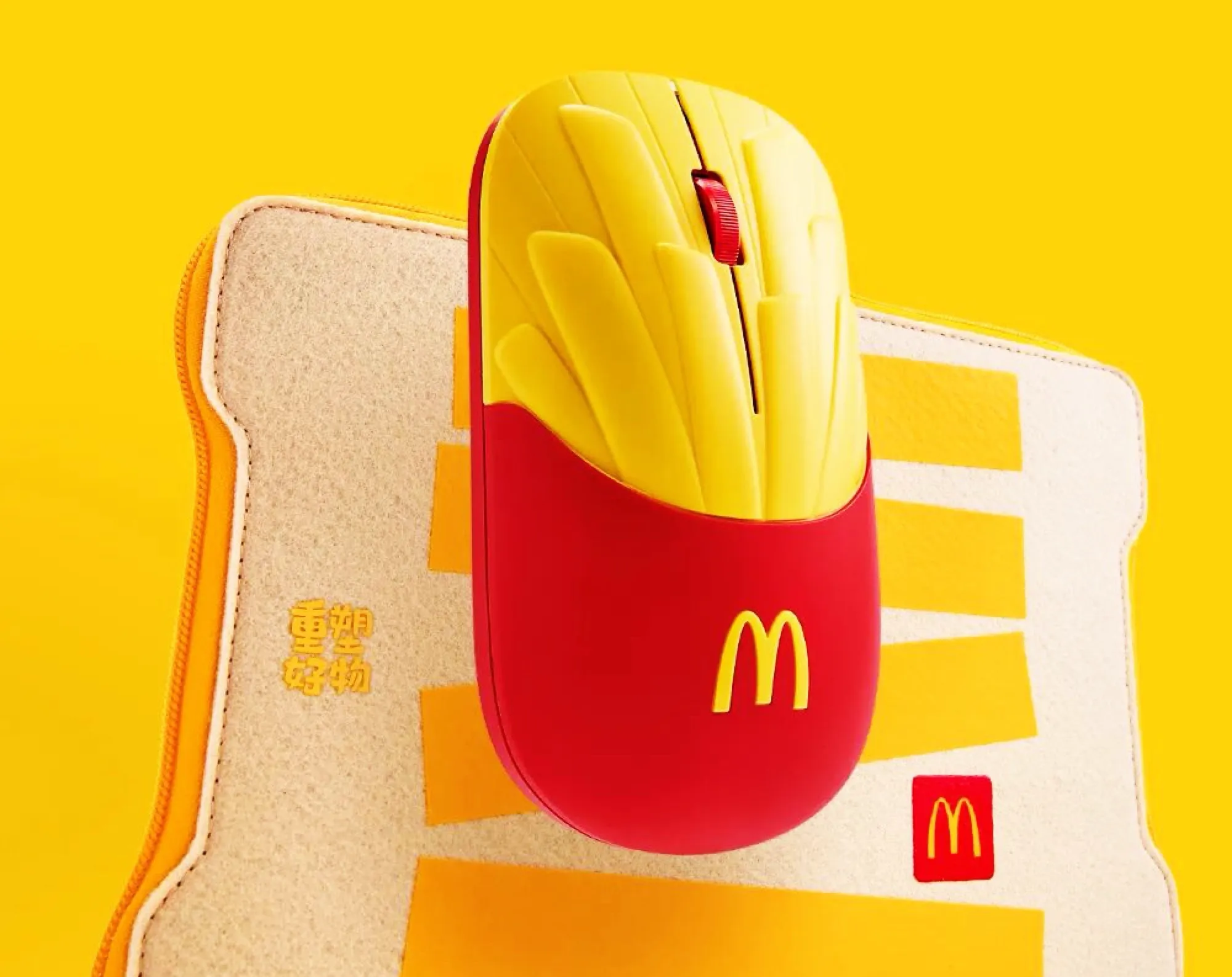
In an unexpected cross-industry collaboration that merges fast-food culture with personal computing hardware, McDonald’s China has teamed up with technology giant Lenovo to unveil a limited-edition peripheral: the McDonald’s Fry Mark wireless mouse. Distinctive not only for its novelty aesthetic modeled after the iconic McDonald’s French fries container, the device marks a notable step in corporate sustainability initiatives. More than 60 percent of the plastic utilized in the construction of its outer casing is derived from recycled, post-consumer Happy Meal toys, reflecting a growing corporate push toward circular economy practices within the consumer goods and technology sectors.
Unveiled as an ultra-exclusive collector’s item, production of the McDonald’s Fry Mark has been strictly capped at 4,000 units globally, heightening its desirability among collectors of branded memorabilia and tech enthusiasts alike. Beyond the unconventional choice of raw materials for the chassis, the project incorporates eco-conscious packaging protocols. McDonald’s confirmed that the peripheral ships inside a dedicated cardboard box completely free of plastic elements, minimizing the carbon footprint associated with unboxing and retail distribution.

Technical Specifications and Versatile Connectivity
Despite its whimsical exterior designed to capture the nostalgic look of fast-food packaging, the Fry Mark functions as a fully capable, modern wireless input device. Lenovo engineered the hardware to support multi-mode connectivity, granting users the flexibility to pair the mouse with computers, tablets, and other compatible systems via standard Bluetooth, a traditional 2.4 GHz USB wireless dongle, or a wired USB connection.
Under the hood, the peripheral is powered by an integrated 380mAh rechargeable battery. Power replenishment is handled through a modern USB Type-C port, aligning with contemporary electronics standards and eliminating the need for disposable alkaline batteries. Furthermore, the retail package includes a thoughtful accessory: a multi-functional fabric pouch designed for portability that can be unzipped and deployed flat as a functional mouse pad.
Strategic Context and Corporate Sustainability Goals
The launch of the Fry Mark mouse aligns with broader corporate strategies by both McDonald’s and Lenovo to integrate sustainable materials into mainstream products. In recent years, fast-food corporations have faced mounting regulatory pressure and consumer scrutiny regarding single-use plastics and toy waste generated by children’s meal promotions. By repurposing legacy plastic waste into durable goods, McDonald’s aims to demonstrate viability in upcycling strategies.

Simultaneously, Lenovo continues to expand its portfolio of hardware incorporating post-consumer recycled (PCR) plastics and recycled ocean-bound plastics. While the Fry Mark is primarily a marketing and promotional exercise rather than a flagship enterprise product, it serves as a tangible proof-of-concept for how non-traditional waste streams can be channeled into precision injection-molded tech accessories.
Market Availability and Pricing Strategy
The McDonald’s Fry Mark is currently available exclusively within the Chinese market, rolling out through official promotional channels associated with McDonald’s China. Priced at 99 yuan (approximately $14 USD or £11 GBP), the low price point contrasted sharply with its strict production limit of 4,000 units, driving intense initial demand among digital consumers and collectors.
Industry analysts note that promotional hardware collaborations of this nature are frequently utilized by major brands to drive digital engagement, capture younger demographic cohorts, and reinforce brand loyalty through novelty and scarcity. While widespread global distribution has not been announced by either McDonald’s or Lenovo, the partnership sets a precedent for future cross-sector initiatives involving consumer electronics and food service giants.