The global automotive landscape is currently embroiled in a fierce price war, as legacy manufacturers and emerging electric vehicle (EV) startups vie for dominance in an increasingly saturated market. Amidst this volatile environment, Vietnamese automaker VinFast has charted a distinctive course. Rather than engaging in the industry-wide race to the bottom through aggressive retail discounting, the company has adopted a long-term strategic framework centered on dismantling the psychological and financial barriers to EV adoption. By prioritizing consumer trust and sustainable integration, VinFast is attempting to redefine the relationship between the vehicle, the energy source, and the driver.
This approach represents a paradigm shift. VinFast posits that lower sticker prices alone are insufficient to fundamentally alter consumer behavior. Instead, the company is betting on a model that addresses the primary anxiety associated with electric mobility: the prohibitive cost and longevity of the battery pack.
The Battery Subscription Model: Decoupling Costs
The cornerstone of VinFast’s strategy is the decoupling of the vehicle chassis from its power source. In the traditional automotive model, the battery pack—often accounting for 30% to 40% of the total vehicle manufacturing cost—is bundled into the final price paid by the consumer. VinFast has introduced a subscription-based model that effectively removes this capital-intensive component from the upfront purchase price.
By separating the battery, VinFast has managed to lower the entry barrier for prospective buyers significantly. In the Indonesian market, for instance, this policy allows the VF 3 to be marketed at a competitive price point of approximately Rp156 million, while the VF e34 sees a reduction of roughly Rp112 million compared to a full-ownership equivalent. The subscription fees—ranging from Rp253,000 to Rp1 million monthly—act as an operational expense rather than a capital investment.
Crucially, this model shifts the burden of risk. VinFast assumes the liability for technical maintenance, software updates, and eventual replacement of the battery. This addresses the “range anxiety” and “battery health anxiety” that have historically deterred middle-income consumers from transitioning to electric platforms.
Chronology of Strategy and Market Entry
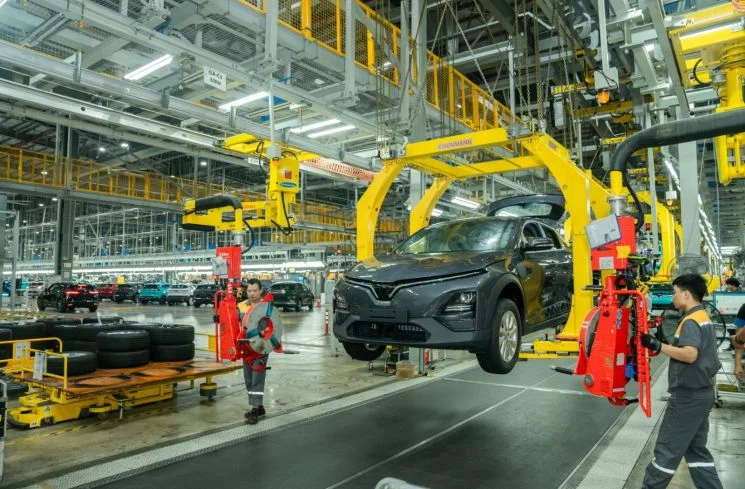
VinFast’s trajectory from a domestic Vietnamese manufacturer to an international player has been rapid. Founded in 2017 as part of the Vingroup conglomerate, the company moved aggressively to establish a fully integrated EV ecosystem.
- 2017–2019: Establishment of the manufacturing hub in Hai Phong, Vietnam, with a focus on internal combustion engine vehicles before pivoting entirely to electrification.
- 2021: Launch of the first dedicated EV models for the domestic market, signaling the beginning of the end for the company’s ICE production.
- 2022: Official announcement of the international expansion strategy, focusing on North America and Southeast Asia, supported by the implementation of the battery subscription program.
- 2024–2025: Market penetration into Southeast Asian nations, including Indonesia, where the company tailored its financial models to suit local credit-based purchasing behaviors.
The decision to introduce the subscription model in emerging markets like Indonesia is calculated. Because the vast majority of vehicle acquisitions in the region are facilitated through credit, reducing the principal loan amount drastically lowers the monthly interest burden. This renders the EV not merely a luxury item for the early-adopter demographic, but a viable economic alternative for the broader middle class.
Ensuring Longevity: The Lifetime Warranty Commitment
To further solidify consumer confidence, VinFast has implemented a robust warranty structure. The company offers a lifetime battery warranty, promising that if the state-of-health (SoH) of the battery drops below 70% of its original capacity, the company will replace or repair the unit at no additional cost to the subscriber.
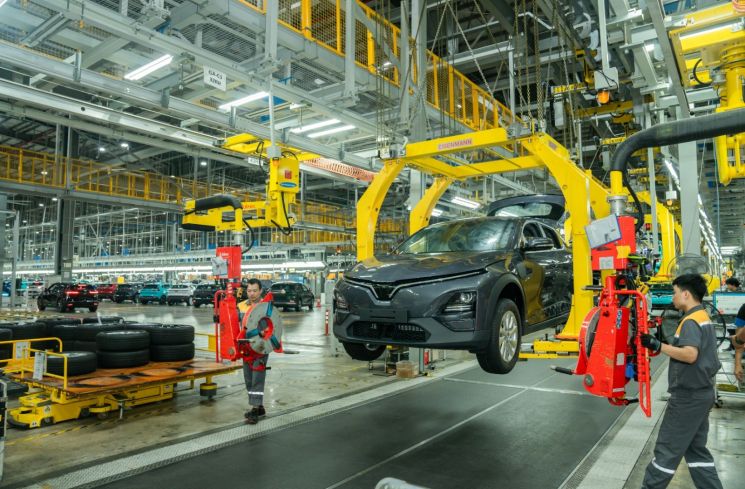
This policy is designed to combat the “residual value” concern. A major criticism of early-generation EVs was the rapid depreciation of the vehicle once the battery began to degrade. By decoupling the battery and guaranteeing its performance, VinFast effectively eliminates the fear of “dead-end” technology. This creates a circular economy where the battery remains the responsibility of the manufacturer, who has the infrastructure to recycle or repurpose the cells, rather than the consumer.
Expert Analysis and Industry Implications
Industry analysts have largely praised the model as a pragmatic solution to the "adoption chasm." Michael Vousden, an automotive analyst at GlobalData, notes that the strategy is fundamentally sound. "The battery is the most complex and expensive component of the vehicle. By stripping this away from the purchase price, VinFast is not just selling a car; they are selling a service. This model lowers the threshold for entry without compromising the quality of the engineering," Vousden explained.
However, the strategy is not without its challenges. Critics have pointed out that the subscription model requires significant capital expenditure on the part of the manufacturer. VinFast must maintain a vast supply chain and service network to manage the battery lifecycle, which could strain resources if the fleet scales faster than the infrastructure.
Moreover, there is the risk of consumer pushback regarding recurring monthly costs. While the upfront price is lower, the total cost of ownership (TCO) must be transparently communicated to ensure that long-term subscribers do not feel penalized compared to those who might prefer a traditional, one-time purchase.
Broader Economic and Environmental Impact
The ripple effects of VinFast’s policy extend beyond mere sales figures. In countries like Indonesia and Thailand, where governments are aggressively promoting the transition to green energy to meet climate targets, such private-sector initiatives are essential.
The integration of EVs into the daily lives of the middle class requires more than just government subsidies. It requires the removal of financial friction. By making the transition an economic choice—saving money on fuel and maintenance while avoiding the high interest rates associated with expensive luxury EVs—VinFast is accelerating the electrification of the regional transport sector.
Furthermore, the focus on sustainable transport is aligned with global supply chain trends. As major automotive markets implement stricter carbon footprint regulations, having a dedicated EV manufacturing base that controls its own battery supply chain—rather than relying solely on third-party suppliers—gives VinFast a strategic advantage.
Conclusion: A New Blueprint for Mobiltiy
VinFast’s approach represents a broader realization within the automotive industry: the era of "selling hardware" is coming to an end, and the era of "selling mobility as a service" is beginning. By treating the consumer as a partner in the transition to clean energy, rather than just a customer at a point-of-sale, the company is attempting to build brand loyalty that is rare in the automotive sector.
As the global market continues to evaluate the effectiveness of the subscription model, VinFast’s performance in Southeast Asia will likely serve as a litmus test. If the company succeeds in maintaining high consumer adoption rates while keeping the cost of battery maintenance manageable, it could set a new industry standard. The future of mobility, in the eyes of VinFast, is not just about the vehicle itself, but about the accessibility, reliability, and long-term peace of mind provided to the driver. Whether this strategy will successfully reshape the industry remains to be seen, but it is undoubtedly one of the most significant experiments in the current automotive landscape.