The Corruption Eradication Commission of the Republic of Indonesia intensified its ongoing financial investigation into regional corruption networks by summoning and questioning Vinna Ledy Anggraheni, a sitting member of the Bengkulu City Regional House of Representatives. The high-profile interrogation took place at the landmark Red and White Building of the anti-corruption agency located in Kuningan, South Jakarta. Investigators focused heavily on untangling a complex web of alleged asset concealment, luxury acquisitions, and financial flows connected to a broader municipal and regency-level graft scheme.
The inquiry into Councillor Vinna Ledy Anggraheni functions as a critical evidentiary extension of a major corruption investigation that previously ensnared former Rejang Lebong Regent, M. Fikri Thobari. As anti-corruption authorities trace the destination of illicit funds, public funds, and unauthorized kickbacks, the trail of financial evidence has increasingly pointed toward interconnected political figures and regional elites. By scrutinizing the acquisition timelines and ownership structures of high-value properties, federal investigators aim to establish whether municipal legislative power was leveraged to secure private wealth and luxury assets through third-party intermediaries.
Background Context and the Origin of the Investigation
The legal proceedings involving Vinna Ledy Anggraheni do not exist in a vacuum; rather, they represent the latest chapter in a sweeping anti-graft crackdown targeting regional governance within Bengkulu Province. Over recent years, federal law enforcement agencies have intensified their scrutiny of municipal and regency administrations across Sumatra, driven by persistent reports of procurement irregularities, budget leakages, and illicit fee-collection practices tied to infrastructure projects and bureaucratic appointments.
The epicenter of this specific investigative wave was the corruption case implicating M. Fikri Thobari during his tenure as the Regent of Rejang Lebong. As anti-graft detectives dismantled the operational network of the former regent, forensic accountants and financial intelligence units uncovered sophisticated money-laundering techniques. These methods routinely involved utilizing nominal holders, corporate shells, and personal associates to purchase high-value movable and immovable assets, effectively shielding ill-gotten gains from public asset declaration mandates and tax authorities.
As the inquiry expanded beyond the immediate executive branch of Rejang Lebong into neighboring jurisdictions like Bengkulu City, investigators identified financial intersections between regional bureaucrats, legislative actors, and private-sector contractors. Councillor Vinna Ledy Anggraheni emerged as a person of interest as investigators cross-referenced real estate registries, vehicle registration databases, and corporate beneficial ownership filings. The anti-corruption agency’s intelligence apparatus flagged several high-value transactions involving luxury properties and premium automobiles that appeared incongruous with the official declared income of a municipal legislator.
Chronology of the Investigative Steps
The legal pressure surrounding Vinna Ledy Anggraheni escalated systematically over several months leading up to her formal examination at the KPK headquarters.
Phase One: Financial Intelligence Gathering and Asset Mapping
Months prior to the public summons, financial investigators deployed forensic auditing tools to analyze suspicious transaction reports forwarded by the Indonesian Financial Transaction Reports and Analysis Center. The data highlighted anomalous cash inflows and high-value asset transfers linked to individuals within the Bengkulu political sphere. During this preliminary phase, anti-graft analysts mapped out a network of connections linking regional political figures to private entrepreneurs.
Phase Two: Identification of Third-Party Facilitators
Investigators zeroed in on transactions involving Eno Bowo Susilo, a prominent regional businessman whose commercial activities frequently intersected with municipal and regency public works projects. Financial traces suggested that a series of high-value asset transfers—including upscale residential properties and luxury automobiles—were facilitated through this business entity. The ultimate beneficial ownership of these assets became the central puzzle for federal investigators.
Phase Three: Execution of Preliminary Asset Seizures
Armed with sufficient preliminary evidence indicating that certain luxury holdings were purchased using proceeds from alleged corruption and gratuity schemes, the anti-graft commission executed targeted asset seizures. Properties and vehicles suspected of representing laundered bribe money or illicit gifts were placed under legal attachment, preventing their sale, transfer, or encumbrance while judicial procedures progressed.
Phase Four: Formal Interrogation of the Witness
The culmination of these investigative milestones occurred with the formal summoning of Vinna Ledy Anggraheni under witness status. The closed-door session at the Red and White Building was designed to confront the legislator with documentary evidence, bank records, and witness testimonies detailing the acquisition of the contested assets. The objective was to secure her official account regarding the ownership, financing, and intended use of the properties in question.
Detailed Scope of the KPK Inquiry
During the rigorous examination session, federal investigators pressed the Bengkulu City councillor regarding the specifics of her asset portfolio. According to statements released by the anti-graft agency’s leadership, the questioning went far beyond routine administrative compliance, probing deep into the mechanics of alleged gratuity acceptance.
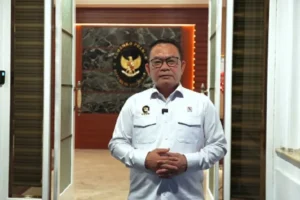
Budi Prasetyo, serving as the official spokesperson for the commission, provided clarity to the press corps regarding the focal points of the interrogation. He emphasized that the primary objective was to trace the origin and legitimate justification behind the accumulation of specific high-ticket items.
"For Sister VLA, she attended and was thoroughly questioned during today’s examination centering around assets allegedly received by Sister VLA from other parties," Budi stated to journalists gathered outside the interrogation rooms.
Investigators specifically sought to determine the nature of the relationship between the legislator and Eno Bowo Susilo, the businessman suspected of acting as a conduit or benefactor in the asset transfer scheme. The inquiry examined whether the luxury apartment units and high-end motor vehicles identified by investigators constituted direct quid-pro-quo payments for political influence, legislative facilitation, or administrative favors granted within the Bengkulu municipal government ecosystem.
Furthermore, the statutory scope of the investigation encompasses the broader definition of gratuities under national anti-corruption legislation. Public officials are legally prohibited from accepting gifts, facilities, or financial advantages that could compromise their impartiality or create conflicts of interest. The commission is actively evaluating whether Vinna Ledy Anggraheni failed to report valuable gifts to the state within the mandatory statutory timeframe, a legal omission that frequently forms the basis of criminal indictments in high-profile public integrity cases.
Official Responses and Witness Demeanor
The contrast between the aggressive pursuit of evidence by federal investigators and the defensive posture of the investigated official defined the public relations landscape surrounding the hearing. While the anti-corruption agency maintained a transparent, communicative stance regarding the legal basis of the inquiry, the subject of the investigation opted for absolute legal silence.
Upon concluding the intensive hours of questioning inside the interrogation suites, Vinna Ledy Anggraheni exited the Red and White Building accompanied by legal counsel or associates. Confronted by a throng of print, broadcast, and digital media journalists seeking immediate reactions to the asset seizures and the substance of the interrogation, the municipal councillor firmly rebuffed all lines of questioning.
Displaying visible frustration with the media presence, she offered a terse dismissal of the inquiries.
"No comment, sorry ya," Vina curtly remarked to reporters before departing the premises.
This refusal to engage with public inquiries stands in sharp contrast to the expectations of transparency placed upon elected public representatives facing serious allegations of financial impropriety. Legal analysts point out that while witnesses retain the constitutional right to remain silent before investigators or the press to avoid self-incrimination, a complete lack of public communication can exacerbate reputational damage and fuel public skepticism regarding the integrity of local legislative bodies.
Meanwhile, representatives from the anti-corruption agency reaffirmed their institutional commitment to following the evidence wherever it leads, regardless of the political affiliation or public status of the individuals involved. The commission underscored that asset tracing remains a cornerstone of modern anti-corruption enforcement, designed not only to secure punitive convictions but also to recover state losses and strip perpetrators of their ill-gotten wealth.
Broader Implications for Regional Governance and Anti-Graft Enforcement
The unfolding case involving Vinna Ledy Anggraheni and the broader Rejang Lebong network carries profound implications for the state of regional governance and political integrity in Indonesia. It highlights systemic vulnerabilities within decentralized administrative structures, where local legislative and executive bodies can sometimes operate as closed networks insulated from effective horizontal oversight.
-
Systemic Risks in Public-Private Intersections
The involvement of business figures like Eno Bowo Susilo underscores the persistent risk of regulatory capture and illicit clientelism at the local level. When municipal officials develop financial dependencies on private contractors, public procurement processes—ranging from municipal infrastructure to social assistance programs—are frequently compromised. This dynamic not only inflates project costs and degrades public service delivery but also diverts public resources away from essential community development. -
Enhanced Scrutiny of Lifestyle Versus Income
The utilization of advanced asset-tracing techniques by federal authorities sends a stern warning to public officials across the archipelago. The era in which illegally acquired wealth could be easily hidden behind third-party nominees, corporate shells, or luxury consumer goods is rapidly drawing to a close. Financial intelligence sharing between banking institutions, tax authorities, and anti-corruption investigators has made lifestyle discrepancies a primary red flag for criminal inquiries. -
Erosion of Public Trust in Local Legislatures
Incidents of this magnitude deal severe blows to public confidence in grassroots democracy. Regional legislative councils are constitutionally mandated to act as checks and balances against executive overreach, representing the interests of local constituents with honesty and diligence. When elected councillors become entangled in corruption and unexplained wealth scandals, public cynicism deepens, threatening the foundational legitimacy of democratic institutions at the municipal level. -
Future Trajectory of the Bengkulu Investigation
As the investigation progresses, legal observers anticipate further witness summonses, additional asset attachments, and potential expansions of formal suspect lists. The anti-corruption commission has made it clear that the net will widen as forensic accountants analyze the digital and paper trails uncovered during the current phase of the probe. Whether these investigative steps will culminate in formal indictments and subsequent judicial trials remains to be seen, but the institutional momentum behind the inquiry indicates that federal authorities are determined to dismantle the entire network systematically.