
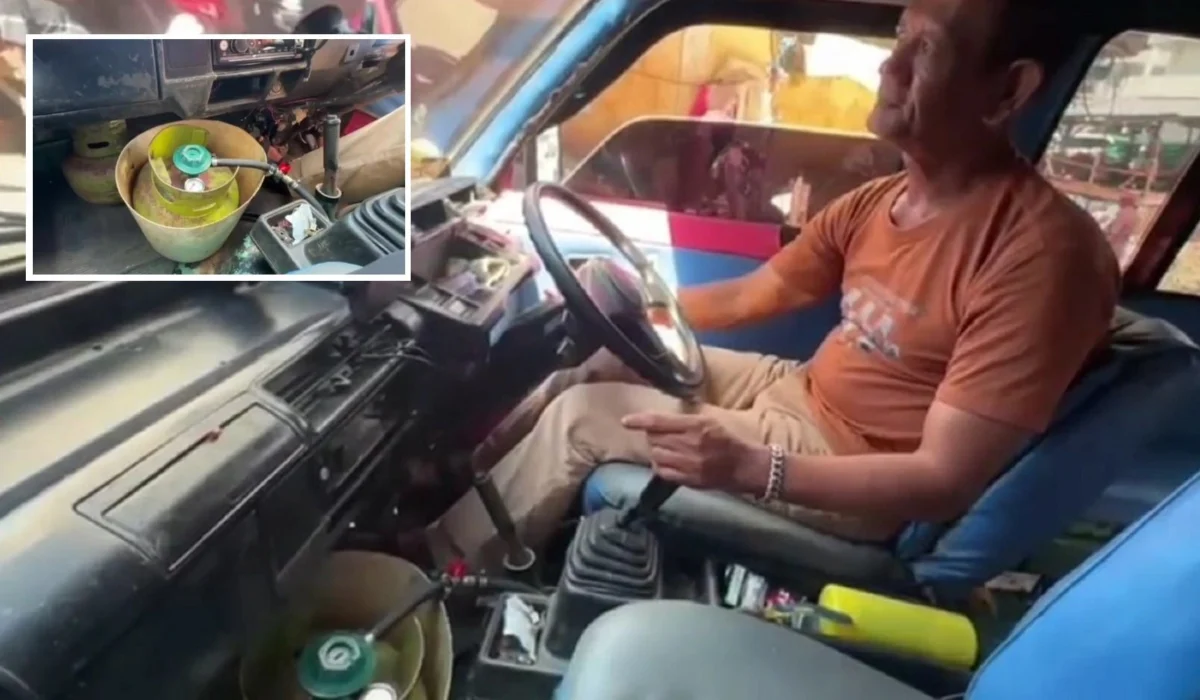
A remarkable innovation is circulating the streets of Sukabumi, West Java, as a local public minivan, or angkot, has been ingeniously modified to run on Liquefied Petroleum Gas (LPG) instead of traditional gasoline. This pioneering initiative by a dedicated driver aims to mitigate the persistent pressure of escalating operational expenses, a challenge faced by many in the public transportation sector.
Visually, the angkot, which serves the Sukaraja-Sukabumi City route, presents no outward distinction from its conventional counterparts. Its exterior appearance and engine acoustics remain unchanged, offering no immediate clue to its alternative fuel source. However, beneath the unassuming facade lies a significant technological adaptation: the vehicle is now primarily powered by 3-kilogram LPG canisters, commonly known as "gas melon" due to their distinctive green color and widespread availability for domestic use. Two such canisters are strategically installed beneath the dashboard, providing the necessary energy to propel the engine.
The driver behind this transformative change, Hendra Irawan, explained that his decision was influenced by observing fellow professional drivers who had already experimented with LPG as a fuel. Witnessing their positive experiences and proven cost-effectiveness, Hendra decided to adopt the modification for his own vehicle. This move reflects a growing trend among small-scale transportation providers to seek out more economical and sustainable fuel solutions in the face of fluctuating fuel prices and economic pressures.
In terms of daily operation, the modified angkot consumes approximately two 3-kilogram LPG canisters. Each canister is reported to be sufficient for four round trips, a metric that underscores the significant cost savings compared to gasoline. While the exact cost difference between LPG and gasoline per kilometer or per trip is not explicitly detailed in the initial report, the driver’s satisfaction and the adoption of this method by others strongly suggest a substantial economic advantage. This efficiency is crucial for drivers operating on tight margins, where every Rupiah saved directly impacts their livelihood.
Background and Context: The Angkot Ecosystem in Indonesia
The angkot is an integral part of Indonesia’s public transportation network, particularly in urban and suburban areas. These minibuses, often colorfully decorated, provide affordable and accessible transport for millions of Indonesians daily. However, the sector is often characterized by informal operations, a high degree of competition, and vulnerability to external economic factors, most notably fuel prices.
The Indonesian government has historically provided fuel subsidies, but these have been subject to periodic adjustments and reductions, leading to price increases that disproportionately affect public transport operators. The rising cost of living and operational overheads, including maintenance and spare parts, further squeeze the profitability of angkot drivers. In this context, innovative solutions like Hendra Irawan’s LPG conversion are not just about personal cost-saving but also represent a form of grassroots resilience and adaptation within the sector.
The Mechanics of the Conversion
While the original article does not delve into the intricate technical details of the LPG conversion, it is understood that such modifications typically involve the installation of a specialized conversion kit. This kit allows the engine to run on either gasoline or LPG, often with a switch that enables the driver to select the preferred fuel source. The system involves regulators, mixers, and storage tanks for the LPG. The placement of the LPG canisters beneath the dashboard, as described, suggests a compact and integrated system designed to minimize disruption to passenger space.

The safety and legality of such modifications are crucial considerations. Reputable conversion kits are designed to meet safety standards, and in many regions, such modifications require inspection and certification by relevant authorities to ensure roadworthiness and environmental compliance. The fact that Hendra’s angkot is actively operating on public roads implies that some level of compliance or acceptance for this type of conversion exists within Sukabumi’s regulatory framework, or that the modification has been implemented with adherence to established safety protocols for LPG usage.
Potential Benefits and Implications
The widespread adoption of LPG-powered angkots could have several significant implications:
- Economic Relief for Drivers: The most immediate benefit is the reduction in fuel expenditure. This can lead to increased take-home pay for drivers, improved financial stability, and potentially lower fares for passengers, making public transport more affordable.
- Environmental Considerations: LPG is generally considered a cleaner-burning fuel than gasoline, producing fewer emissions of certain pollutants. A broader shift could contribute to improved air quality in urban areas, reducing the overall environmental impact of public transportation. However, a comprehensive life-cycle analysis would be needed to fully assess the environmental benefits.
- Energy Diversification: Utilizing LPG, which is often derived from natural gas production or petroleum refining, contributes to a more diversified energy mix for transportation, reducing reliance on a single fuel source.
- Technological Advancement and Adoption: This initiative highlights the ingenuity of local mechanics and drivers in adapting existing technology to meet their specific needs. It could spur further innovation and the development of more accessible and affordable alternative fuel solutions for the public transportation sector.
Challenges and Future Outlook
Despite the promising aspects, challenges remain. The availability and cost of LPG canisters, while currently favorable, could fluctuate. The long-term durability and maintenance requirements of converted engines also need to be considered. Furthermore, ensuring the safety and regulatory compliance of all such modifications across the country would be a significant undertaking for transportation authorities.

The incident in Sukabumi serves as a compelling case study of how pragmatic innovation can address pressing economic challenges. As fuel costs continue to be a significant factor in the lives of public transport operators, it is likely that more drivers will explore and adopt similar solutions. The trend could gain momentum, potentially influencing policy discussions around alternative fuels for public transportation in Indonesia.
The story of Hendra Irawan and his LPG-powered angkot is a testament to the resilience and adaptability of individuals striving to make a living in a dynamic economic landscape. It underscores the importance of supporting and understanding such grassroots innovations that not only benefit the individuals involved but also hold the potential for broader societal and environmental advantages. Further developments in this area will be keenly watched as Indonesia navigates the complexities of energy security, economic sustainability, and environmental responsibility in its public transportation sector. The question remains whether this localized innovation will become a widespread movement, transforming the way public transport operates across the archipelago.
