
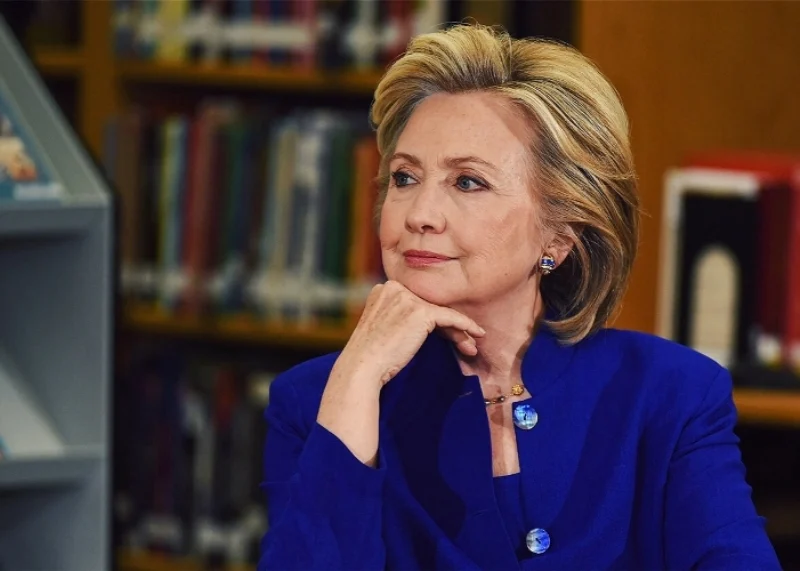
Hillary Rodham Clinton, born on October 26, 1947, in Chicago, Illinois, has carved an indelible mark on the American political landscape. Her journey, marked by significant achievements and notable setbacks, offers a compelling narrative of ambition, resilience, and the evolving role of women in public service. Her legal education at Yale Law School not only provided her with the foundational skills for a distinguished career but also served as the venue where she met Bill Clinton, who would become her husband and, eventually, the 42nd President of the United States.
From First Lady to Senator: Laying the Groundwork
During Bill Clinton’s presidency from 1993 to 2001, Hillary Clinton served as First Lady, a role she redefined by actively engaging in policy initiatives, most notably her advocacy for healthcare reform with the Health Insurance Portability and Accountability Act (HIPAA) and the Children’s Health Insurance Program (CHIP). These endeavors, while facing considerable political opposition, showcased her commitment to public service and her capacity to navigate the complex machinery of Washington D.C.
A pivotal moment in her independent political career arrived in 1998. Following the resignation of Senator Daniel Patrick Moynihan, a prominent figure in the Democratic Party, Hillary Clinton was urged by party officials to consider filling the vacant seat representing New York. This suggestion marked a significant departure from the traditional role of a First Lady and signaled her burgeoning political aspirations. In 2000, she was elected as the Senator for New York, becoming the first former First Lady to win elected office. She served two terms, from 2001 to 2009, during which she focused on issues such as national security, economic development, and healthcare. Her senatorial tenure provided her with invaluable legislative experience and solidified her national political profile.
The Presidential Ambitions: A Historic Campaign
By early 2007, while still serving as a Senator, Hillary Clinton made the momentous announcement of her candidacy for the U.S. Presidency. This campaign was historic on multiple fronts, positioning her as a leading contender for the Democratic nomination and raising the prospect of the United States electing its first female president. Her platform emphasized experience, a steady hand in foreign policy, and a commitment to expanding access to healthcare and education.
The Democratic primaries of 2008 were fiercely contested. Clinton faced a formidable challenge from then-Senator Barack Obama, whose message of hope and change resonated deeply with a significant portion of the electorate. The primary battles were intense, characterized by detailed policy debates and contrasting leadership styles. Ultimately, on June 7, 2008, Hillary Clinton suspended her presidential campaign, endorsing Barack Obama and urging her supporters to rally behind him. This decision, while a personal disappointment, demonstrated her commitment to party unity and paved the way for Obama’s eventual victory in the general election.

Secretary of State: Navigating Global Diplomacy
Upon Barack Obama’s election as President in 2008, he recognized Hillary Clinton’s extensive experience and formidable diplomatic skills. In January 2009, she was appointed as the 67th United States Secretary of State. This role placed her at the forefront of American foreign policy for four years, from 2009 to 2013. During her tenure, she traveled extensively, visiting over 100 countries, and played a key role in managing complex international relations, including navigating the Arab Spring uprisings, overseeing the withdrawal of troops from Iraq, and engaging in diplomatic efforts related to Iran’s nuclear program. Her leadership as Secretary of State was widely acknowledged for its energy and effectiveness, further bolstering her credentials as a seasoned stateswoman.
The 2016 Presidential Election: A Landmark Contention
Following her service as Secretary of State, Hillary Clinton again set her sights on the presidency, announcing her candidacy for the 2016 election. This campaign was historic as she became the first woman to secure the presidential nomination of a major party. Her Republican opponent was businessman Donald Trump. The election cycle was marked by intense media scrutiny, divisive rhetoric, and a stark contrast in political ideologies.
Clinton’s campaign focused on themes of inclusivity, economic opportunity, and a continuation of Obama’s policies, while Trump’s campaign centered on an "America First" agenda, immigration reform, and a critique of established political norms. The election saw unprecedented levels of voter engagement and, unfortunately, polarization.
On November 8, 2016, the election results delivered a surprising outcome. Despite winning the popular vote by nearly three million votes, Hillary Clinton did not secure enough electoral votes to win the presidency, ultimately losing to Donald Trump. This outcome was a profound disappointment for her supporters and marked a significant moment in American electoral history, highlighting the complexities of the Electoral College system and the deep divisions within the nation.
Post-Election Life and Continued Influence
Following the 2016 election, Hillary Clinton remained an active voice in public discourse. She has continued to engage in political advocacy, particularly concerning women’s rights and democratic values. Her extensive memoir, "What Happened," published in 2017, offered a candid reflection on her 2016 campaign and her perspectives on the political landscape. She has also been involved in various initiatives aimed at empowering women in politics and promoting civic engagement.
Hillary Clinton’s political career, spanning decades, is a testament to her unwavering commitment to public service and her profound impact on American governance. From her early advocacy as First Lady to her historic presidential campaigns and her impactful tenure as Secretary of State, she has consistently pushed boundaries and challenged traditional expectations. Her story is a crucial chapter in the ongoing evolution of American democracy and the increasing participation of women in the highest echelons of power. Her influence, though no longer holding elected office, continues to be felt through her continued engagement in political dialogue and her advocacy for causes she holds dear.
