
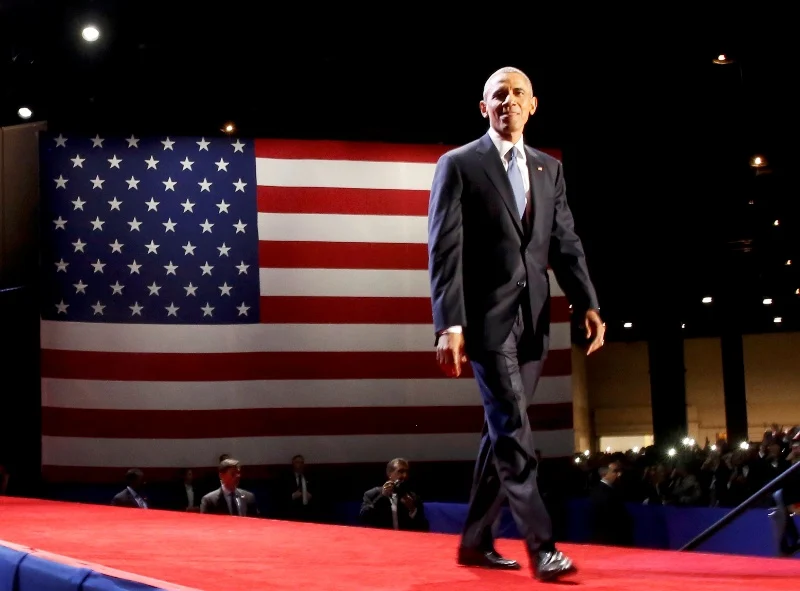
Barack Hussein Obama, the 44th President of the United States, embarked on a life path that would ultimately lead him to the highest office in the nation, a journey marked by a unique multicultural upbringing, a commitment to community service, and a burgeoning political career that captivated the world. Born in Honolulu, Hawaii, on August 4, 1961, Obama’s lineage reflected a global tapestry. His father, Barack Obama Sr., hailed from Kenya, while his mother, Ann Dunham, was an American from Wichita, Kansas. This international heritage would later shape his perspective and influence his approach to domestic and foreign policy.
Obama’s early childhood was not solely confined to the shores of Hawaii. Due to his mother’s marriage to Lolo Soetoro, an Indonesian businessman, young Barack, often affectionately called "Barry," spent several formative years in Jakarta, Indonesia. From approximately 1967 to 1971, he resided in the Menteng district of Central Jakarta. This period provided him with firsthand experience of a different culture and way of life, a contrast to his Hawaiian upbringing. His primary education in Jakarta included attendance at two local schools: Santo Fransiskus Asisi Catholic School for two years and SDN 01 Menteng for a year and a half. These early educational experiences, immersed in a non-Western environment, undoubtedly contributed to his broad worldview and his later emphasis on diplomacy and international understanding.
In 1971, at the age of ten, Obama returned to Honolulu, Hawaii. He lived with his maternal grandparents, Stanley and Madelyn Dunham, who played a crucial role in his upbringing and education. His grandfather, a World War II veteran, instilled in him a sense of discipline and duty, while his grandmother, who worked in a bank and later in the oil industry, provided a stable and nurturing environment. It was during this period that Obama attended Punahou School, a prestigious preparatory school in Honolulu. Thanks to a scholarship, he completed his education there, graduating from high school in 1979. His academic prowess was evident, laying the groundwork for his future intellectual pursuits.
Higher Education and Early Career in Public Service
Following his graduation from Punahou, Obama’s educational journey took him to the mainland United States. He enrolled at Occidental College in Los Angeles, California, in 1979, where he pursued his undergraduate studies for two years. It was at Occidental that he began to engage more deeply with political and social issues. In 1981, he transferred to Columbia University in New York City, a decision that would further shape his intellectual and professional trajectory. Graduating in 1983, he earned a Bachelor of Arts degree in political science with a specialization in international relations.
After completing his degree, Obama spent two years working in the private sector. However, his true calling lay in public service. In 1985, he moved to Chicago, Illinois, a city that would become his political home. There, he took on the role of a community organizer, working with a coalition of churches to address the social and economic fallout from the closure of a local steel plant. This experience was profoundly impactful, exposing him to the challenges faced by working-class communities and solidifying his commitment to social justice and urban development. He helped to revitalize struggling neighborhoods, working directly with residents to identify and implement solutions to their problems.
His desire for deeper understanding and a platform to effect change led him to pursue a legal education. In 1988, Obama enrolled at Harvard Law School. His time at Harvard was marked by significant academic achievement and leadership. He was elected the first African American president of the Harvard Law Review, a testament to his intellectual capabilities and his ability to garner respect among his peers. During his tenure as editor, he focused on issues of civil rights and racial justice, further honing his analytical and persuasive skills.
Building a Life and a Political Foundation in Chicago
Before graduating from Harvard Law School in 1991, Obama returned to Chicago. He dedicated himself to community activism and continued his work in voter registration drives, encouraging civic participation among marginalized communities. He also began teaching constitutional law as a senior lecturer at the University of Chicago Law School, sharing his knowledge and inspiring future generations of legal scholars and practitioners. His continued involvement in his community church further cemented his roots in Chicago.
It was in Chicago that Obama met Michelle LaVaughn Robinson, a fellow lawyer. Their professional paths crossed when Michelle was assigned as Obama’s mentor at the law firm of Sidley Austin. Their initial professional relationship blossomed into a deep personal connection. They married on October 3, 1992, embarking on a partnership that would become a cornerstone of his public life. The Obamas were blessed with two daughters: Malia Ann, born in 1998, and Natasha (Sasha), born in 2001. His family life provided him with a grounding influence and a constant reminder of the stakes involved in his political aspirations.
Entry into Politics and a Rise to National Prominence
Barack Obama’s formal entry into the political arena began in 1996 when he successfully ran for a seat in the Illinois State Senate representing the 13th District. As a state senator, he focused on legislative initiatives aimed at improving access to healthcare and early childhood education for low-income residents of Illinois. His pragmatic approach and his ability to build consensus among diverse political factions quickly earned him a reputation as an effective and thoughtful legislator. He championed policies that aimed to uplift underserved communities and create opportunities for all.
In 2000, Obama made his first bid for national office, seeking a seat in the U.S. House of Representatives. Although he was unsuccessful in this initial attempt, losing to incumbent Bobby Rush, the experience provided him with valuable insights into the complexities of federal politics. Undeterred, he continued to build his political network and refine his message. In 2002, he formed a campaign committee and began laying the groundwork for a run for the U.S. Senate. With the strategic guidance of renowned political consultant David Axelrod, Obama launched his campaign for the U.S. Senate seat in Illinois in 2004.
His campaign gained significant traction, and he secured a decisive victory in the Democratic primary. The year 2004 proved to be a pivotal moment in his ascent. He was invited to deliver the keynote address at the Democratic National Convention (DNC) in Boston, a platform typically reserved for rising stars within the party. In his eloquent and inspiring speech, Obama articulated a vision of unity and hope, emphasizing the need for Americans to come together despite their differences. His powerful oratory and his message of "change we can believe in" resonated deeply with audiences across the nation, propelling him into the national spotlight. He underscored the idea that the American story was one of shared aspirations and collective progress, a theme that would define his presidential campaign.
The Path to the Presidency
Obama’s victory in the 2004 Senate election was a resounding success, making him the first African American to represent Illinois in the U.S. Senate. His tenure as a U.S. Senator was characterized by a commitment to bipartisanship and a focus on issues such as combating climate change, improving public education, and promoting ethical government. He quickly established himself as a national figure, known for his intellectual rigor and his calm demeanor.
In February 2007, Obama officially announced his candidacy for the Democratic nomination for President of the United States. His campaign, built on a platform of hope, change, and a rejection of partisan gridlock, captured the imagination of millions. He faced a formidable primary opponent in Hillary Rodham Clinton, but his grassroots organizing, his compelling message, and his ability to connect with voters on a personal level ultimately led him to victory.
The 2008 presidential election was a historic contest. Obama’s opponent was Republican Senator John McCain. The campaign addressed critical issues such as the ongoing wars in Iraq and Afghanistan, the global financial crisis, and the need for healthcare reform. Obama’s message of hope and his call for a new direction for America resonated strongly with a diverse electorate. On November 4, 2008, Barack Obama was elected the 44th President of the United States, making him the first African American to hold the nation’s highest office. This landmark achievement was a culmination of his extraordinary life journey, a testament to the enduring ideals of American democracy, and a moment of profound historical significance for the nation and the world. His victory was celebrated not only in the United States but also globally, seen as a powerful symbol of progress and possibility. The election marked a turning point in American history, breaking racial barriers and inspiring a new generation of leaders and citizens.
