
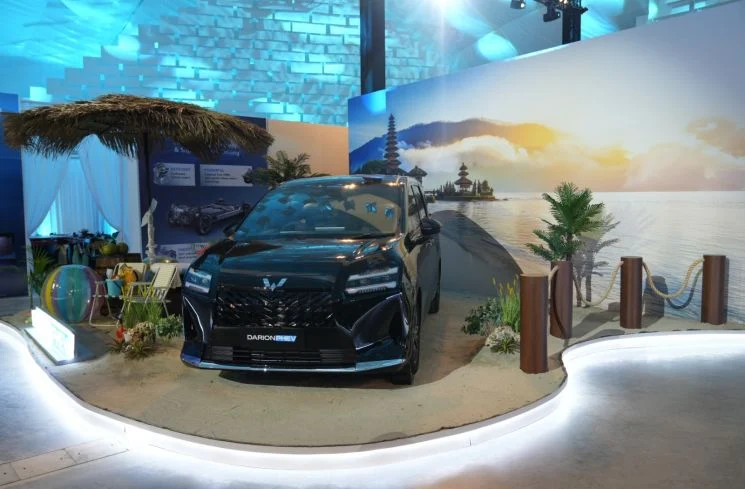
Following its official market launch, Wuling Motors has continued its aggressive product offensive by hosting a comprehensive media briefing to unveil the detailed specifications of the Wuling Darion. This innovative family vehicle, designed to cater to the diverse needs of modern households, will be available in both fully electric (EV) and plug-in hybrid electric vehicle (PHEV) configurations, marking a significant step for the Indonesian automotive market and Wuling’s commitment to electrification.
The media briefing, held on Wednesday, November 5, 2025, provided an in-depth look at the technological advancements and feature sets across the Darion’s different variants. Aji Ibrahim, Product Planning at Wuling Motors, elaborated on the strategic positioning of the new model, stating, "The Wuling Darion is being marketed with both EV and PHEV options, and within each powertrain type, there are two trim levels: CE and EX. Both the CE and EX trims share a similar design concept for their exterior, interior, and dimensions. These two trims are presented to offer consumers flexibility in meeting their family’s mobility needs." This dual-powertrain strategy underscores Wuling’s understanding of the evolving consumer preferences and the varying infrastructure readiness for electric vehicles across different regions.
A Foundation of Comfort and Space
The Wuling Darion boasts impressive dimensions, measuring 4,910 mm in length, 1,870 mm in width, and 1,770 mm in height, with a substantial wheelbase of 2,910 mm. These generous proportions translate into an ergonomically designed seven-passenger cabin, prioritizing comfort and practicality for families. The vehicle’s underpinnings feature a robust braking system with front and rear disc brakes, complemented by a McPherson strut suspension at the front and a multi-link independent suspension at the rear, engineered to ensure a smooth and secure ride.
Visually, the Darion exudes a modern aesthetic with 17-inch machined alloy wheels shod with 215/55 R17 tires. The inclusion of Electric Power Steering (EPS) promises a light and responsive driving experience, crucial for maneuverability in various driving conditions.
Electrified Performance: Catering to Diverse Needs
Wuling’s commitment to sustainable mobility is evident in the Darion’s powertrain options.
Wuling Darion EV
The fully electric Darion EV is equipped with a potent electric motor generating 150 kW of power (equivalent to 201 horsepower) and a robust 310 Nm of torque, driving the front wheels. Energy is supplied by a substantial 69.2 kWh Lithium Iron Phosphate (LFP) battery, offering a claimed pure electric range of up to 540 kilometers on the CLTC (China Light-Duty Vehicle Test Cycle) standard. This range is competitive within its segment and addresses range anxiety for many potential buyers considering an EV for daily commuting and longer journeys.
Wuling Darion PHEV
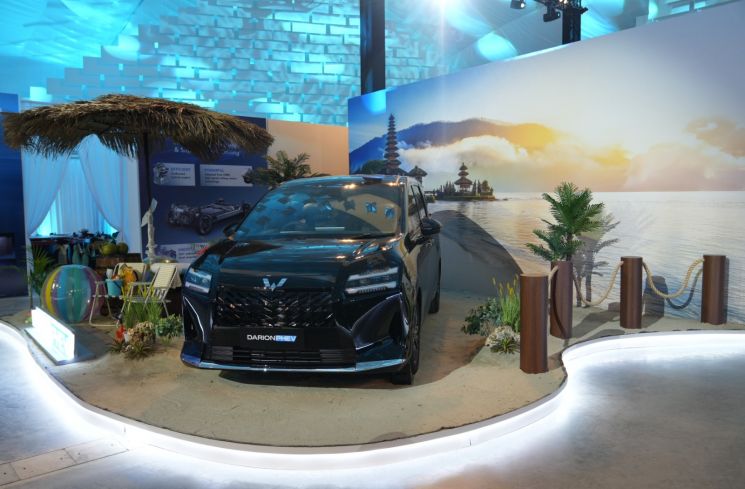
For those seeking a balance between electric efficiency and the convenience of traditional refueling, the Darion PHEV presents a compelling solution. It integrates a 1.490cc naturally aspirated Atkinson cycle gasoline engine with an electric motor. The electric motor delivers 145 kW of power (195 horsepower) and 230 Nm of torque, while the internal combustion engine contributes 105 horsepower and 130 Nm of torque. This hybrid system is managed by a Dedicated Hybrid Transmission (DHT). The PHEV variant is powered by a 20.5 kWh battery, providing a pure electric driving range of up to 125 kilometers (CLTC). This allows for emission-free urban driving for most daily commutes, with the gasoline engine ready to take over for longer trips or when charging is not readily available. The PHEV is also equipped with a 52-liter fuel tank, offering a combined range that significantly alleviates concerns about long-distance travel.
The CLTC standard, while not universally adopted, provides a benchmark for estimating electric vehicle range under specific testing conditions. It is important for consumers to note that real-world range can vary based on driving style, environmental conditions, and vehicle load.
Family-Centric Features for Enhanced Convenience
Beyond its powertrain options, the Wuling Darion is replete with practical features designed to simplify family life. The Smart Electric Tailgate, for instance, offers four different methods of operation, adding a layer of convenience when hands are full. Similarly, the Electric Sunroof can be controlled via three distinct methods. Perhaps most impressively, the Autocomfort Sliding Door boasts five different operational methods, ensuring effortless entry and exit for all passengers, a feature particularly beneficial for families with young children or elderly passengers.
A Spacious and Versatile Interior
The interior of the Darion is meticulously crafted to maximize passenger comfort and utility. It features a spacious 2+2+3 seating configuration, providing ample room for up to seven occupants. The second-row seats offer a generous 230 mm of fore-aft adjustment and can be reclined up to 180 degrees, allowing for a lounge-like experience or creating additional cargo space when needed. The cabin height exceeds 1,200 mm, offering excellent headroom and a sense of airiness. The third-row seats are designed for comfort on longer journeys, with a reclining angle of 127 degrees and ergonomically shaped cushions for both length and width.
A Technological Hub for the Modern Family
At the heart of the Darion’s interior experience is a 12.8-inch intuitive touchscreen infotainment system. This central command unit controls a wide array of vehicle functions, including lighting, sound system, climate control, driving assistance features, energy management, and access to various applications. The system’s integration with Wuling’s IoV (Internet of Vehicle) technology allows for remote control and monitoring of certain vehicle functions via a smartphone app, adding another layer of convenience and security.
The interior design across all Darion variants, including both EV and PHEV CE and EX trims, exudes a sense of premium sophistication. It features a tasteful combination of Walnut Brown and Carbon Black accents, complemented by captain seats upholstered in synthetic leather. A multi-function leather-wrapped steering wheel and soft-touch interior panels further enhance the cabin’s upscale ambiance.
Strategic Implications for the Indonesian Market
The introduction of the Wuling Darion with its dual EV and PHEV offerings signifies a strategic move by Wuling to capture a significant share of the burgeoning family car segment in Indonesia. By providing consumers with choices that cater to different levels of EV adoption readiness, Wuling is positioning itself as a versatile and forward-thinking automaker. The PHEV option, in particular, serves as an excellent bridge technology, allowing consumers to experience the benefits of electric driving without the immediate constraints of charging infrastructure limitations.
The detailed specifications suggest that Wuling is not only focusing on powertrain diversification but also on delivering a comprehensive package of comfort, technology, and practicality. This approach is crucial for competing effectively in a market where family vehicles are a cornerstone of automotive sales. The competitive pricing, which is expected to be revealed closer to the official market release, will be a key determinant of the Darion’s success. However, based on Wuling’s historical market strategy, it is anticipated that the Darion will offer compelling value for money.
The availability of two trim levels, CE and EX, allows Wuling to cater to a broader spectrum of the market, offering a well-equipped base model and a more feature-rich top-tier variant. This tiered approach is a standard practice that helps maximize sales volume by appealing to different budget constraints and feature preferences.
The Wuling Darion’s entry into the Indonesian market is poised to stimulate competition and accelerate the adoption of electrified vehicles within the family car segment. As consumers increasingly prioritize fuel efficiency, environmental consciousness, and advanced technology, vehicles like the Darion are set to redefine expectations for family mobility. The success of this new model will be closely watched as a barometer for the wider acceptance of EVs and PHEVs in one of Southeast Asia’s largest automotive markets.
