JAKARTA – The Indonesian Ministry of Foreign Affairs (Kemlu RI) has unequivocally stated that the apprehension and subsequent deportation of Abdul Karim Raeq Miqdad, a foreign national identified as a Palestinian citizen, by the National Police (Polri) is a matter purely rooted in criminal law. Vahd Nabyl Achmad Mulachela, Spokesperson for the Ministry of Foreign Affairs, emphasized that this specific legal action bears no relation to, nor does it diminish, Indonesia’s unwavering and long-standing commitment to supporting the Palestinian struggle for independence and self-determination. This clarification serves to reinforce earlier statements made by Coordinating Minister for Legal, Human Rights, Immigration, and Correctional Affairs, Yusril Ihza Mahendra, underscoring a unified governmental stance on the high-profile case.
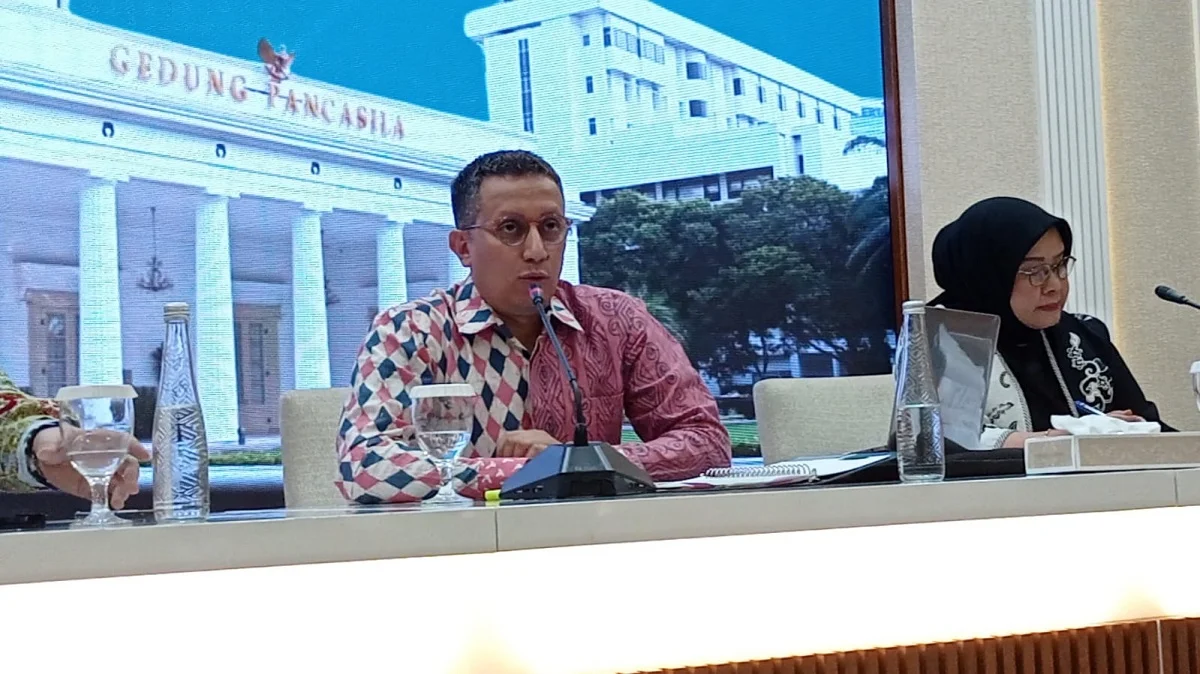
The official clarification from Kemlu comes amid public discourse surrounding the deportation, which some circles initially misconstrued as potentially impacting Indonesia’s steadfast foreign policy regarding Palestine. However, Nabyl firmly articulated the government’s position during a press briefing at the Kemlu office in Jakarta on Thursday, July 23, 2026. "As has already been conveyed by Mr. Menko Yusril (Coordinating Minister for Legal, Human Rights, Immigration, and Correctional Affairs, Yusril Ihza Mahendra), this issue is purely a criminal matter and is not related to our relationship with Palestine," Nabyl stated, leaving no room for ambiguity. He further elaborated that Indonesia’s stance on supporting the Palestinian people’s struggle remains robust and unaltered. "And we know that Indonesia’s attitude in supporting the Palestinian struggle has not changed. As the focal point ministry handling this matter, Mr. Menko has provided a sufficiently clear explanation, and we from Kemlu follow that," he added, highlighting the coherence and consistency of Indonesia’s foreign policy apparatus.
Unpacking the Official Narrative: Abdul Karim’s Status
The core of the Indonesian government’s narrative revolves around the true identity and legal status of Abdul Karim Raeq Miqdad. Prior to Kemlu’s statement, Coordinating Minister Yusril Ihza Mahendra had already shed critical light on the individual, refuting claims circulating in certain public spheres that identified Miqdad as an Islamic cleric or a humanitarian activist from Gaza. Instead, Mahendra explicitly stated that Abdul Karim was a fugitive sought by the National Central Bureau (NCB) Interpol Nicosia, Cyprus, in connection with alleged acts of terrorism. This crucial piece of information fundamentally shifted the understanding of the case from a potential political or humanitarian issue to a clear-cut international law enforcement matter.
The Indonesian National Police (Polri) further corroborated this narrative. The International Relations Division of Polri definitively denied any suggestions that Abdul Karim was a Palestinian activist. They clarified that his apprehension was solely based on his status as an Interpol fugitive, culminating in his lawful deportation to Cyprus, the country that had issued the red notice for his capture. This coordinated communication from high-level government officials and law enforcement agencies aimed to dispel misinformation and ensure that the public understood the legal basis for the actions taken. The clear distinction between supporting a national cause and apprehending an individual suspected of criminal activities is central to the government’s message.
The Mechanism of International Justice: Interpol’s Role
The case of Abdul Karim Raeq Miqdad provides a salient example of the operational mechanics of international law enforcement cooperation, specifically through Interpol. Interpol, or the International Criminal Police Organization, is the world’s largest international police organization, facilitating cross-border police cooperation and supporting all organizations, authorities, and services whose mission is to prevent or combat international crime. With 195 member countries, including Indonesia, Interpol acts as a neutral platform for police forces to share and access data on crimes and criminals, and to offer a range of technical and operational support.
A key tool utilized by Interpol is the ‘Red Notice,’ an alert issued by Interpol at the request of a member country for a wanted person, seeking their location and arrest for extradition, surrender, or similar lawful action. In Abdul Karim’s case, the Red Notice was issued by NCB Interpol Nicosia, indicating that Cypriot authorities had a legitimate legal basis and evidence to seek his arrest in connection with alleged terrorist activities. As a signatory to various international agreements on mutual legal assistance and a member of Interpol, Indonesia is obligated to act upon such notices, provided they meet legal requirements under national and international law. The apprehension and subsequent deportation of Abdul Karim underscore Indonesia’s commitment to these international obligations, demonstrating its role as a responsible member of the global community dedicated to combating transnational crime, including terrorism. The process typically involves verifying the identity of the individual, confirming the validity of the Red Notice, and then initiating the legal procedures for arrest and deportation or extradition as appropriate. In this instance, the decision to deport to Cyprus aligns with the origin of the Red Notice, facilitating further legal proceedings by the requesting country.
Indonesia’s Steadfast Foreign Policy on Palestine: A Historical Perspective
Indonesia’s support for Palestine is not merely a contemporary diplomatic stance but a deeply ingrained principle stemming from the very foundation of the nation. Rooted in the preamble of its 1945 Constitution, which mandates the abolition of colonialism worldwide, Indonesia has consistently championed the cause of self-determination for oppressed nations. The first President of Indonesia, Sukarno, famously declared, "As long as the freedom of Palestine has not been handed over to the Palestinians, then the Indonesian people will stand firm to oppose the Israeli occupation." This sentiment has echoed through successive Indonesian administrations, becoming a cornerstone of its foreign policy.
Indonesia’s solidarity with Palestine is multifaceted, encompassing diplomatic, humanitarian, and political dimensions. On the diplomatic front, Indonesia has consistently advocated for Palestinian rights in international forums such as the United Nations (UN), the Organization of Islamic Cooperation (OIC), and the Non-Aligned Movement. It has vehemently condemned Israeli occupation, settlement expansion, and actions deemed to violate international law and human rights. Indonesia does not maintain diplomatic relations with Israel, a powerful symbol of its unwavering support for Palestine.
Humanitarian aid has also been a significant component of Indonesia’s commitment. Through various government programs and civil society initiatives, Indonesia has provided substantial financial assistance, medical supplies, food, and reconstruction efforts to Palestinians, particularly in Gaza and the West Bank, often through UN agencies and direct bilateral channels. For instance, Indonesia has frequently dispatched medical teams and supplies to assist victims of conflict in Palestinian territories, and has contributed millions of dollars to humanitarian funds. This consistent flow of aid underscores the depth of Indonesia’s empathy and practical support for the Palestinian people. The government’s insistence that Abdul Karim’s criminal case does not alter this profound and historical commitment is crucial for both domestic and international audiences, reaffirming that state-level support for a cause is distinct from individual criminal accountability.
Chronology of Events and Official Responses
While specific dates for Abdul Karim Raeq Miqdad’s entry into Indonesia or the exact issuance date of the Interpol Red Notice were not explicitly detailed, a logical sequence of events can be inferred from the official statements released on July 23, 2026.
- Prior to Detection: Interpol Nicosia (Cyprus) issues a Red Notice for Abdul Karim Raeq Miqdad, identifying him as a fugitive sought for alleged terrorism offenses. This notice would have been circulated among Interpol member countries, including Indonesia.
- Detection and Apprehension: Indonesian authorities, likely Polri in conjunction with immigration officials, detect Abdul Karim Raeq Miqdad within Indonesian territory. Acting upon the Interpol Red Notice, Polri apprehends him. The exact location and circumstances of his arrest are not publicly detailed but would have followed standard police procedure for international fugitives.
- Verification and Legal Process: Following his apprehension, Indonesian authorities would have verified his identity and the legitimacy of the Interpol Red Notice. This phase would involve coordination with Interpol Nicosia and possibly other international agencies. Legal proceedings within Indonesia would determine the appropriate course of action, which in this case led to deportation rather than a lengthy extradition process, perhaps due to the nature of his stay or bilateral agreements.
- Deportation to Cyprus: Abdul Karim Raeq Miqdad is officially deported to Cyprus, the requesting country, for further legal action pertaining to the alleged terrorism charges.
- Official Statements (July 23, 2026):
- Coordinating Minister Yusril Ihza Mahendra issues an initial statement clarifying Abdul Karim’s status as an Interpol fugitive involved in alleged terrorism, explicitly denying claims of him being a cleric or activist.
- The International Relations Division of Polri corroborates this, emphasizing that the arrest and deportation were purely based on his fugitive status.
- Vahd Nabyl Achmad Mulachela, Spokesperson for the Ministry of Foreign Affairs, reinforces these statements, underscoring that the case is a pure criminal matter and does not affect Indonesia’s consistent support for Palestine.
The swift and coordinated nature of these official responses highlights the government’s proactive efforts to manage public perception and prevent any potential misinterpretation that could undermine Indonesia’s foreign policy objectives or create domestic unrest.
Public Perception and Government Communication Strategy
The strong pro-Palestinian sentiment prevalent among the Indonesian populace necessitated a clear and decisive communication strategy from the government. Any perceived softening of support for Palestine, even if indirect, could trigger significant public concern or even backlash. The government’s prompt and unified statements from both the Coordinating Minister for Legal, Human Rights, Immigration, and Correctional Affairs and the Ministry of Foreign Affairs were crucial in pre-empting and countering potentially misleading narratives.
The explicit debunking of the "activist" or "cleric" label for Abdul Karim Raeq Miqdad by both Polri and high-ranking ministers was a deliberate move to frame the issue correctly from the outset. By categorizing it as a "pure criminal matter" involving an "Interpol fugitive suspected of terrorism," the government effectively decoupled the individual’s legal predicament from the broader geopolitical issue of Palestinian sovereignty. This strategy aimed to reassure the public that Indonesia’s foreign policy principles remained sacrosanct, while simultaneously demonstrating its commitment to international law enforcement and the fight against terrorism, irrespective of the individual’s origin. The emphasis on transparency and adherence to due process in handling the case further aimed to build trust and mitigate any negative public reactions.
Legal and Diplomatic Precedents: Balancing Act
Indonesia’s handling of the Abdul Karim Raeq Miqdad case is not an isolated incident but rather indicative of its consistent approach to international legal obligations and its nuanced foreign policy. As a nation committed to the rule of law and an active participant in global security frameworks, Indonesia frequently cooperates with international bodies like Interpol to apprehend and deport/extradite fugitives. There have been numerous instances where Indonesia has acted on Red Notices for individuals wanted for various crimes, including fraud, drug trafficking, and terrorism, from different countries. These actions underscore Indonesia’s commitment to upholding international legal norms and its role in fostering a safer global environment.
The diplomatic challenge in this specific case was to execute its legal obligations without inadvertently signaling a shift in its deeply held foreign policy positions. The government’s carefully worded statements achieved this delicate balance. They successfully communicated that while Indonesia unequivocally supports the Palestinian cause, this support does not extend to shielding individuals accused of serious international crimes, regardless of their nationality or origin. This distinction is vital for maintaining diplomatic credibility and consistency. It demonstrates that Indonesia can simultaneously be a staunch advocate for human rights and self-determination on the global stage, while also being a responsible partner in the international fight against terrorism and other transnational crimes. This nuanced approach reinforces Indonesia’s image as a mature and principled actor in international relations.
Broader Implications: A Statement of Principle
The deportation of Abdul Karim Raeq Miqdad carries several significant broader implications for Indonesia’s international standing and its internal policy coherence. Firstly, it reinforces Indonesia’s unwavering commitment to combating international crime and terrorism. By acting swiftly and decisively on an Interpol Red Notice, Indonesia demonstrates its reliability as a partner in global security efforts, enhancing its reputation as a responsible nation that adheres to international legal frameworks. This is particularly important in an era where international cooperation is crucial for tackling complex transnational threats.
Secondly, the handling of this case exemplifies the effectiveness of international law enforcement cooperation. The seamless coordination between Interpol, Cypriot authorities, and Indonesian law enforcement agencies underscores the practical benefits of such networks in bringing fugitives to justice. It sends a clear message that individuals suspected of serious crimes cannot easily evade justice by seeking refuge in other countries.
Finally, and perhaps most importantly, the government’s articulate and consistent communication strategy effectively reaffirmed the nuanced nature of its foreign policy. It showcased Indonesia’s ability to maintain a strong, principled stance on geopolitical issues, such as Palestinian self-determination, while simultaneously upholding its legal obligations concerning individual criminal accountability. This careful distinction prevents conflation of a national cause with individual transgressions, ensuring that Indonesia’s foreign policy remains robust, transparent, and consistent with both its humanitarian values and its legal responsibilities. The incident serves as a powerful statement that Indonesia remains steadfast in its support for the Palestinian people, while unequivocally rejecting and acting against any individual involved in criminal activities, including terrorism, regardless of their background or the causes they may purport to represent.