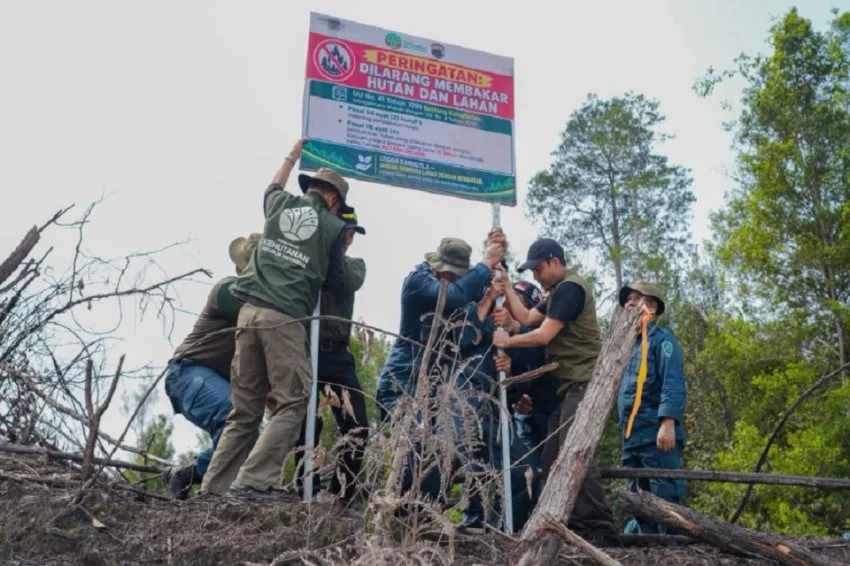
In a decisive move to secure fragile ecosystems and prevent unauthorized exploitation, authorities have initiated the installation of strict warning signs across multiple post-wildfire zones in Central Kalimantan. This operation specifically targets areas previously ravaged by devastating forest and land fires—locally known as karhutla—where suspended concessions and fragile ecological conditions have created severe vulnerabilities to illegal activities such as land grabbing and unauthorized logging.
The enforcement strategy underscores a major shift in how Indonesian environmental and forestry authorities manage recovering landscapes. By clearly demarcating these restricted zones, the government aims to eliminate ambiguity surrounding land status and deter corporate or individual encroachment while ecosystem restoration efforts are underway.
Strategic Demarcation of Vulnerable Post-Fire Zones
The newly installed warning boards explicitly prohibit any form of unauthorized activity within designated forest management concession areas. These specific zones fall under the authority of companies holding Forest Utilization Business Permits (PBPH) that have recently faced administrative and legal penalties enforced by the Ministry of Forestry.
According to officials, the post-wildfire landscape presents a unique set of management challenges. Following a severe fire, the immediate loss of canopy cover and timber value often invites opportunistic actors seeking to illegally clear land for agriculture, mining, or timber harvesting. By erecting high-visibility warning notices, authorities are establishing clear legal boundaries on the ground, making it significantly easier to prosecute trespassers and unauthorized operators attempting to exploit the aftermath of natural and man-made disasters.
The initiative is not merely symbolic; it serves as a legal anchor for field enforcement teams. With the signs in place, any presence or operation within these boundaries constitutes a blatant violation of statutory warnings, removing potential legal loopholes for encroachers claiming ignorance of land status.
Regulatory Crackdown and Ministry Enforcement Actions
The deployment of these warning signs directly follows a series of aggressive regulatory measures implemented by the Ministry of Forestry against concession holders failing to prevent or manage fires within their operational boundaries. These penalties include the official freezing or revocation of permits, alongside mandatory government-enforced orders requiring operators to finance and execute comprehensive ecosystem restoration programs.
The targeted zones in Central Kalimantan represent some of the most ecologically sensitive peatland and mineral soil forests in the region. Under prevailing environmental regulations, concessionaires whose lands suffer from severe fires are held legally accountable for ecological degradation, regardless of whether the ignition sources originated internally or encroached from outside borders.
This enforcement wave coincides with broader national investigations into corporate environmental negligence. Recently, the Ministry of Forestry announced the formal designation of multiple corporate entities as suspects in ongoing criminal investigations related to suspected deliberate or negligent forest fires across West Kalimantan (Kalbar) and Central Kalimantan (Kalteng). These parallel legal actions signal a zero-tolerance policy toward entities failing to uphold statutory environmental safeguarding duties.

Overcoming Resource Constraints Through Smart Surveillance
Addressing the vast expanse of Indonesia’s tropical forests presents monumental logistical hurdles, particularly regarding manpower. The number of active Forest Police (Polhut) personnel is dwarfed by the millions of hectares of forested terrain requiring constant monitoring.
Addressing this persistent challenge, Minister of Forestry Raja Juli Antoni emphasized that logistical limitations and a shortage of personnel must never serve as an excuse to compromise on forest protection standards. In recent operational directives, the Ministry has stressed the necessity of pivoting toward smarter, more tactical surveillance methodologies.
Instead of relying solely on uniform, resource-heavy patrolling across entire regional grids, enforcement agencies are deploying data-driven risk assessments. By identifying hotspots of high ecological vulnerability, historical fire frequency, and active socioeconomic pressure, authorities can concentrate their limited tactical units on high-risk corridors. The strategic placement of prohibition signage acts as a force multiplier in these targeted zones, serving as a 24-hour visual deterrent in areas where physical patrols cannot be permanently stationed.
Chronology of Escalated Forest Fire Management
The path toward the current enforcement measures in Central Kalimantan is rooted in a multi-year escalation of national fire prevention strategies:
- Dry Season Anticipation and Early Warnings: Months prior to peak dry conditions, meteorological agencies and environmental ministries issue high-alert warnings for carbon-rich peatland provinces, identifying Central and West Kalimantan as primary risk zones due to prolonged dry weather patterns.
- Occurrence of Severe Karhutla: Despite preventative campaigns, extensive forest and land fires breach containment lines, destroying thousands of hectares of forest cover and releasing massive volumes of greenhouse gases into the atmosphere.
- Post-Fire Audits and Concession Sanctions: Following the containment of the blazes, environmental inspectorates conduct rigorous aerial and ground audits, identifying specific PBPH concessionaires whose negligence or failure to maintain adequate firefighting infrastructure contributed to the scale of the destruction.
- Legal Designations and Permit Freezes: The Ministry of Forestry steps up punitive actions, freezing operational licenses, issuing mandatory ecosystem restoration mandates, and officially naming corporate suspects linked to criminal fire investigations.
- On-the-Ground Demarcation: As a critical physical follow-up to administrative penalties, authorities deploy teams to erect warning and prohibition plangs across vulnerable post-fire zones to secure the perimeter against illegal utilization.
Broader Socioeconomic and Environmental Implications
The tightening of control over post-karhutla zones carries profound implications for environmental recovery, regional governance, and the rule of law in Indonesia’s forestry sector.
From an ecological perspective, peatlands and forests recovering from fire damage require absolute undisturbed rest to allow natural succession and artificial revegetation to succeed. Human intrusion, soil compaction from heavy machinery, or secondary fires set for land clearing can permanently degrade the soil, transforming vital carbon sinks into barren, degraded wastelands prone to annual recurring disasters.
Economically, these measures send an unmistakable signal to the plantation and forestry sectors. Investors and concession holders are put on notice that environmental compliance is no longer a peripheral concern but a core prerequisite for maintaining business viability. The financial liabilities associated with mandated ecosystem restoration—combined with the risk of permit revocation and criminal prosecution—far outweigh the short-term gains of illegal expansion.
Furthermore, the initiative addresses the complex socioeconomic dynamics surrounding forest land use in Central Kalimantan. By clearly marking lands under active state intervention and legal dispute, the government aims to curb speculative land claims by local or external syndicates hoping to profit from post-fire chaos.
As the Ministry of Forestry continues to expand its intelligent surveillance network and enforce strict penalties against corporate and individual violators, the installation of prohibition signs in Central Kalimantan marks an important milestone. It bridges the gap between high-level regulatory decrees and localized enforcement, ensuring that damaged forests receive the legal protection necessary to regenerate and safeguard the region’s ecological future.