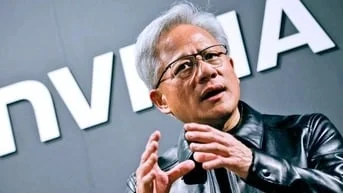
The return of Jensen Huang to the helm of Nvidia on November 23 serves as a pivotal moment for the global technology sector, reinforcing the company’s status as the indispensable architect of the artificial intelligence revolution. While the market reacted with immediate optimism—driving Nvidia’s stock price and broader indices to new heights—the company’s internal machinations reveal a complex, multi-layered financial strategy. Nvidia has moved beyond its traditional role as a hardware manufacturer to become a central pillar of the global AI economy, wielding a portfolio worth over $100 billion that spans research laboratories, cloud infrastructure, and software development.
The Evolution of Nvidia’s Strategic Investment Arm
Historically, Nvidia was defined by its dominance in graphics processing units (GPUs). However, under the long-term vision of Jensen Huang, the company has transitioned into an "AI utility provider." By investing in the very companies that integrate its technology, Nvidia has created a closed-loop system of demand.
As of the fiscal filings submitted on September 30, Nvidia held stakes valued at more than $48 billion in eight publicly traded companies. These investments are not merely financial maneuvers; they are strategic partnerships. By providing capital to companies like CoreWeave, Nebius Group, and even traditional chip rivals like Intel, Nvidia ensures that its hardware remains the industry standard. This model creates a symbiotic relationship where the growth of Nvidia’s partners directly correlates with the increased adoption of Nvidia’s own H100 and Blackwell series chips.
Chronology of a Strategic Pivot
The ascent of Nvidia to its current valuation did not occur in a vacuum. It is the result of a deliberate, decade-long strategy:
- 2012-2016: Nvidia pivots its focus from gaming and professional visualization to deep learning and neural network training, recognizing the potential of CUDA-enabled GPUs in AI research.
- 2020-2022: The explosion of generative AI models, such as ChatGPT, creates an unprecedented demand for compute power. Nvidia becomes the sole supplier of the high-end silicon required for these breakthroughs.
- Late 2023: Nvidia begins formalizing its role as an investor in the cloud-native AI infrastructure space, acquiring significant minority stakes in firms like CoreWeave.
- November 17, 2024: During the quarterly earnings announcement, interim CEO Colette Kress addresses the sustainability of these investments, emphasizing a move toward more rigorous internal evaluation processes.
- November 23, 2024: Jensen Huang returns to active leadership, signaling stability and continuity for investors, leading to a rally in the U.S. technology sector.
The "Circular Financing" Model: Analysis and Risk
Market analysts have increasingly scrutinized Nvidia’s investment behavior, often labeling it a "circular financing" model. The mechanism is relatively straightforward: Nvidia invests in a cloud service provider (CSP) like CoreWeave. CoreWeave then utilizes that capital—or the valuation boost associated with Nvidia’s backing—to purchase massive quantities of Nvidia GPUs. These GPUs are then deployed in data centers to provide AI-as-a-service to other companies.
While this model has undeniably accelerated the deployment of AI infrastructure, it introduces systemic risks. The concern among institutional investors is that the entire ecosystem relies on a singular demand driver. If the appetite for AI compute power were to cool or if a major partner faced a liquidity crisis, the "domino effect" could reach Nvidia’s balance sheet.
However, proponents of the model argue that this is a necessary "market-making" activity. By injecting capital into nascent cloud providers, Nvidia is effectively removing the barrier to entry for AI developers, thereby expanding the total addressable market for its hardware. Without this support, the deployment of large-scale GPU clusters would likely be slowed by the capital-intensive nature of the cloud infrastructure business.
Official Responses and Governance
During the November 17 earnings call, the leadership team at Nvidia acknowledged the concerns regarding its investment portfolio. Interim CEO Colette Kress emphasized that while the company is proud of its role in fostering industry growth, there is a clear mandate for fiscal discipline.
"We have a lot of work to do to evaluate whether this is truly the right investment," Kress stated, noting that future acquisitions and stakes will be subject to more stringent oversight. This statement serves as a subtle signal to shareholders that the company is mindful of the risks associated with rapid capital deployment and is transitioning from a "growth-at-all-costs" phase to a more mature, risk-aware investment strategy.
Broader Market Implications
The concentration of wealth and influence within Nvidia’s ecosystem has raised questions about market competition. By investing in both competitors and partners, Nvidia occupies a unique position where it can influence the direction of the industry’s technological roadmap. For instance, the investment in Intel, a company traditionally seen as a rival in the CPU space, suggests that Nvidia is hedging its bets and positioning itself to be a beneficiary of any hardware-related recovery in the broader semiconductor market.
Furthermore, the investment in xAI—the company founded by Elon Musk—prior to its integration with broader corporate entities, highlights Nvidia’s focus on staying close to the most aggressive AI projects globally. This ensures that regardless of which AI startup emerges as the dominant player in the next five years, Nvidia’s technology will likely be the engine powering that success.
Future Outlook and Sustainability
As the AI industry matures, the focus will shift from "can it be done" to "what is the return on investment." Companies across the globe are currently spending billions on AI infrastructure, but the long-term profitability of these data centers remains unproven. Nvidia’s challenge in the coming years will be to ensure that its portfolio companies remain solvent and competitive in a tightening economic environment.
Economists observing the tech sector suggest that the next phase of the AI cycle will involve a consolidation of services. Nvidia’s role in this consolidation will be critical. If the company continues to provide the financial backbone for the industry, it will maintain its dominance. However, if the regulatory environment shifts, particularly regarding antitrust concerns, Nvidia may find itself under pressure to divest or limit its involvement in its partners’ operations.
For now, the return of Jensen Huang provides the market with a sense of security. Huang’s reputation for long-term strategic foresight is the primary asset that sustains investor confidence. Under his leadership, Nvidia has successfully navigated the transition from a niche GPU company to the most influential hardware firm in history.
Conclusion
Nvidia’s strategy is a bold experiment in industrial vertical integration. By funding its own customers and competitors, the company has effectively accelerated the arrival of the AI era, while simultaneously shielding itself from the risks of market volatility. Whether this model constitutes a sustainable financial structure or a high-risk bubble remains a point of intense debate.
What is certain, however, is that Nvidia has fundamentally altered the landscape of corporate finance in technology. The company no longer just sells chips; it provides the capital, the infrastructure, and the strategic direction for the entire AI sector. As Jensen Huang resumes his leadership duties, the tech world will be watching to see how he navigates the delicate balance between aggressive expansion and the fiscal discipline required to maintain Nvidia’s unprecedented valuation. The coming fiscal quarters will likely determine if this "AI universe" can continue its rapid expansion or if the company must pivot toward a more conservative operational structure to protect its long-term market leadership.