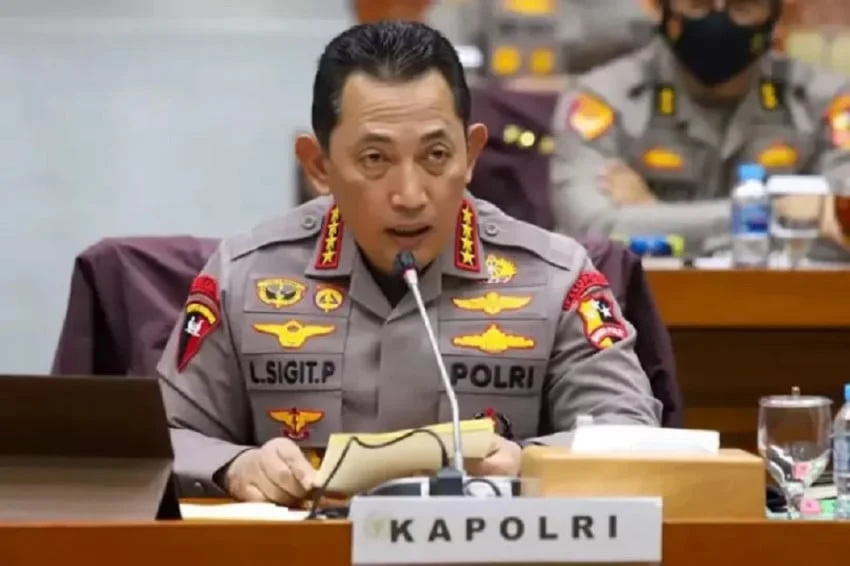
The ongoing battle against illicit trade within the Indonesian archipelago has reached a critical juncture, drawing widespread praise from various observers and economic analysts. Director of the Indonesian Public Institute (IPI), Karyono Wibowo, has recently voiced strong commendation for the firm stance taken by the Chief of the Indonesian National Police (Kapolri), General Listyo Sigit Prabowo, in aggressively targeting and eradicating illegal textile imports. This decisive action by law enforcement is widely viewed as a vital catalyst capable of breathing new life into a domestic manufacturing sector that has long struggled under the heavy burden of unfair foreign competition.
Speaking in Jakarta on Wednesday, September 16, 2026, the prominent political analyst and former 1998 activist highlighted that the unchecked influx of illegal commodities has historically served as a profound structural impediment. For decades, this illicit trade systematically suppressed the growth and expansion of local industries, undercutting domestic pricing and eroding profit margins for legal manufacturers. By stepping into the fray with targeted enforcement, the National Police have provided a much-needed beacon of hope, signaling to the market that the state is genuinely committed to offering tangible, robust protection to domestic producers and the massive workforce they sustain.
Background Context of the Textile Industry Crisis
To fully grasp the significance of the National Police’s intervention, one must examine the turbulent landscape of Indonesia’s textile and garment sector over recent years. As one of the country’s oldest and most labor-intensive manufacturing pillars, the textile industry has historically been a cornerstone of the national economy. It provides millions of jobs ranging from factory floor operators to skilled artisans, significantly contributing to national export revenues and regional economic development.
However, the sector has faced unprecedented turbulence, characterized by a flood of cheap, substandard, and illicit imported goods entering the domestic market through both official ports and illegal entry points—commonly known as black markets or grey markets. These unauthorized imports bypass standard customs duties, value-added taxes, and compliance checks regarding environmental and labor standards. Consequently, these goods are sold at predatory prices that domestic producers, who strictly adhere to national regulations and taxation laws, simply cannot match.
Over the past decade, this unfair competition has resulted in widespread factory shutdowns, massive waves of layoffs, and a drastic reduction in operational capacity across major textile hubs in West Java, Central Java, and Banten. Industry associations have repeatedly sounded the alarm, warning that without immediate and aggressive state intervention, the domestic textile ecosystem faced total collapse. The intervention led by General Listyo Sigit Prabowo therefore addresses a long-standing structural vulnerability that previous bureaucratic measures alone failed to resolve.
The Role of Law Enforcement and Structural Protection
The proactive stance adopted by the Indonesian National Police represents a strategic shift from traditional regulatory oversight to direct law enforcement action against smuggling syndicates and corrupt distribution networks. Analysts note that while ministries such as the Ministry of Trade and the Directorate General of Customs and Excise hold primary administrative authority, the inclusion of law enforcement agencies introduces a necessary deterrent element capable of dismantling organized crime syndicates operating behind the scenes.

"Illegal imports have long been a structural bottleneck that continuously stifles the potential of domestic industries," Karyono Wibowo stated. He further emphasized that the direct involvement of the police force delivers a reassuring message to investors and business owners alike, proving that the state is prepared to use its full coercive and investigative powers to uphold the rule of law in the economic sphere.
This development does not stand in isolation. It aligns closely with broader institutional initiatives, such as the recent establishment of the National Police Labor Desk (Desk Ketenagakerjaan Polri), which has been widely praised as a concrete manifestation of the police force’s commitment to safeguarding workers’ rights and bolstering the sustainability of national industries. By safeguarding factories from unfair competition, law enforcement indirectly secures the livelihoods of hundreds of thousands of factory workers who would otherwise face sudden termination due to corporate insolvency.
The Necessity of Public Oversight and Democratic Accountability
While the aggressive crackdown on textile smuggling has generated considerable optimism among economists and business leaders, experts caution that execution and transparency remain paramount. Karyono Wibowo underscored the necessity for continuous public scrutiny and rigorous oversight regarding how these enforcement policies are implemented on the ground.
In a healthy democratic society, law enforcement operations targeting commercial sectors must be conducted with absolute integrity, transparency, and accountability to prevent potential abuse of power or selective enforcement. Public monitoring ensures that the campaign against illegal imports remains genuinely focused on protecting the national economy and leveling the playing field, rather than creating new bureaucratic bottlenecks or monopolistic practices. Civil society organizations, trade unions, and industry watchdogs are encouraged to maintain active participation in evaluating the long-term outcomes of these police-led interventions.
Broader Economic Implications and Future Outlook
The implications of successfully curbing illegal textile imports extend far beyond the immediate financial relief of local garment factories. A revived domestic textile sector triggers a positive multiplier effect throughout the entire national supply chain. Upstream industries, including domestic cotton producers, synthetic fiber manufacturers, and chemical suppliers, stand to benefit significantly from increased operational demand by local textile mills. Similarly, downstream sectors such as local fashion brands, retail distributors, and logistics providers experience a healthier, more predictable business climate.
Furthermore, a crackdown on contraband goods directly bolsters state revenue collection. When imported textiles enter the country legally, they are subject to standard import tariffs, luxury taxes, and income taxes. The proliferation of illegal imports deprives the state budget of trillions of rupiah annually in potential customs duties and tax revenues. By cutting off illicit supply chains, the government not only protects local jobs but also secures crucial fiscal resources needed for public infrastructure and social welfare programs.
As Indonesia navigates its path toward sustainable economic resilience and self-sufficiency, the commitment demonstrated by the National Police under the leadership of General Listyo Sigit Prabowo marks a vital turning point. If sustained through transparent coordination between law enforcement agencies, regulatory bodies, and industry stakeholders, this initiative could serve as a successful blueprint for combating illegal trade across other strategic commodities, ultimately ensuring a secure and prosperous future for the nation’s industrial landscape.