Jakarta, Indonesia – Her Majesty Queen Máxima of the Netherlands recently concluded a significant working visit to Indonesia, spanning from Monday, November 24, to Thursday, November 27, 2025. The four-day itinerary underscored her profound commitment to advancing global financial health, undertaken not in her capacity as Queen of the Netherlands, but as the United Nations Secretary-General’s Special Advocate (UNSGSA) for Inclusive Finance for Development. Her mission centered on bolstering financial resilience and well-being, engaging with a diverse array of stakeholders from government officials and development organizations to local communities and burgeoning entrepreneurs across Jakarta, Sragen, Solo, and Bekasi. This pivotal visit, her fifth to the archipelago, reinforced Indonesia’s crucial role in the global financial inclusion agenda.
The Mandate: Championing Global Financial Health
Queen Máxima’s role as UNSGSA, initiated in 2009, positions her at the forefront of global efforts to promote universal access to affordable, useful, and safe financial services. This mandate is rooted in the conviction that financial inclusion is not merely an economic concept but a fundamental enabler for achieving broader sustainable development goals (SDGs). By facilitating access to savings, credit, insurance, and payment systems, individuals and small businesses can better manage their finances, invest in their futures, and mitigate risks, thereby lifting themselves out of poverty and building more resilient communities. The UNSGSA’s work involves advocating for national strategies, fostering public-private partnerships, and promoting innovative solutions, particularly in emerging economies where significant populations remain unbanked or underbanked. Queen Máxima’s extensive background in international finance and her unwavering dedication to this cause have made her a globally recognized and influential voice in this critical domain. Her advocacy often focuses on vulnerable groups, including women, rural populations, and small and medium-sized enterprises (SMEs), recognizing their immense potential for economic growth when adequately supported by financial services.
Indonesia: A Strategic Partner in Financial Inclusion
Indonesia, with its vast archipelago, diverse demographics, and robust economic growth, represents a strategic priority for the UNSGSA’s mission. Despite significant strides, a considerable portion of its population, particularly in remote areas and among lower-income segments, still lacks comprehensive access to formal financial services. The Indonesian government has articulated ambitious targets for financial inclusion, aiming to bring more citizens into the formal financial system through digital innovation and supportive regulatory frameworks. This shared vision makes Indonesia an ideal partner for Queen Máxima’s advocacy efforts. Her repeated visits – previously in 2012, 2016, and 2018 as UNSGSA, and in 2020 alongside King Willem-Alexander for a state visit – underscore the enduring relevance and impact of her engagements within the country. These visits provide valuable opportunities to assess progress, identify remaining challenges, and champion tailored solutions that align with Indonesia’s unique socio-economic landscape. The nation’s rapid adoption of digital technologies, coupled with its commitment to financial literacy and consumer protection, offers a fertile ground for implementing and scaling innovative financial inclusion models.
Chronology of Engagements: A Deep Dive into Financial Ecosystems
The latest visit featured a meticulously planned itinerary designed to offer Queen Máxima firsthand insights into Indonesia’s diverse financial ecosystem and the practical impact of inclusive finance initiatives.
Day 1: Empowering Communities in Central Java (Tuesday, November 25)
Queen Máxima commenced her working visit in Central Java, a region known for its vibrant industrial and cultural sectors. Her first stop was a garment factory in Sragen Regency. This visit provided an opportunity to observe the financial realities of industrial workers, many of whom are migrant laborers who often face challenges in accessing formal financial services, managing remittances, and saving for the future. Discussions likely centered on improving financial literacy programs for employees, promoting digital wage payments, and exploring micro-savings schemes that can enhance their financial resilience against economic shocks. Ensuring that factory workers have access to secure and affordable financial tools is crucial for their well-being and productivity.
Following this, Queen Máxima traveled to Kampung Batik Laweyan in Solo, a renowned hub for traditional batik production and home to numerous micro, small, and medium-sized enterprises (MSMEs). Here, she engaged with local artisans and entrepreneurs, delving into their experiences with financial health. MSMEs are the backbone of Indonesia’s economy, contributing significantly to its GDP and employment. However, they frequently struggle with access to capital, market linkages, and digital financial literacy. The discussions in Laweyan likely explored how tailored financial products, such as microcredit, digital payment solutions, and business development services, could empower these artisans to grow their businesses, reach broader markets, and preserve their cultural heritage. Queen Máxima underscored the importance of integrating traditional craft sectors into the formal financial system to ensure their long-term sustainability and prosperity.
The day concluded with Queen Máxima’s participation in a Women’s World Banking event held at the majestic Pura Mangkunegaran in Solo. This high-profile gathering brought together young individuals, university students, and women entrepreneurs. In a dynamic exchange, Queen Máxima conversed with participants about their experiences in utilizing financial products and services. Women’s economic empowerment is a cornerstone of financial inclusion, and organizations like Women’s World Banking play a vital role in designing financial solutions specifically for women. Topics likely included access to credit for women-led businesses, digital financial literacy for female entrepreneurs, and the role of financial services in promoting gender equality. Queen Máxima emphasized the transformative power of financial independence for women, highlighting how it can lead to improved family well-being, community development, and broader economic growth. According to recent data, while women’s financial inclusion rates in Indonesia are improving, gaps persist, particularly in access to digital financial tools and credit for scaling businesses.
Day 2: Strategic Dialogues and Innovative Housing Solutions (Wednesday, November 26)
The second day commenced in Jakarta with Queen Máxima participating in a roundtable discussion at the local United Nations office. This crucial engagement brought together various development organizations operating in Indonesia. The dialogue focused on aligning national development priorities with the UN Sustainable Development Goals (SDGs), particularly those related to poverty eradication, gender equality, and economic growth, all underpinned by financial inclusion. Discussions likely covered strategies for enhancing coordination among stakeholders, leveraging digital technologies for wider reach, and addressing systemic barriers to financial access. The collective expertise shared at this forum aimed to identify actionable steps for accelerating progress on Indonesia’s financial inclusion roadmap.
Subsequently, Queen Máxima visited the International Finance Corporation (IFC), a member of the World Bank Group. The IFC plays a critical role in promoting private sector development in emerging markets. Her discussions with IFC representatives focused on the development of lending programs that contribute to economic growth and improved financial health. This included exploring innovative financing mechanisms for SMEs, infrastructure projects, and green initiatives, which are essential for sustainable development. The IFC’s commitment to supporting financially inclusive growth aligns perfectly with the UNSGSA’s mandate, particularly in facilitating private sector engagement to bridge financing gaps and foster a more resilient economy.
A highlight of the day was Queen Máxima’s visit to the Gran Harmoni Cibitung subsidized housing complex in Bekasi Regency, West Java. This complex provides low-emission housing solutions for low and middle-income communities, addressing Indonesia’s persistent housing deficit. During her visit, Queen Máxima personally interacted with residents, including first-time homebuyers, gaining insights into their journey towards homeownership. Indonesia faces a significant housing backlog, and government programs, often supported by institutions like Bank BTN, are crucial in making housing affordable. A particularly innovative aspect observed was the complex’s partnership with a waste bank, offering residents the option to pay housing installments by collecting and depositing recyclable waste. Queen Máxima reportedly expressed her appreciation for this ingenious "waste-to-mortgage" innovation, highlighting its dual benefits of promoting financial access and environmental sustainability. She also observed the process of signing sales and purchase agreements for dozens of prospective homeowners, witnessing firsthand the realization of their dreams. This initiative exemplifies how creative solutions can overcome financial barriers and promote sustainable living practices.
In the afternoon, Queen Máxima visited Deloitte Indonesia, where she engaged in discussions with employers about their role in contributing to the financial health of their employees and clients. This session underscored the growing recognition of corporate responsibility in promoting employee well-being, including financial wellness. Discussions likely covered the implementation of financial literacy programs within companies, access to affordable financial products, and the positive correlation between employee financial health, productivity, and retention. Queen Máxima emphasized that a financially healthy workforce is a more productive and engaged workforce, benefiting both individuals and the broader economy.
Day 3: Policy Dialogue and High-Level Consultation (Thursday, November 27)
On the final day of her visit, Queen Máxima participated in a crucial agenda focused on financial literacy, involving key Indonesian financial authorities: the Financial Services Authority (OJK), Bank Indonesia (BI), and the Ministry of Finance (Kemenkeu). This high-level meeting delved into Indonesia’s national strategy for financial inclusion and literacy, its progress, challenges, and future initiatives. Discussions likely covered the role of digital finance in expanding access, consumer protection frameworks, regulatory innovation, and strategies to reach underserved populations. The collaborative efforts of OJK, BI, and Kemenkeu are vital in creating a robust and inclusive financial ecosystem, and Queen Máxima’s engagement provided international perspectives and strengthened bilateral cooperation on these fronts. The emphasis on financial literacy is paramount, as increased access must be coupled with the knowledge and skills to make informed financial decisions.
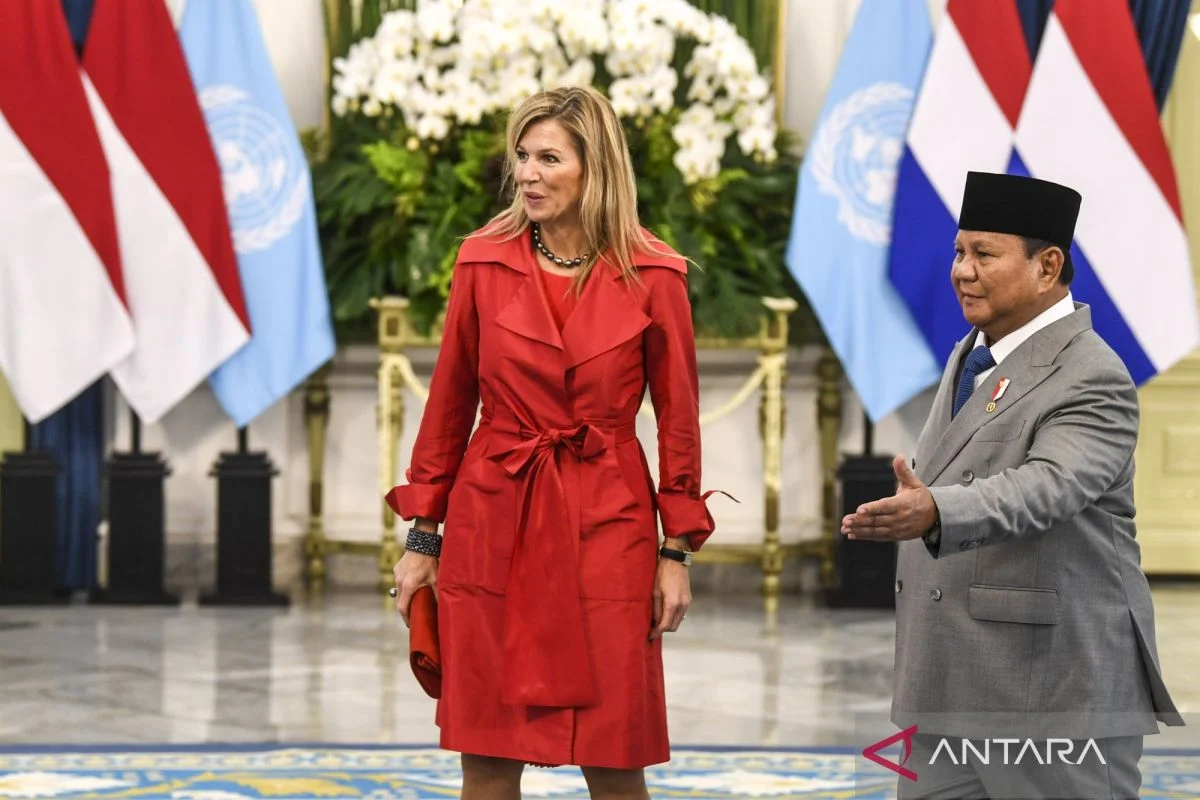
The culmination of Queen Máxima’s visit was a significant meeting with the President of Indonesia, Prabowo Subianto, at the Merdeka Palace in Jakarta. This encounter provided an opportunity for Queen Máxima to convey her key findings, observations, and impressions from her extensive engagements across the country. The meeting, which included a private session and a luncheon, served as a high-level platform to discuss policy recommendations, highlight successful initiatives, and explore avenues for enhanced collaboration between the Netherlands, Indonesia, and the United Nations in advancing financial inclusion. President Subianto reportedly welcomed Queen Máxima’s insights and reaffirmed Indonesia’s steadfast commitment to fostering inclusive economic growth and ensuring that all citizens have access to the financial tools necessary for prosperity. Such high-level diplomatic exchanges are instrumental in solidifying international partnerships and driving global development agendas.
Broader Implications and Future Outlook
Queen Máxima’s visit to Indonesia as UNSGSA carries significant implications. It not only reinforces the strong bilateral relationship between the Netherlands and Indonesia but also elevates the discourse on financial inclusion within Indonesia’s national agenda. Her advocacy serves as a powerful catalyst, encouraging policymakers, regulators, and the private sector to redouble their efforts in creating a more inclusive financial system. The focus on specific initiatives, such as the waste-to-mortgage program, highlights scalable models that can address complex socio-economic challenges through innovative financial solutions.
Looking ahead, the insights gained and the partnerships strengthened during this visit are expected to contribute to Indonesia’s ongoing journey towards achieving its financial inclusion targets. The emphasis on digital transformation, women’s empowerment, and sustainable finance will likely continue to guide policy development and program implementation. Queen Máxima’s consistent engagement ensures that Indonesia remains a vital partner in the global effort to build a world where everyone has the opportunity to participate fully in the economy and achieve financial well-being, contributing directly to the realization of the UN Sustainable Development Goals. Her dedication to this cause serves as an inspiration for collective action and a reminder of the transformative power of accessible financial services.
Queen Máxima’s Background
Born Máxima Zorreguieta Cerruti on May 17, 1971, in Buenos Aires, Argentina, Queen Máxima embarked on a career in international finance before marrying Willem-Alexander, then Prince of Orange, in 2002 in Amsterdam, Netherlands. Her extensive experience in the financial sector, coupled with her deep understanding of development economics, positioned her uniquely for her role as UNSGSA. Since her appointment, she has tirelessly traveled the globe, engaging with heads of state, central bankers, and grassroots communities to advocate for financial services that empower individuals and foster sustainable development. Her work consistently emphasizes that financial inclusion is not an end in itself but a means to achieve broader human development and economic stability.