JAKARTA – A recent survey conducted by Parameter Politik Indonesia has identified Taj Yasin Maimoen, the former Vice Governor of Central Java for the 2018-2023 term, as the most popular figure among potential candidates for the upcoming Central Java (Jateng) gubernatorial election. The data collection for this survey was carried out between May 15 and 21, 2024, providing an early snapshot of public sentiment in one of Indonesia’s most politically significant provinces.
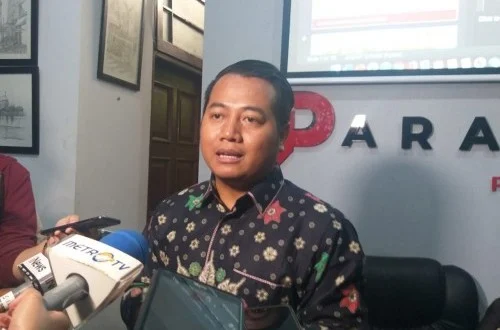
Adi Prayitno, the Executive Director of Parameter Politik Indonesia, disclosed the findings in an online release observed from Jakarta on Wednesday, May 29, 2024. He detailed the methodology, stating, "We asked respondents one by one, ‘Sir, Madam, are you familiar with the following figure?’ So, we asked the respondents individually, and approximately 52.1 percent reported being familiar with the name Taj Yasin." This direct, one-on-one approach aims to gauge genuine recognition among the populace, a critical initial step in assessing a candidate’s potential.
Following Taj Yasin, Hendrar Prihadi, who currently serves as the Head of the Government Goods/Services Procurement Policy Institute (LKPP) and is a former Mayor of Semarang, secured the second position with a recognition rate of 40 percent. Bupati Kendal, Dico Ganinduto, rounded out the top three, registering a popularity score of 38.1 percent.
Prayitno elaborated on the selection criteria for the figures included in the survey, explaining, "These individuals are those whom we believe possess potential, are frequently discussed, or are consistently linked to the possibility of running in the Central Java gubernatorial election. Therefore, when we tally them one by one, this is generally the portrait of their popularity." Despite these figures, he cautioned that none of the currently popular figures could yet be described as "outstanding" or overwhelmingly dominant, suggesting a fluid and competitive landscape as the election cycle progresses.
Understanding the Central Java Political Landscape
Central Java, with its vast population and significant electoral base, stands as a pivotal province in Indonesian politics. It is traditionally considered a stronghold for the Indonesian Democratic Party of Struggle (PDI-P), having consistently delivered strong electoral performances for the party in national and regional elections. The province’s political dynamics are shaped by a blend of nationalist and religious influences, particularly from the Nahdlatul Ulama (NU), Indonesia’s largest Islamic organization, which holds substantial sway in many rural and semi-urban areas. The upcoming Pilkada Jateng 2024 is part of the nationwide simultaneous regional elections (Pilkada Serentak) scheduled for November 27, 2024, adding another layer of complexity as national political narratives often intertwine with local contests.
The PDI-P’s historical dominance in Central Java means that securing its endorsement is often seen as a significant advantage for any gubernatorial hopeful. However, the province also hosts a diverse array of other major political parties, including Golkar, Gerindra, PKB, NasDem, and PKS, all of whom are keen to secure their share of influence and potentially challenge the established order through strategic coalition building. The influence of influential religious figures and traditional leaders also plays a considerable role, particularly in shaping public opinion and mobilizing voters in various regions.
Profiles of Leading Contenders
The survey highlights three distinct profiles of potential candidates, each bringing a unique set of experiences and political capital to the table.
Taj Yasin Maimoen (52.1% Popularity):
Taj Yasin Maimoen, often referred to by his honorific Gus Yasin, carries a significant political and religious legacy. He is the son of the late K.H. Maimoen Zubair, affectionately known as Mbah Moen, a revered cleric and former leader of the Sarang Islamic boarding school in Rembang, as well as a former Chairman of the Advisory Council of the United Development Party (PPP). This lineage imbues Taj Yasin with considerable moral and religious authority, particularly among the Nahdliyin (followers of NU) community, which is numerically strong in Central Java.
His tenure as Vice Governor from 2018 to 2023, serving alongside former Governor Ganjar Pranowo, provided him with direct experience in provincial administration and enhanced his public profile. During his term, he was actively involved in various policy initiatives, often focusing on religious affairs, education, and community empowerment. His background as a young, educated religious leader with practical political experience makes him an appealing figure to both traditional religious bases and younger, more progressive voters. His popularity, as indicated by the survey, is likely bolstered by the enduring respect for his family and his active role in the previous administration. Taj Yasin is typically associated with the PKB (National Awakening Party) and PPP, parties with strong ties to NU.
Hendrar Prihadi (40% Popularity):
Hendrar Prihadi brings a strong track record in urban governance and national-level bureaucratic experience. Before assuming his current role as Head of LKPP, he served multiple terms as the Mayor of Semarang, the capital city of Central Java. His leadership in Semarang was widely recognized for urban development, infrastructure improvements, and effective public services, contributing to the city’s growth and livability.
His experience as a mayor of a major provincial capital gives him a deep understanding of local governance and the aspirations of urban populations. As a prominent cadre of the PDI-P, Hendrar Prihadi benefits from strong party backing and a well-established political network. His current position at LKPP, a national agency, also provides him with exposure to broader national policy issues and administrative complexities. His strengths lie in his proven executive capabilities, his connection to the PDI-P’s extensive machinery, and his appeal to voters seeking experienced and results-oriented leadership.
Dico Ganinduto (38.1% Popularity):
Dico Ganinduto represents the younger generation of political leaders. As the current Bupati (Regent) of Kendal, a district in Central Java, he has demonstrated leadership at the local level. His relative youth and dynamic approach resonate with a segment of the electorate that seeks fresh faces and innovative ideas in politics. Dico is also known for being married to actress Chacha Frederica, which provides him with a degree of public recognition beyond traditional political circles.
His leadership in Kendal has focused on local development initiatives and engaging with the community. As a member of the Golkar Party, one of Indonesia’s oldest and most established political parties, Dico benefits from its extensive organizational structure and resources. His candidacy could be part of Golkar’s strategy to cultivate new leaders and expand its influence in Central Java. His strengths include his youthful appeal, his current executive experience, and the potential for cross-party appeal through strategic alliances.
Methodology and Significance of the Survey
Parameter Politik Indonesia’s survey, conducted from May 15-21, 2024, employed a robust quantitative methodology designed to capture public awareness and perception accurately. While specific details on the sample size and margin of error were not explicitly stated in the initial release, reputable survey institutions typically interview between 800 and 1,200 respondents for provincial-level polls, using multi-stage random sampling techniques to ensure representativeness. A common margin of error for such surveys ranges from +/- 2.8% to 3.5% at a 95% confidence level.
The "one-by-one" questioning approach for popularity is crucial as it measures unprompted or semi-prompted recognition, indicating how deeply a candidate’s name has penetrated the public consciousness. This differs from electability surveys, which ask respondents whom they would vote for. Popularity is a foundational element; a candidate must first be known before they can be considered electable. The timing of the survey, several months ahead of the November 2024 election, places it in the pre-nomination phase, where political parties are still deliberating and potential candidates are gauging their public standing.
The Road Ahead: From Popularity to Electability
Adi Prayitno’s assessment that "none of the popular figures are truly outstanding yet" underscores the dynamic and unpredictable nature of the pre-election period. While popularity is a vital starting point, converting it into actual votes (electability) requires a multifaceted strategy. Several factors will influence how these candidates, and potentially others, fare in the coming months:
- Party Endorsements and Coalitions: Securing the backing of major political parties is paramount. In Indonesia’s multi-party system, candidates often need to form coalitions to meet the electoral threshold for nomination. The horse-trading and negotiations among parties can significantly alter the candidate landscape.
- Campaign Strategy and Messaging: Effective communication of vision, mission, and policy proposals will be crucial. Candidates need to articulate clear solutions to the challenges faced by Central Java residents, ranging from economic development and job creation to infrastructure, education, and healthcare.
- Running Mate Selection: The choice of a vice-gubernatorial candidate can greatly impact a ticket’s appeal, helping to balance regional representation, religious-nationalist divides, or experience gaps.
- Funding and Campaign Resources: A successful campaign requires substantial financial resources for outreach, advertising, and logistical support.
- National Political Dynamics: The Central Java gubernatorial election will not occur in isolation. National political developments, endorsements from national figures, and the performance of presidential candidates in the earlier general election can all influence regional outcomes.
Inferred Reactions and Strategic Considerations
While no direct statements from the candidates or political parties were included in the original report, one can infer typical reactions and strategic considerations:
- From Taj Yasin Maimoen: He would likely express gratitude for the public’s trust and recognition. He might emphasize his continued commitment to serving the people of Central Java, whether in a formal capacity or through community engagement. He would probably state that he is prepared to answer the call of duty should political parties decide to nominate him, while respecting the ongoing processes.
- From Hendrar Prihadi: Similar to Taj Yasin, he would acknowledge the survey findings with appreciation. He might highlight his extensive experience in governance and public service, affirming his dedication to his current role at LKPP while remaining open to the possibility of contributing to Central Java’s future development if given the mandate by his party.
- From Dico Ganinduto: He would likely welcome the public’s positive reception and express his commitment to his current role as Bupati of Kendal. He might subtly emphasize his youth and innovative approach, positioning himself as a fresh alternative, and signaling his readiness to accept any assignments from his party, Golkar.
- From Political Parties (PDI-P, PKB, Golkar): Party leaderships would be closely monitoring such surveys. They would likely issue statements emphasizing that surveys are important inputs but not the sole determinant for nominations. They would stress the importance of internal party mechanisms, candidate integrity, electability, and the ability to build effective coalitions. For PDI-P, evaluating Hendrar Prihadi’s standing would be critical, while PKB and PPP would assess Taj Yasin’s potential, and Golkar would weigh Dico Ganinduto’s prospects. Discussions on potential alliances and the search for suitable running mates would intensify.
- From Political Analysts: Analysts would likely point out that while Taj Yasin’s lead is notable, the relatively low percentages for all candidates indicate that the race is still wide open. They might highlight the challenge for any candidate to achieve a truly commanding lead in a diverse province like Central Java. Analysts would also discuss the significance of the NU vote, the PDI-P’s structural advantage, and the potential for a dark horse candidate to emerge as the official nomination period draws closer. They would also differentiate between "popularity" and "electability," noting that the former is a necessary but insufficient condition for winning an election.
Broader Implications and Future Outlook
The early popularity survey by Parameter Politik Indonesia offers a valuable initial reading of the public mood in Central Java. Taj Yasin Maimoen’s leading position underscores the enduring influence of religious figures and established political families in the province, especially those connected to the powerful Nahdlatul Ulama base. The strong showings by Hendrar Prihadi and Dico Ganinduto also signal the public’s recognition of experienced administrators and emerging young leaders.
However, the journey from being a popular figure to becoming a successful gubernatorial candidate is arduous. The coming months will be characterized by intense political maneuvering, internal party deliberations, coalition formations, and strategic campaigning. Candidates will need to demonstrate not just recognition but also a compelling vision for Central Java, the ability to build broad-based support, and the capacity to navigate complex political alliances. The results of the Pilkada Jateng 2024 will not only determine the next leadership of this critical province but also potentially influence the broader national political landscape, given Central Java’s historical role as a barometer for national elections. As the election date approaches, further surveys will likely track shifts in public opinion, offering more refined insights into the preferences of Central Java’s diverse electorate.