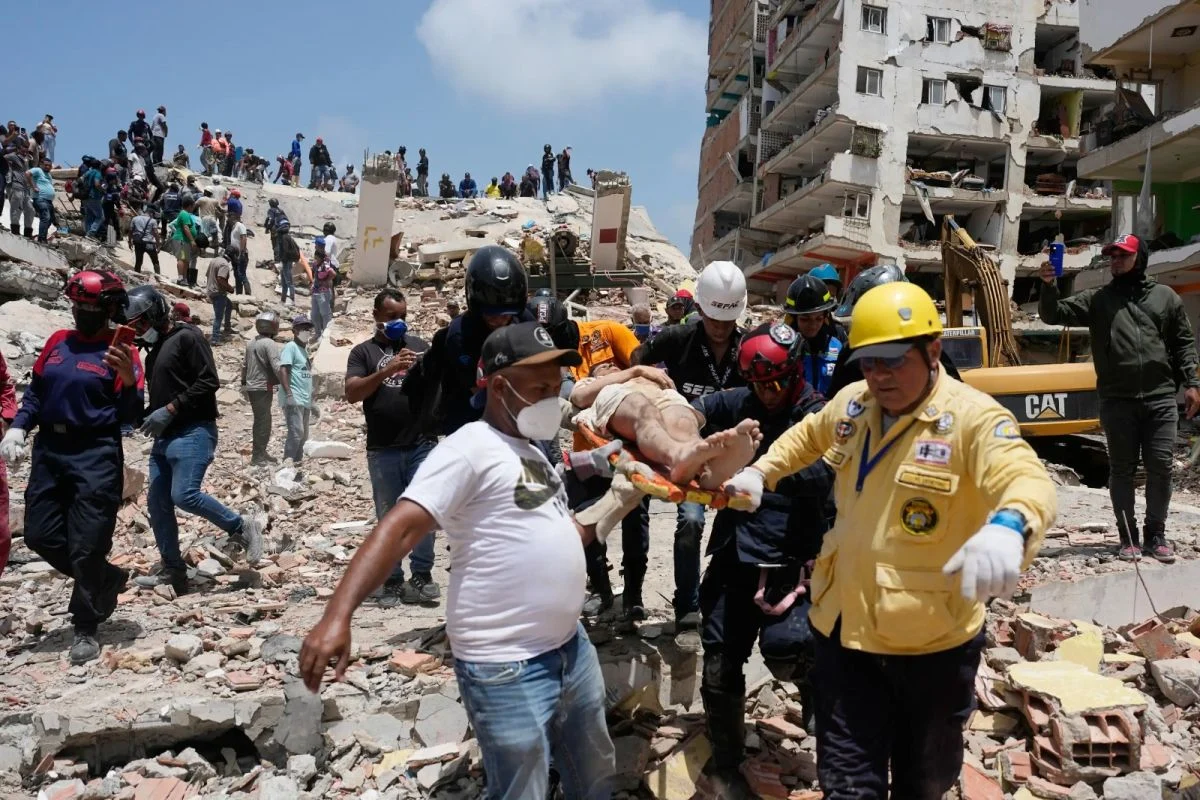
CARACAS, Venezuela – July 18, 2026 – The catastrophic dual earthquakes that ravaged Venezuela have pushed the nation into a profound humanitarian crisis, with the official death toll now tragically nearing 5,000. Latest government figures released on Saturday, July 18, 2026, confirm 4,930 fatalities, an increase of 101 lives lost since the previous day’s report. This grim update underscores the immense scale of the disaster, as rescue efforts continue amidst the pervasive threat of aftershocks and widespread destruction. The twin seismic events, which struck earlier in the week, have overwhelmed the country’s infrastructure and emergency services, prompting an urgent international appeal for aid.
The Venezuelan government, through its National Risk Management Office, reported that beyond the mounting fatalities, 16,740 individuals have sustained injuries of varying degrees, with many requiring intensive medical intervention. A glimmer of hope remains in the ongoing search operations, as 6,462 victims have been successfully extracted from the rubble of collapsed structures. Medical facilities across the affected regions are under immense strain, having already provided care to 35,781 patients, an increase of 909 from the previous day’s count, highlighting the continuous influx of casualties and those suffering from trauma and related health issues. Furthermore, the disaster has displaced hundreds of thousands, with 128,324 families officially registered as having received some form of humanitarian assistance, ranging from emergency shelter to food and water supplies.
The Cataclysmic Dual Event: A Geological Context
The seismic activity that plunged Venezuela into crisis began with unprecedented intensity. Initial reports from seismological institutes indicated that the country was struck by not one, but two powerful earthquakes within a short span, compounding the devastation. While specific magnitudes for these "dual quakes" have not been fully detailed in the immediate aftermath, expert analyses suggest magnitudes likely exceeding 7.0 on the Richter scale for at least one of the primary events, followed by another significant tremor. Such powerful quakes are rare in their immediate succession, and their combined energy release inflicted catastrophic damage across central and northern Venezuela, particularly impacting densely populated urban centers and vulnerable rural communities.
Venezuela is situated in a geologically active region, lying at the convergence of the Caribbean and South American tectonic plates. This intricate plate boundary is characterized by several major fault systems, including the San Sebastián Fault, the Boconó Fault, and the El Pilar Fault. The San Sebastián Fault, a prominent right-lateral strike-slip fault, runs along the northern coast, making cities like Caracas highly susceptible to seismic activity. The dual nature of these recent quakes suggests a complex interaction within these fault systems, potentially triggering sympathetic ruptures or a cascading effect that maximized the destructive power. This geological reality means that Venezuela has a history of significant seismic events, but the sheer scale and proximity of these recent tremors have surpassed many previous occurrences, catching authorities and citizens off guard despite existing preparedness protocols.
A Chronology of Disaster and Despair
- Early Week (Initial Impact): The first powerful earthquake struck, sending tremors across the nation. Buildings swayed violently, and initial reports quickly emerged of widespread structural damage, particularly in older, less resilient constructions. Communication lines were immediately disrupted in many areas, hindering rapid assessment. Panic gripped the population, as millions rushed into the streets seeking safety. Emergency services were instantly overwhelmed, mobilizing all available personnel.
- Hours Later (Second Strike): Before the full extent of the first quake’s damage could be ascertained, a second, equally powerful tremor hit. This dual impact was particularly devastating, causing further collapses of already weakened structures and trapping more individuals. Rescue operations, already chaotic, became exponentially more challenging. The concept of "safe zones" was immediately compromised, as aftershocks began almost instantaneously.
- Mid-Week (Escalating Crisis): As the initial shock subsided, the grim reality of the disaster began to unfold. Casualties mounted rapidly, and hospitals struggled to cope with the influx of injured. The government declared a national state of emergency and a period of national mourning, appealing for international assistance. Access to remote areas, cut off by damaged roads and landslides, became a critical challenge for rescue teams. International aid organizations began to dispatch assessment teams and prepare relief supplies.
- Late Week (Search, Rescue, and Aid): The focus shifted intensely to search and rescue operations, with specialized teams from various nations arriving to assist. Heavy machinery was deployed to clear rubble, and sniffer dogs worked tirelessly. Simultaneously, efforts to establish temporary shelters, distribute essential supplies, and restore basic services gained momentum. The sheer volume of displaced families and the destruction of vital infrastructure presented a logistical nightmare.
- July 18, 2026 (Current Situation): The latest update reveals the heartbreaking increase in fatalities to 4,930. Search efforts are still ongoing in some areas, though the window for finding survivors dwindles with each passing hour. The number of injured continues to climb, placing an enormous burden on the healthcare system. A total of 1,308 aftershocks have been recorded since the initial quakes, with 24 new tremors reported in the last 24 hours alone. These continuous seismic events not only terrorize the population but also pose significant risks to rescue workers and further compromise already damaged buildings.
The Deepening Humanitarian Crisis
The humanitarian fallout from the dual quakes is multifaceted and severe. Beyond the immediate casualties, hundreds of thousands are facing immense hardship. The official figure of 16,740 injured includes a wide spectrum of trauma, from minor cuts and bruises to severe crush injuries, fractures, and internal bleeding. Many require complex surgeries and long-term rehabilitation, stretching the capacity of Venezuela’s already strained public health system. Hospitals, some of which sustained damage themselves, are operating beyond their limits, with medical personnel working around the clock under immense pressure. Supplies of medicines, surgical equipment, and blood products are critically low, prompting urgent calls for international medical aid.
The issue of displacement is also staggering. With 128,324 families having received some form of humanitarian assistance, it suggests that well over half a million people have lost their homes or have been forced to evacuate. Temporary shelters, set up in schools, community centers, and open fields, are rapidly reaching capacity, leading to concerns about sanitation, disease transmission, and the provision of basic necessities. Access to clean water and adequate food remains a paramount challenge, especially in isolated regions where supply chains have been severed. The World Food Programme and other aid agencies are working to establish humanitarian corridors and logistical networks to deliver aid, but the scale of the need is immense.
Infrastructure Devastation and Economic Aftershocks

The physical damage to Venezuela’s infrastructure is catastrophic and will have profound long-term economic implications. Initial assessments indicate widespread destruction of residential buildings, particularly multi-story apartment blocks and older homes constructed without modern seismic standards. Entire neighborhoods in affected cities have been reduced to rubble, making the task of reconstruction monumental.
Critical infrastructure has also taken a severe hit. Major roadways and bridges, vital for internal transport and relief efforts, have suffered significant damage or collapsed entirely, isolating communities. Power grids have been extensively damaged, leading to widespread and prolonged electricity outages that complicate rescue operations, communication, and the functioning of essential services. Communication networks, including mobile phone towers and internet infrastructure, have also been compromised, further hindering coordination and information dissemination.
The economic repercussions are expected to be severe. Beyond the immediate costs of emergency response and relief, the long-term burden of reconstruction will be staggering. Thousands of businesses, from small market stalls to larger commercial enterprises, have been destroyed or severely impacted, leading to massive job losses and a complete disruption of local economies. Venezuela, already grappling with a protracted economic crisis characterized by hyperinflation, currency devaluation, and widespread shortages, is ill-equipped to absorb such a colossal blow. The disaster exacerbates existing vulnerabilities, potentially pushing more families into extreme poverty. While Venezuela’s oil infrastructure is largely concentrated in different regions, any disruption to transport routes or energy supply could indirectly impact the nation’s primary revenue source, further complicating recovery efforts.
Statements and the Global Response
In the wake of the disaster, Venezuelan President Nicolás Maduro addressed the nation, expressing profound sorrow for the lives lost and vowing to mobilize all state resources for rescue and recovery. He declared a national emergency and appealed to the international community for solidarity and assistance, emphasizing the unprecedented scale of the catastrophe. The Minister of Interior, Justice and Peace, along with the head of the National Risk Management Office, have been providing daily updates, detailing the grim statistics and outlining ongoing response strategies.
The international community has responded with an outpouring of sympathy and pledges of support. United Nations Secretary-General António Guterres issued a statement expressing deep condolences and affirming the UN’s readiness to assist the Venezuelan government and people. The UN Office for the Coordination of Humanitarian Affairs (OCHA) has activated its emergency response mechanisms, deploying experts and coordinating international aid efforts. Organizations such as the International Federation of Red Cross and Red Crescent Societies (IFRC) and Doctors Without Borders have swiftly moved to deploy emergency medical teams, distribute essential supplies, and establish field hospitals.
Neighboring countries, including Colombia, Brazil, and Ecuador, have offered immediate assistance, including search and rescue teams, medical personnel, and humanitarian supplies. Major global powers and humanitarian organizations are coordinating to provide financial aid, technical expertise, and logistical support, recognizing the immense challenge facing Venezuela. The collective response underscores the global commitment to humanitarian principles, even in politically complex environments.
Analysis: Challenges of Recovery and Resilience
The dual earthquakes present Venezuela with an unparalleled recovery challenge. The immediate aftermath has highlighted several critical vulnerabilities:
- Vulnerable Infrastructure: The high death toll and extensive damage point to the inherent fragility of much of Venezuela’s building stock. Lax enforcement of building codes, the prevalence of older structures, and the growth of informal settlements in seismically active zones significantly contributed to the catastrophic collapses.
- Compounding Crises: The earthquake strikes a nation already grappling with a severe socio-economic crisis. Decades of underinvestment in infrastructure, a struggling healthcare system, and a mass exodus of skilled professionals exacerbate the challenges of disaster response and long-term recovery. The capacity of the state to manage a crisis of this magnitude is severely tested.
- Logistical Hurdles: The sheer geographic scale of the impact, coupled with damaged infrastructure and potential internal political complexities, creates immense logistical hurdles for delivering aid efficiently to those most in need. Ensuring equitable distribution of resources will be crucial.
- Psychological Trauma: Beyond physical injuries, the population is experiencing profound psychological trauma. The repeated aftershocks perpetuate fear and anxiety, requiring long-term mental health support services that are often overlooked in the immediate aftermath of disasters.
The path to recovery will be protracted and arduous. It will require not only massive financial investment but also a concerted effort in urban planning, reconstruction of resilient infrastructure, and the strengthening of early warning systems and disaster preparedness protocols. The international community’s sustained engagement will be vital, moving beyond immediate relief to support long-term rehabilitation and capacity building. This disaster serves as a stark reminder of humanity’s vulnerability to natural forces and the critical importance of robust governance, international cooperation, and community resilience in the face of such overwhelming events. The resilience of the Venezuelan people will be tested as they navigate the immense task of rebuilding their lives and their nation from the rubble.