JAKARTA – A recent survey conducted by Parameter Politik Indonesia (PPI) indicates that Taj Yasin Maimoen, the former Deputy Governor of Central Java from 2018 to 2023, has emerged as the most popular figure among potential candidates for the upcoming Central Java gubernatorial election (Pilkada Jateng). The data collection for this comprehensive survey was carried out between May 15 and 21, 2024, providing an early snapshot of public sentiment in one of Indonesia’s most populous and politically significant provinces.
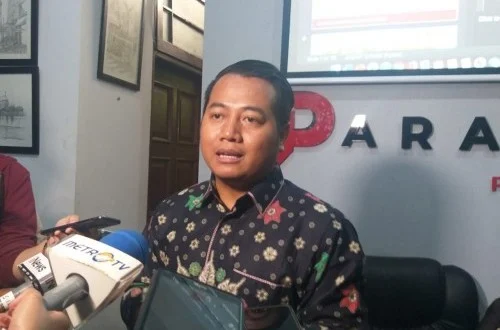
Adi Prayitno, Executive Director of Parameter Politik Indonesia, announced the findings in an online release observed from Jakarta on Wednesday, May 29, 2024. He detailed the methodology, explaining that respondents were individually asked about their recognition of various political figures. "We asked respondents one by one, ‘Sir, Madam, are you familiar with the following figure?’ So, we questioned each respondent individually, and approximately 52.1 percent stated they were familiar with Taj Yasin’s name," Prayitno elaborated. This initial level of recognition, often termed ‘top-of-mind awareness,’ is a crucial indicator in the early stages of political campaigning, suggesting a strong foundation for future electability.
Following Taj Yasin, Hendrar Prihadi, who currently serves as the Head of the Government’s Goods and Services Procurement Policy Agency (LKPP), secured the second position with a recognition rate of 40 percent. Hendrar Prihadi brings significant administrative experience, having previously served as the Mayor of Semarang, the provincial capital of Central Java. The third spot in terms of popularity was occupied by Dico Ganinduto, the current Regent of Kendal, who garnered 38.1 percent. Dico represents a newer generation of political leaders, having overseen a regency adjacent to Semarang, which could appeal to a different demographic segment within the province.
Prayitno emphasized that these figures represent individuals who are widely perceived as having the potential to run or are frequently discussed in relation to the Central Java gubernatorial race. "These individuals are those whom we believe possess potential, or are frequently debated, or are consistently linked to the possibility of advancing in the Central Java Pilkada. Thus, if we calculate them one by one, this is generally the portrait of their popularity," he stated. However, despite these encouraging early figures for the leading candidates, Prayitno cautioned that none of the popular figures have yet achieved an overwhelmingly dominant or "shining" level of popularity, suggesting that the race remains open and highly dynamic.
The Significance of Central Java’s Political Landscape
Central Java is a crucial battleground in Indonesian politics, often considered a bellwether province due to its large population, diverse socio-economic demographics, and historical political leanings. With over 37 million inhabitants, it is the third most populous province in Indonesia, after West Java and East Java. Its political landscape is traditionally dominated by the Indonesian Democratic Party of Struggle (PDI-P), which has strong roots among nationalist and secular segments of the population, particularly in its rural heartlands and urban working-class areas. However, Islamic parties, particularly the National Awakening Party (PKB) and the United Development Party (PPP), also command significant influence, especially within communities affiliated with Nahdlatul Ulama (NU), the largest Islamic organization in Indonesia.
The gubernatorial election in Central Java is not merely a regional contest; it often serves as a proxy for national political trends and power dynamics. The winner of this election will control substantial resources and influence, impacting regional development, public services, and political stability in a strategically important part of the country. For national political parties, securing the governorship of Central Java is a prestige issue and a critical component of their broader electoral strategy, especially in the lead-up to the next general election cycle.
Background Context: The Candidates and Their Strengths
Taj Yasin Maimoen’s leading position in the popularity poll is largely attributable to several key factors. His tenure as Deputy Governor alongside Ganjar Pranowo from 2018 to 2023 provided him with considerable public exposure and administrative experience. During this period, he was involved in various provincial initiatives and policies, making his face and name familiar to a broad spectrum of the Central Javanese populace. Beyond his political office, Taj Yasin benefits immensely from his lineage. He is the son of the late K.H. Maimoen Zubair, affectionately known as Mbah Moen, a highly revered cleric, leader of the Sarang Islamic boarding school (pesantren) in Rembang, and a former chairman of the consultative council (Majelis Syuro) of the United Development Party (PPP). Mbah Moen’s influence extends far beyond religious circles, encompassing political and social spheres across Indonesia, particularly within the NU community. This powerful religious and cultural capital provides Taj Yasin with an inherent advantage, tapping into networks of santri (religious students), ulamas (Islamic scholars), and traditional communities that are a significant demographic force in Central Java. His familiarity rating of 52.1 percent reflects this combined legacy of political exposure and deep-rooted community connections.
Hendrar Prihadi, with 40 percent popularity, represents a different political archetype. His political career has been largely centered on urban governance. As the Mayor of Semarang for two terms (2013-2022), he oversaw significant infrastructural development and urban planning initiatives that transformed the provincial capital. His administrative achievements in Semarang have likely contributed to his strong recognition, particularly among urban and suburban voters who value good governance and tangible development. His current role as Head of LKPP, a national agency, also provides him with a platform, though perhaps less direct in terms of provincial grassroots engagement than his previous mayoral position. Hendrar’s strength lies in his reputation as an effective bureaucrat and a modern, progressive leader, which could appeal to younger, more educated voters.
Dico Ganinduto, at 38.1 percent, is a rising star in Central Javanese politics. As the Regent of Kendal, a regency located strategically between Semarang and Pekalongan, he has demonstrated local leadership. His relatively younger age compared to the other two leading figures might appeal to youth voters, a significant demographic segment that is increasingly active in political discourse through social media and digital platforms. Regents and mayors often serve as training grounds for future gubernatorial candidates, and Dico’s performance in Kendal will be closely scrutinized as a measure of his broader leadership capabilities. His popularity indicates a growing recognition of his potential beyond his immediate administrative region.
Survey Methodology and Timeline
The Parameter Politik Indonesia survey, conducted from May 15 to 21, 2024, employed a robust methodology designed to capture a representative sample of the Central Javanese electorate. While specific details such as sample size and margin of error were not fully disclosed in the initial report, reputable survey institutions typically employ proportional stratified random sampling across regencies and cities, with face-to-face interviews to ensure data quality. A typical sample size for a provincial-level survey of this nature would range from 800 to 1,200 respondents, yielding a margin of error of approximately +/- 2.8% to 3.5% at a 95% confidence level. Such a methodology ensures that the findings are statistically representative of the broader population of eligible voters in Central Java.
The timing of this survey is critical. The official registration period for candidates for the 2024 simultaneous regional elections (Pilkada) is set for August 27-29, 2024. This means the May survey results provide an early indication, roughly three months before candidate registration, allowing political parties and potential candidates ample time to strategize, consolidate support, and potentially form coalitions. The campaign period is scheduled from September 25 to November 23, 2024, culminating in election day on November 27, 2024. Therefore, these early popularity figures serve as a crucial barometer for political parties contemplating their endorsements and for individuals considering their candidacy.
Analysis of Implications and Broader Impact
The early popularity figures, while not definitive predictors of electoral victory, carry significant implications for the Central Java gubernatorial race:
-
Party Endorsements and Coalition Building: Political parties meticulously analyze survey results to guide their endorsement decisions. A candidate with high early popularity is more attractive to parties seeking to win the election. Taj Yasin’s lead, particularly given his strong ties to religious communities and his family’s legacy, makes him a strong contender for endorsements from parties with Islamic bases, such as PPP, PKB, and potentially even parties like Gerindra or Golkar looking to broaden their appeal. Hendrar Prihadi, with his PDI-P background and strong track record in Semarang, is a natural choice for the PDI-P, though the party has other potential internal candidates. Dico Ganinduto, affiliated with Golkar, would also be a strong candidate for his party, potentially forming a coalition with others. The challenge for any candidate will be to secure enough party support to meet the electoral threshold, which typically requires a certain percentage of seats in the provincial legislature or a combined vote share from the previous general election. This often necessitates forming multi-party coalitions.
-
Strategic Adjustments for Candidates: The survey results provide valuable feedback for the candidates themselves. Taj Yasin’s team will likely seek to maintain and expand his public visibility, leveraging his existing networks and perhaps focusing on issues that resonate with his established base. Hendrar Prihadi might need to enhance his provincial-wide recognition beyond Semarang, emphasizing his administrative achievements and articulating a broader vision for Central Java. Dico Ganinduto, while popular in Kendal, will need to significantly boost his profile across the entire province to challenge the more established figures, potentially through targeted campaigns and media exposure. The comment from Adi Prayitno that no candidate is "shining" suggests that all candidates have room for improvement in consolidating their support and differentiating themselves.
-
Dynamic Nature of the Race: It is crucial to remember that early popularity does not equate to electability, nor does it guarantee victory. Several factors can dramatically shift public opinion closer to election day, including:
- Campaign Messaging: The effectiveness of each candidate’s campaign message and their ability to articulate a compelling vision for Central Java.
- Media Exposure: The amount and type of media coverage each candidate receives, both traditional and social media.
- Campaign Funding and Machinery: The financial resources available to each campaign and the efficiency of their party’s grassroots mobilization efforts.
- Debates and Public Appearances: How candidates perform in public forums and debates, which can sway undecided voters.
- Negative Campaigns/Black Campaigns: The potential for smear tactics, though illegal, can sometimes influence public perception.
- Last-Minute Endorsements: Key endorsements from influential figures or organizations closer to the election can have a significant impact.
-
Role of National Politics: While a regional election, the Central Java Pilkada cannot be entirely decoupled from national political dynamics. The performance of the newly elected national government under President-elect Prabowo Subianto and Vice President-elect Gibran Rakabuming Raka may indirectly influence voter sentiment in regional elections. Parties aligned with the national government might seek to capitalize on their victory, while opposition parties might try to consolidate regional strongholds.
In conclusion, the Parameter Politik Indonesia survey offers a critical early insight into the Central Java gubernatorial race, highlighting Taj Yasin Maimoen’s initial lead in popularity. However, the political landscape is complex and fluid, with other strong contenders like Hendrar Prihadi and Dico Ganinduto also showing significant public recognition. The coming months will be crucial as candidates and political parties work to translate early popularity into sustained electability, build formidable coalitions, and present their vision for the future of Central Java to its millions of voters. The race for the province’s top executive seat is far from over, promising an engaging and closely watched electoral contest.