The city of Tangerang Selatan is rapidly transforming into a focal point of regional sports development as it gears up to host the Pekan Olahraga Provinsi (Porprov) VII Banten in 2026. Scheduled to take place from November 15 to November 23, 2026, the event is poised to be the most expansive iteration of the games in the province’s history. With an ambitious program featuring 60 distinct sporting disciplines, the event is expected to draw thousands of athletes, officials, and spectators, placing significant logistical and competitive pressure on the host city. Among the most closely watched disciplines is karate, a sport where the Tangerang Selatan contingent is currently undergoing a rigorous, high-intensity training regimen to ensure the city secures a dominant position on the medal tally.
A Historic Milestone for Banten Sports
Porprov VII Banten 2026 represents a critical juncture for sports infrastructure and talent development in the province. Since its inception, the provincial games have served as the primary pipeline for identifying athletes capable of representing Banten at the national level, specifically for the Pekan Olahraga Nasional (PON). The decision to host 60 sporting categories reflects a broader strategic initiative to revitalize local sports, promote health, and stimulate the regional economy through sports tourism.
The nine-day event is designed to accommodate a diverse range of athletic talents, from traditional martial arts and team field sports to emerging aquatic and electronic gaming competitions. For Tangerang Selatan, serving as the host city is not merely a logistical challenge but a prestige project. Local government officials have indicated that the city’s readiness to host such a large-scale event serves as a benchmark for its administrative efficiency and capacity to manage multi-venue operations.
The Karate Contingent: A Calculated Path to Excellence
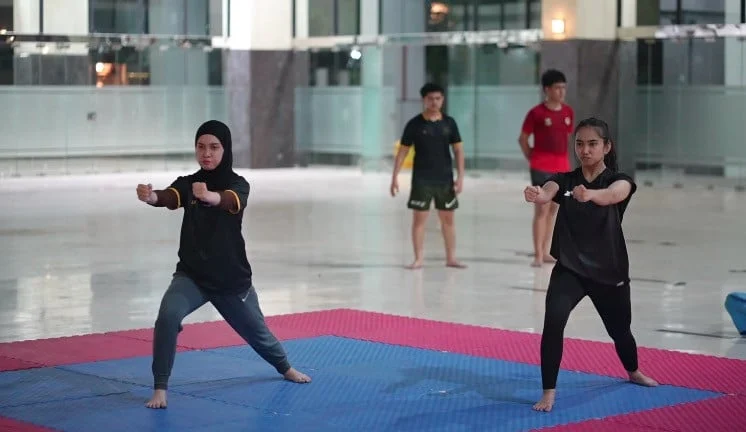
While the entire host city prepares its infrastructure, the karate squad has adopted a "championship-first" philosophy. Under the guidance of head coach Sugeng Haryoto, the team has transitioned into a full-scale training camp (TC) model that has been in operation for over five months. This long-term approach acknowledges that the gap between a podium finish and elimination is often found in the subtle nuances of technique and the endurance levels of the athlete.
The training schedule is designed to optimize physiological performance. Athletes are required to participate in two-a-day sessions at the Tangerang Selatan Government Hall. The morning sessions, running from 06:00 to 08:00 WIB, focus primarily on cardiovascular conditioning, agility, and speed. The evening sessions, conducted from 19:00 to 21:00 WIB, shift toward technical refinement, strategic maneuvering, and mental conditioning. This dual-session approach is standard for elite-level preparation, aiming to build a cumulative fatigue resistance that allows athletes to perform at peak capacity during the high-pressure environment of a tournament final.
"Our objective is to move beyond basic proficiency and reach a level of instinctual execution," explained Sugeng Haryoto. "By focusing on the micro-details of every stance, movement, and strike, we are building the mental fortitude necessary to stay composed under the lights. It is not enough to be physically superior; one must be mentally unshakable."
Strategic Goals and Competitive Targets
The Tangerang Selatan karate team has set an internal target of securing seven to eight gold medals. This goal is based on an analytical assessment of current provincial standings and the projected trajectory of their athletes. In the context of the Porprov, this target is aggressive but considered attainable given the home-court advantage and the depth of the current squad.
The team’s preparation is divided into two primary domains: Kata and Kumite. Kata, the demonstration of formal patterns and techniques, requires precision, rhythm, and artistic grace, often judged by a panel. The coaching staff is currently utilizing video analysis software to deconstruct each athlete’s movements, comparing them against the standards set by the World Karate Federation (WKF) to ensure that every motion maximizes scoring potential.
Kumite, the combat-based discipline, requires a different set of tactical preparations. Coaches are conducting regular simulation bouts—essentially mock tournaments—to test how athletes handle different fighting styles. By identifying individual weaknesses in real-time, the coaching staff can pivot training focus, ensuring that each fighter is prepared to counter various tactical approaches from opponents representing other regencies and cities in Banten.
Analytical Implications of the Porprov 2026
The hosting of Porprov VII carries significant implications for Tangerang Selatan’s sports landscape. First, it serves as a catalyst for infrastructure maintenance and upgrades. The city has had to evaluate its existing athletic halls, training centers, and public facilities to ensure they meet the rigorous standards required for a multi-sport provincial event. This ensures a long-term legacy where local clubs and schools can benefit from improved facilities long after the closing ceremony.
Second, the intense focus on "medal targets" reflects a shift in how regional sports are managed in Indonesia. There is an increasing emphasis on data-driven performance. The use of performance indicators—such as the systematic tracking of athlete recovery times, heart rate variability, and strike efficiency—shows that the Tangerang Selatan contingent is moving toward a more scientific approach to martial arts training. This professionalization is likely to influence other sports within the province to adopt similar methodologies to stay competitive.
Third, the social impact of hosting the games cannot be overstated. By centering the community around the success of their local athletes, the city is fostering a sense of civic pride. The presence of the training camp at the city’s main government hall serves as a visible symbol of commitment, encouraging public interest in karate and other martial arts, which may lead to increased enrollment in local dojos and youth programs.
Challenges and Future Outlook
Despite the meticulous planning, the path to the 2026 games is not without challenges. The primary concern remains the management of athlete burnout. Maintaining such a high-intensity training pace for several months requires careful monitoring of physical health to prevent injuries. The team’s medical staff is reportedly working in tandem with the coaching staff to manage nutrition, hydration, and recovery protocols.
Furthermore, the pressure of being the host city creates an psychological burden. Athletes must balance the expectations of their community with the technical demands of the sport. Coach Sugeng acknowledges this pressure, noting that mental resilience training is just as vital as physical conditioning. "We discuss the weight of expectations openly," he noted. "We frame it not as a burden, but as a source of energy. Knowing that your city is behind you provides a unique drive that opponents often find difficult to match."
As the clock ticks down toward November 2026, the focus will likely shift from foundational conditioning to tactical peaking. The final few months before the event will be dedicated to "tapering," a process where training volume is reduced to allow the body to recover fully while maintaining intensity, ensuring that every athlete is at their absolute physical and mental peak when they step onto the tatami.
Conclusion
The preparations for Porprov VII Banten 2026 in Tangerang Selatan offer a compelling look at the intersection of local government administration and elite athletic development. By setting clear targets, implementing a rigorous and data-backed training schedule, and fostering a culture of excellence, the karate contingent is positioning itself as a leader in the upcoming games. Whether they reach their ambitious goal of eight gold medals remains to be seen, but the process currently underway—marked by discipline, science, and strategic planning—establishes a professional standard that will undoubtedly shape the future of provincial sports in Banten for years to come. The success of these games will be judged not only by the medals collected but by the legacy of infrastructure and sports culture left for the citizens of Tangerang Selatan.