JAKARTA – Indonesia’s access to modern biotechnology pharmaceuticals is set to expand significantly following a landmark joint venture agreement between PT Tempo Scan Pacific Tbk, a leading Indonesian pharmaceutical and consumer goods conglomerate, and Chia Tai Tianqing Pharmaceutical Group Co., Ltd (CTTQ), a prominent subsidiary of the Chinese pharmaceutical giant Sino Biopharmaceutical Limited. This strategic collaboration culminates in the establishment of PT Tempo CTTQ Biopharmaceutical Indonesia (TCBI), a new entity poised to revolutionize the availability and affordability of specialty drugs within the archipelago.
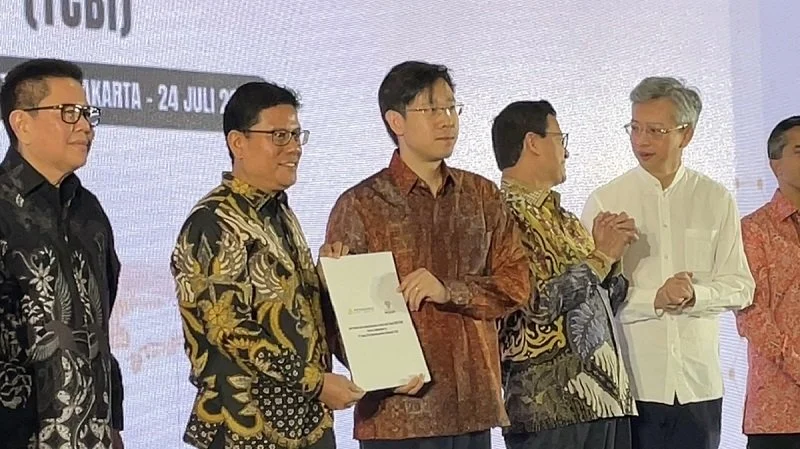
The partnership, formalized through a signing ceremony at the Tempo Scan Tower in Jakarta on Friday, July 24, 2026, is specifically engineered to fortify Indonesia’s specialty pharmaceutical production capabilities. A primary objective is to substantially reduce the nation’s reliance on imported high-value medicines, thereby enhancing national health security and fostering greater self-sufficiency in a critical sector. The auspicious event was graced by several high-ranking officials and prominent figures, including Coordinating Minister for Economic Affairs Airlangga Hartarto, Head of the Food and Drug Supervisory Agency (BPOM) Taruna Ikrar, Special Presidential Envoy for Youth and Creative Workers Raffi Ahmad, and Co-CEO of MNC Group Angela Tanoesoedibjo, underscoring the national significance and broad support for this initiative.
Under the terms of the joint venture, Sino Biopharmaceutical/CTTQ will hold a controlling stake of 51 percent in TCBI, while Tempo Scan will retain a 49 percent share. This balanced structure is designed to leverage the distinct strengths of both partners: CTTQ’s advanced biotechnological expertise and extensive R&D capabilities, combined with Tempo Scan’s deep understanding of the Indonesian market, established distribution networks, and local operational prowess.
Coordinating Minister Airlangga Hartarto lauded the investment in bio-pharmaceutical manufacturing as a crucial step towards bolstering the national health sector’s independence. He emphasized that local production, particularly focusing on drugs for priority diseases, would not only ensure a more consistent supply but also potentially drive down the cost of these often-expensive treatments. "This initiative is expected to stimulate the production of bio-pharmaceuticals for priority diseases," Minister Hartarto stated, highlighting the government’s strategic vision for healthcare. He further articulated the potential for locally manufactured biotechnology drugs to become more accessible and affordable for the wider population, with the added benefit of potentially integrating these vital medicines into the coverage scheme of the National Health Insurance Agency (BPJS Kesehatan). "The prices could be reduced, and they could be accessed through the BPJS system," he affirmed, pointing to a future where advanced therapies are within reach for more Indonesians.
Handojo S. Muljadi, Executive Chairman and Co-Founder of Tempo Scan Group, elaborated on the strategic rationale behind the joint venture model. He underscored that the collaboration transcends a mere product licensing agreement, which typically offers shorter-term benefits. Instead, both companies are committed to a long-term vision, encompassing a comprehensive roadmap for sustainable technology transfer. "This joint venture has a long-term perspective," Muljadi remarked, signaling a deep commitment to not just manufacturing but also to fostering local expertise and innovation in the biopharmaceutical domain. This commitment to technology transfer implies an investment in human capital development, R&D infrastructure, and manufacturing process optimization within Indonesia, paving the way for future indigenous innovation.
The Strategic Imperative: Fortifying Indonesia’s Pharmaceutical Independence
Indonesia, with its vast population and growing economy, represents one of the largest and most dynamic pharmaceutical markets in Southeast Asia. However, the nation has historically grappled with a significant dependency on imported pharmaceutical products, particularly for high-technology and specialty medicines. This reliance creates vulnerabilities in supply chains, exposes the market to international price fluctuations, and limits access to cutting-edge treatments for a substantial portion of the population. The COVID-19 pandemic starkly highlighted these fragilities, accelerating the government’s resolve to achieve greater self-sufficiency in the healthcare sector.
The government, through initiatives like the National Health System Transformation roadmap, has prioritized boosting local production of active pharmaceutical ingredients (APIs) and finished pharmaceutical products, especially those categorized as biotechnology drugs. These biologics, derived from living organisms, represent the forefront of modern medicine, offering targeted and often highly effective treatments for complex diseases such as various cancers, autoimmune disorders, diabetes, and rare genetic conditions. However, their development and manufacturing are highly complex and capital-intensive, leading to exorbitant prices that often place them out of reach for many patients in developing economies.
Indonesia’s pharmaceutical market was estimated to be worth approximately IDR 90-100 trillion (around USD 6-7 billion) in recent years, with a consistent growth trajectory driven by an expanding middle class, increasing health awareness, and the widespread coverage of BPJS Kesehatan. Despite this growth, local production capacity for sophisticated biopharmaceuticals has lagged, making the country a net importer in this segment. The formation of TCBI directly addresses this critical gap, aligning perfectly with the government’s long-term health agenda.
Chronology of a Strategic Partnership
While the signing on July 24, 2026, marks the official culmination, the formation of such a significant joint venture is typically the result of extensive preparatory work. The process likely involved:
- Initial Explorations (Late 2024 – Early 2025): Preliminary discussions between Tempo Scan Group and Sino Biopharmaceutical/CTTQ, identifying mutual strategic interests and potential synergies. Tempo Scan’s established market presence and CTTQ’s advanced technological capabilities would have made them natural partners.
- Memorandum of Understanding (MoU) (Mid-2025): Formalization of intent to explore a partnership, outlining general terms and areas of collaboration.
- Due Diligence and Feasibility Studies (Late 2025 – Early 2026): Detailed assessments of market potential, regulatory landscape, technical requirements, financial projections, and legal frameworks. This phase would have involved extensive data sharing and expert consultations.
- Negotiation of Definitive Agreements (Mid-2026): Drafting and finalization of the joint venture agreement, shareholder agreements, and other ancillary contracts, detailing ownership structure, governance, operational plans, and intellectual property arrangements.
- Regulatory Approvals (Ongoing – Post-Signing): While the signing event is a key milestone, TCBI will likely undergo further regulatory scrutiny from bodies like BPOM for product registrations, as well as business and investment licenses from relevant Indonesian authorities.
- Formal Signing Ceremony (July 24, 2026): The public announcement and formalization of the partnership, attended by key stakeholders and government officials, signaling a new era of collaboration.
- Operationalization and Facility Development (Late 2026 onwards): Post-signing, the focus will shift to establishing TCBI’s operational infrastructure, including potentially setting up new manufacturing facilities or upgrading existing ones, technology transfer implementation, talent acquisition, and initiating R&D activities.
The Partners: Strength in Collaboration

Tempo Scan Group: An Indonesian powerhouse with a history spanning over five decades, Tempo Scan Pacific Tbk has evolved from a pharmaceutical company into a diversified group with strong presences in consumer products, cosmetics, and pharmaceuticals. Its pharmaceutical division boasts a robust portfolio of ethical drugs, over-the-counter (OTC) medicines, and consumer health products, supported by extensive manufacturing facilities and a wide distribution network across Indonesia. Tempo Scan’s deep understanding of local market dynamics, regulatory environment, and patient needs positions it as an ideal partner for CTTQ to navigate the Indonesian landscape. The group’s commitment to quality and innovation has been a cornerstone of its success.
Sino Biopharmaceutical Limited and CTTQ: Sino Biopharmaceutical is a leading innovative research and development driven pharmaceutical group in China, listed on the Hong Kong Stock Exchange. Its subsidiary, Chia Tai Tianqing Pharmaceutical Group Co., Ltd (CTTQ), is renowned for its strong R&D capabilities, particularly in the fields of oncology, liver diseases, infectious diseases, and respiratory illnesses. CTTQ has a formidable pipeline of biologics and small molecule drugs, leveraging cutting-edge biotechnological platforms. The company’s global expansion strategy seeks to extend its reach into high-growth emerging markets, and Indonesia presents a compelling opportunity due to its unmet medical needs and supportive government policies for local pharmaceutical production. CTTQ’s expertise in developing and manufacturing complex biopharmaceuticals, coupled with its experience in navigating large-scale production, will be invaluable to TCBI.
Beyond the Signing: Implications and Broader Impact
The establishment of PT Tempo CTTQ Biopharmaceutical Indonesia carries multifaceted implications for Indonesia’s healthcare ecosystem and economy:
1. Enhanced Access and Affordability of Specialty Drugs:
The most immediate benefit is the potential for increased availability of high-quality, locally manufactured biotechnology drugs. By producing these medicines domestically, TCBI can potentially circumvent import duties, logistics costs, and foreign exchange risks, leading to more competitive pricing. This aligns with Minister Hartarto’s vision of integrating these therapies into BPJS Kesehatan, making life-saving treatments accessible to millions who might otherwise be unable to afford them. This move could significantly improve health outcomes for patients suffering from chronic and severe conditions that currently rely on expensive imported biologics.
2. Bolstering National Health Security and Resilience:
Local production capacity for specialty pharmaceuticals directly contributes to national health security. In times of global crises, pandemics, or supply chain disruptions, Indonesia will be less vulnerable to shortages of essential medicines. This move reduces geopolitical risks associated with relying on foreign suppliers and ensures a more stable and predictable supply of critical drugs.
3. Technology Transfer and Skill Development:
The long-term vision of sustainable technology transfer, as articulated by Handojo S. Muljadi, is paramount. This will involve the transfer of advanced manufacturing processes, quality control methodologies, and R&D know-how from CTTQ to Indonesian personnel. This intellectual capital transfer will elevate the skills of the local workforce, create high-value jobs, and foster a new generation of biopharmaceutical scientists and engineers in Indonesia. Over time, this could catalyze the growth of indigenous biopharmaceutical R&D capabilities, reducing the need for foreign expertise.
4. Economic Stimulus and Investment Attraction:
The joint venture represents a significant foreign direct investment (FDI) into Indonesia’s strategic healthcare sector. This investment will not only create direct employment opportunities within TCBI but also stimulate growth in ancillary industries, such as raw material suppliers, logistics, and research services. The success of TCBI could also serve as a strong signal to other international pharmaceutical companies, encouraging further investment and collaboration in Indonesia’s burgeoning healthcare market.
5. Regulatory Support and Market Facilitation:
The presence of BPOM Head Taruna Ikrar at the signing ceremony highlights the regulatory body’s commitment to supporting such strategic initiatives. BPOM plays a crucial role in ensuring the safety, efficacy, and quality of pharmaceutical products. Its active involvement signals a streamlined regulatory pathway for TCBI’s products, while maintaining rigorous standards. This regulatory certainty is vital for the success and rapid market entry of new pharmaceutical products.
6. Strengthening Indonesia-China Economic Ties:
This joint venture is a testament to the deepening economic partnership between Indonesia and China, particularly in high-technology sectors. It signifies a shift from traditional trade relationships to more collaborative ventures that involve shared investment, technology, and risk. Such partnerships are vital for fostering mutual growth and addressing shared challenges.
Outlook and Future Prospects
The journey for PT Tempo CTTQ Biopharmaceutical Indonesia is just beginning. Following the signing, the immediate priorities will likely involve finalizing regulatory approvals, establishing or expanding manufacturing facilities with state-of-the-art bioprocessing capabilities, and initiating the technology transfer process. The selection of specific drug candidates for local production will be critical, likely prioritizing therapies for diseases with high prevalence and significant unmet needs in Indonesia.
The long-term success of TCBI will depend on several factors: the effectiveness of technology transfer, the ability to maintain stringent quality standards, competitive pricing strategies, and strong market penetration through Tempo Scan’s established networks. If successful, TCBI could become a cornerstone of Indonesia’s biopharmaceutical industry, transforming patient access to advanced medicines and significantly contributing to the nation’s health resilience and economic growth. This pioneering partnership sets a precedent for future collaborations aimed at making Indonesia a regional hub for pharmaceutical innovation and production, ultimately benefiting millions of lives.