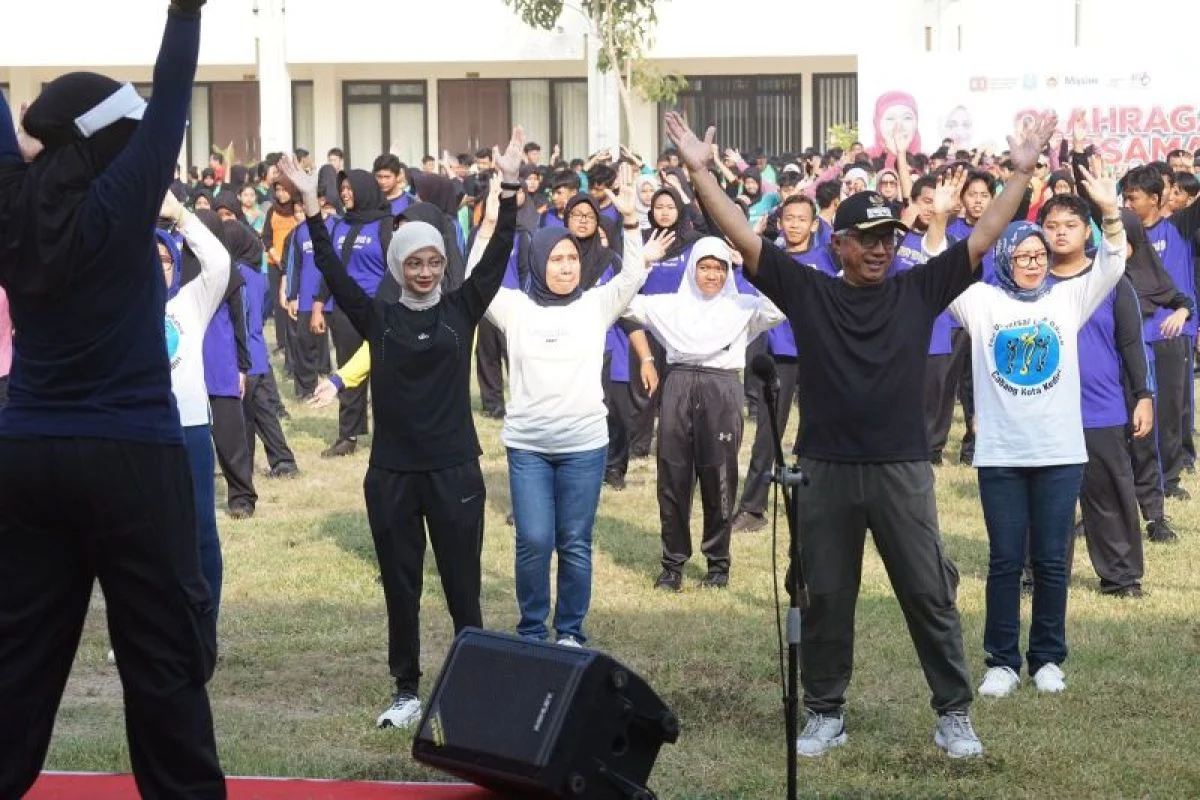
Every September 9, Indonesia observes National Sports Day, widely known as Hari Olahraga Nasional (Haornas). While modern observances focus heavily on physical fitness, community engagement, and the burgeoning sports economy, the roots of this national day extend deep into the crucible of Indonesia’s early independence era. Born out of geopolitical exclusion and a fierce domestic desire to prove national sovereignty on the athletic stage, Haornas has evolved from a commemorative date into a multi-faceted movement encompassing public health, character building, community resilience, and sports tourism. As the nation marks the 43rd anniversary of its official proclamation in 2026, examining the historical trajectory of Haornas reveals how physical culture remains inextricably linked to the identity and progress of the Indonesian republic.
Historical Origins: The Geopolitical Impetus of the First PON in Solo
The genesis of National Sports Day cannot be separated from the turbulent yet hopeful landscape of post-independence Indonesia. In 1948, the fledgling republic was locked in a diplomatic and physical struggle to maintain its hard-won sovereignty, recognized only by a handful of nations while facing ongoing military and political pressures from colonial powers. Despite these monumental domestic challenges, Indonesian sports leaders harbored ambitions to project the nation onto the international arena.
The immediate catalyst for the inaugural Pekan Olahraga Nasional (PON) was an administrative blockade encountered ahead of the XIV Olympic Games in London in 1948. The nascent Indonesian Olympic Committee sought to send a contingent to the global showcase, aiming to fly the red-and-white flag independently on the world stage. However, the International Olympic Committee (IOC) and organizing bodies did not yet broadly recognize Indonesia’s political status, and demands for specific administrative recognitions—such as competing under a colonial-era passport or lacking formal international recognition—created insurmountable hurdles for the contingent.
Refusing to be sidelined, Indonesian sports pioneers decided to channel this frustration inward. Rather than abandoning athletic competition, the nation resolved to organize its own grand multi-sport event. Surakarta (Solo), Central Java, was selected as the host city. From September 9 to September 12, 1948, athletes from various regions, resistance factions, and cities converged on Solo for the first-ever PON.
The games served a dual purpose. Athletically, it provided a structured environment for domestic athletes to compete and set benchmarks. Politically and socially, it functioned as a powerful propaganda tool, signaling to both the domestic populace and the watching world that the Republic of Indonesia was fully functioning, culturally vibrant, and capable of organizing massive national endeavors independently. The opening day of this historic event—September 9—would eventually be etched permanently into the national calendar as the philosophical birthdate of Indonesian sports consciousness.
Institutionalization and the 1983 Proclamation
While the spirit of September 9, 1948, resonated strongly within athletic circles, decades passed before the date was formally institutionalized as a national day. The formalization of Haornas took place on September 9, 1983, during a high-profile national address by President Soeharto. The announcement was strategically made in Surakarta during the inauguration of the newly restored and historic Sriwedari Stadium—the very spiritual home where the 1948 PON had unfolded.
The 1983 proclamation was designed to inject renewed vigor into the nation’s sports policies. During this era, the government sought to systematically elevate Indonesia’s standing in international multi-sport events like the Southeast Asian (SEA) Games and the Asian Games, while simultaneously driving grassroots participation.
To give the proclamation permanent legal standing, the government enacted Presidential Decree (Keppres) Number 67 of 1985 concerning National Sports Day. This legal framework formally designated September 9 of each year as Haornas. The decree mandated that state institutions, educational facilities, and civil society organizations utilize the date to promote physical education, support athletic training pipelines, and cultivate a culture of wellness. Over subsequent decades, this institutional framework expanded, transforming Haornas from a bureaucratic commemoration into a participatory nationwide movement.
Shifting Paradigms: From Elite Medals to Public Health and the Sports Economy
In contemporary discourse, the Ministry of Youth and Sports (Kemenpora) emphasizes that Haornas transcends the narrow pursuit of podium finishes and gold medals. While elite athletic achievements at the Olympic, Paralympic, and Asian Games remain vital sources of national pride, modern sports governance increasingly views physical activity through a socioeconomic lens.
Recent policy frameworks and Ministerial statements underscore that the development of sports infrastructure yields profound secondary benefits, notably in public health care savings and macroeconomic stimulation. By encouraging citizens to incorporate daily physical activity into their routines, the state aims to mitigate the rising prevalence of non-communicable lifestyle diseases, thereby reducing long-term national health expenditures.
Furthermore, sports have increasingly intersected with the tourism and creative economy sectors. Initiatives such as integrating major events into regional development strategies—exemplified by plans to position regional competitions like upcoming editions of PON and specialized events like beach games and regional tourism showcases—demonstrate how physical culture generates tangible financial dividends. Mega-events stimulate local hospitality industries, create temporary and permanent employment, spur infrastructure development in remote or developing regions, and elevate the profile of domestic destinations for both domestic and international travelers.
However, realizing these ambitious goals requires sustained capital investment. Recent policy debates highlighted by Kemenpora have emphasized the necessity of substantial funding—such as proposals exceeding trillions of rupiah—to construct state-of-the-art national training centers, regional academies, and localized sports hubs. These investments are deemed critical if Indonesia wishes to transition from sporadic athletic triumphs to a systematic, science-backed pipeline capable of producing world-class competitors consistently across generations.
The 2026 Observance: Celebrating 43 Years of Haornas
As the calendar turns to Wednesday, September 9, 2026, Indonesia marks the 43rd official anniversary of Hari Olahraga Nasional since its 1983 inception. Across the archipelago, the day is observed through a diverse array of community-led and institutional initiatives. Schools, corporate offices, government agencies, and neighborhood associations routinely organize mass gymnastics, community running events, traditional games, and health-screening camps.
The 43rd iteration of Haornas serves as a vital reminder of the long and arduous road traversed by the nation’s sports ecosystem. From the makeshift tracks and fields of post-revolutionary Solo in 1948 to modern multi-purpose stadiums, digital fitness applications, and professional sports leagues, the landscape of Indonesian athletics has transformed dramatically.
Beyond organized events, Haornas 2026 acts as a personal call to action for every citizen. It challenges individuals to evaluate their physical lifestyles in an era dominated by sedentary digital environments. By encouraging families to introduce physical literacy to children at an early age and urging communities to reclaim public spaces for active recreation, the national day fulfills its core mandate: embedding resilience, discipline, and unity into the national character.
Conclusion: Preserving the Legacy for Future Generations
The enduring legacy of Hari Olahraga Nasional lies in its synthesis of historical memory and future ambition. It honors the resilience of the 1948 generation who, amidst the smoke of revolution, recognized that a nation’s strength is measured not only by its political and military defense, but by the vitality, discipline, and unity of its people.
As Indonesia looks toward future global sporting milestones and domestic spectacles—ranging from specialized beach multi-sport events to comprehensive national games—Haornas remains the philosophical anchor of the nation’s athletic journey. Every September 9 challenges the republic to bridge the gap between grassroots wellness and elite international excellence, ensuring that the foundational spirit of Solo 1948 continues to inspire generations of physically active, mentally resilient, and globally competitive Indonesians.