National Sports Day, widely recognized as Hari Olahraga Nasional or Haornas, stands as one of the most significant commemorative milestones in the Republic of Indonesia’s socio-cultural and athletic calendar. Celebrated annually on September 9, this observance transcends a mere ceremonial acknowledgment of athletic achievements; it serves as a profound historical reminder of how sports became an instrument of diplomacy, national survival, and unity. The genesis of Haornas is inextricably linked to the turbulent yet determined early years of Indonesia’s independence, specifically tracing back to the staging of the inaugural National Games, or Pekan Olahraga Nasional (PON), in Solo, Central Java, in 1948. Over the decades, Haornas has evolved from a symbolic political statement into a comprehensive national movement aimed at fostering public health, economic vitality, character-building, and high-performance athletic excellence across the archipelago.
The Historical Crucible: The 1948 Solo PON as a Declaration of Independence
To fully understand the weight of National Sports Day, one must examine the geopolitical and administrative landscape of Indonesia in 1948. Having proclaimed independence on August 17, 1945, the young republic was still locked in a fierce struggle to secure international recognition and defend its sovereignty against Dutch colonial attempts to re-establish control. Amidst military blockades, economic hardship, and internal political stabilization efforts, Indonesian sports pioneers harbored a visionary ambition: to participate in the XIV Olympic Games scheduled for London in 1948.
However, entering the global sporting arena required formal recognition by the International Olympic Committee (IOC) and membership in international sports federations. Because the international community had not yet widely acknowledged Indonesia’s independence, and because the newly formed Indonesian Olympic Committee (PortI, later transformed into KOI) lacked formal international affiliation, the nation’s athletes faced insurmountable administrative barriers. They were told that Indonesian athletes could only compete under the Dutch flag—an unacceptable compromise for a nation that had shed blood for its freedom.
Refusing to yield to colonial subordination, Indonesian sports leaders, visionaries, and government officials decided to pivot inward while projecting a powerful external message. Led by figures such as Sri Sultan Hamengku Buwono IX and local sports organizers, the nation resolved to organize its own multi-sport event. Surakarta (Solo), serving as a safe haven and a vibrant cultural heartland, was chosen as the host city.
Thus, from September 9 to September 12, 1948, the first-ever Pekan Olahraga Nasional (PON I) took place. Featuring hundreds of athletes competing across multiple disciplines, the games were not merely about winning medals. They constituted a bold, defiant political statement. Through PON I, Indonesia demonstrated to the world that despite its young age and the ongoing physical revolution, it possessed the organizational capability, infrastructure, administrative competence, and national spirit characteristic of a sovereign, independent state. The opening day of these historic games, September 9, permanently etched itself into the national consciousness as the spiritual foundation of Indonesian sports.
Institutionalization: The Official Proclamation in 1983
While the spirit of September 9, 1948, resonated deeply among athletes and nationalists, it took nearly four decades for the date to be institutionalized into an official national commemoration. The formal designation of Hari Olahraga Nasional occurred on September 9, 1983, under the administration of President Soeharto.
The proclamation took place during a momentous public ceremony involving the grand reopening and revitalization of the historic Sriwedari Stadium in Surakarta—the very cradle of Indonesian multi-sport competition. The selection of Sriwedari Stadium carried immense symbolic weight, bridging the heroic era of 1948 with the modernization and developmental push of the 1980s. President Soeharto’s decree aimed to reinvigorate the nation’s commitment to physical education, grassroots athletic participation, and elite athlete development.
To solidify this presidential initiative into law, the government subsequently issued Presidential Decree (Keppres) Number 67 of 1985 concerning National Sports Day. This legal framework formally established September 9 as a permanent fixture on the national calendar, mandating continuous efforts by both state institutions and civil society to advance sports science, infrastructure, training regimens, and public health campaigns.
The Modern Evolution of Haornas: Beyond Medals to Public Health and Economic Value
In contemporary times, the scope of Hari Olahraga Nasional has expanded dramatically. While elite sports achievements—such as Olympic gold medals in badminton, weightlifting, and sport climbing—continue to capture public imagination and foster national pride, modern sports policy views physical activity through a much wider lens.
According to guidelines and policy frameworks issued by the Ministry of Youth and Sports (Kemenpora), Haornas serves as a critical catalyst for the "sports industry" and "sports tourism," alongside traditional public health initiatives. Modern state officials emphasize that the cultivation of sports yields profound socio-economic dividends. A physically active population translates directly into lower national healthcare expenditures, higher productivity, and reduced absenteeism in the workforce.
Furthermore, sports have transformed into a major economic driver. Events ranging from local marathons and community fun runs to international championships like the upcoming National Games (PON) and specialized regional competitions generate substantial economic activity. For instance, strategic initiatives such as positioning regions like Sumba Timur as national "sport tourism" hubs demonstrate how athletic events can stimulate local hospitality, culinary arts, transportation, and micro, small, and medium enterprises (MSMEs). Similarly, innovative concepts like hosting beach sports festivals in urban waterfronts, such as the scheduled coastal games in Ancol, reflect the diversification of modern sporting culture in Indonesia.
Challenges in Infrastructure and the Path Forward
Despite the celebratory nature of Haornas, Indonesia’s sporting ecosystem faces structural hurdles that require sustained financial and administrative investment. High-performance sports cannot thrive on passion alone; they demand cutting-edge training science, state-of-the-art facilities, sports psychology, and robust athlete welfare programs.
Recent evaluations by sports administrators have underscored the urgent need for comprehensive national training centers. Statements from sports ministry leadership have highlighted multi-trillion rupiah budgetary requirements necessary to construct advanced academies and centralized training facilities capable of nurturing talent from grassroots levels to international podiums. Developing these facilities represents a vital strategic investment if Indonesia aims to consistently rank among elite sporting nations on the global stage.
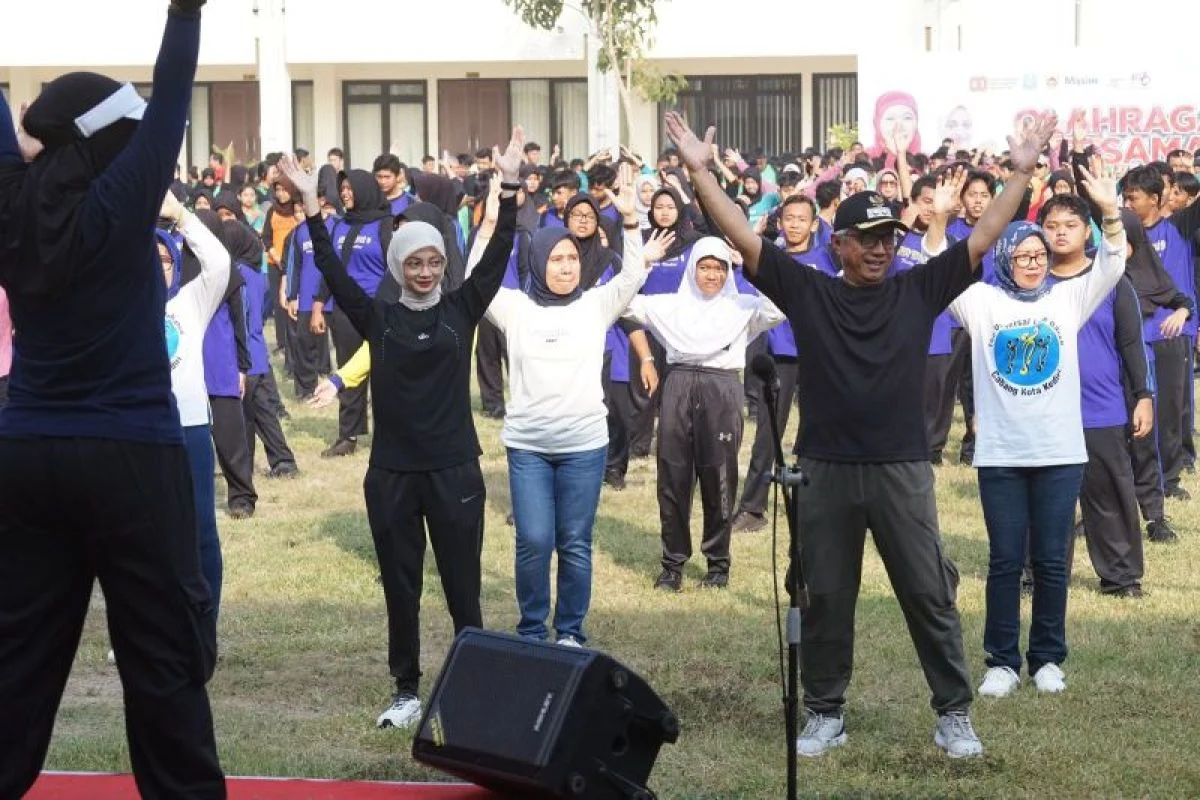
At the grassroots level, the challenge lies in transforming sedentary modern lifestyles—exacerbated by urbanization and digital screen consumption—into active habits. Public policy under Haornas campaigns heavily encourages schools, corporate offices, neighborhood communities, and families to integrate regular physical exercise into their daily routines. Walking, cycling, community gymnastics, and recreational team sports are continuously promoted as accessible tools for community building and mental well-being.
Conclusion: Honoring the Past While Building a Fitter Future
As the nation observes the 43rd anniversary of the formalization of Haornas in 2026, the core message of September 9 remains as urgent and relevant as it was in the revolutionary year of 1948. What began as a defiant gathering of athletes in Solo during a time of national peril has blossomed into a nationwide movement championing health, discipline, unity, and excellence.
Hari Olahraga Nasional is far more than a historical anniversary; it is a recurring call to action. It challenges every citizen to recognize that a strong, resilient nation begins with healthy bodies and disciplined minds. By honoring the sacrifices and vision of the 1948 pioneers, contemporary Indonesia continues to build a robust sporting culture—one that not only produces world-class champions on international stages but also cultivates a vibrant, productive, and unified society across every corner of the archipelago.