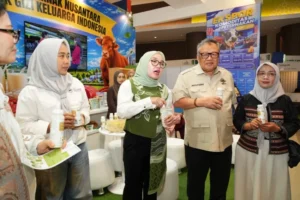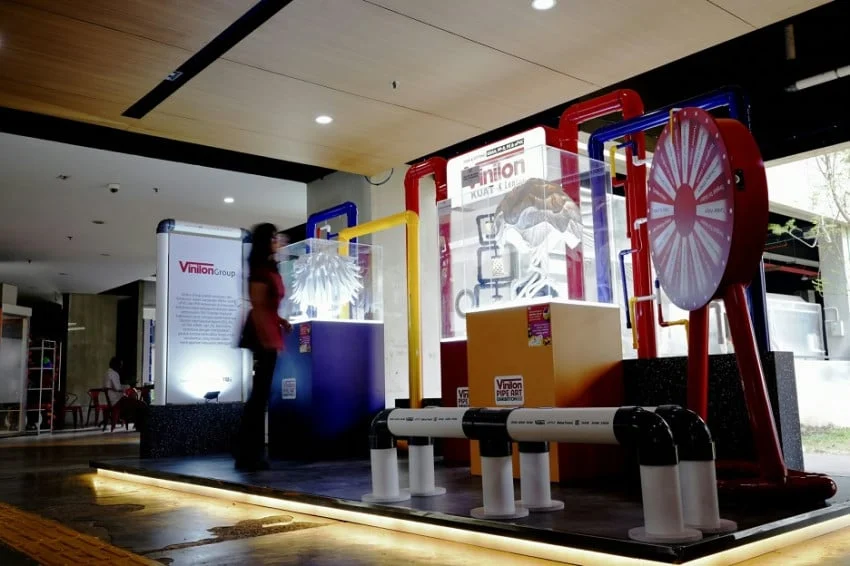
The Vinilon Group has officially inaugurated the Pipe Art Exhibition 2026, a landmark cultural event hosted at the prestigious Taman Ismail Marzuki (TIM) in Jakarta. Running from October 28 to November 8, 2026, the exhibition serves as a definitive intersection between industrial manufacturing and contemporary fine art. By transforming standard PVC pipes, fittings, and industrial adhesives into sophisticated artistic installations, the event challenges the conventional perception of construction materials. This initiative, now in its third consecutive year, highlights a strategic shift in how industrial entities engage with the creative sector, offering a platform for architects, designers, and students to experiment with the structural versatility of Vinilon’s product range.
The Evolution of the Pipe Art Competition
The exhibition serves as the culmination of the Pipe Art Competition 2026, which commenced in July. This annual competition was conceptualized to bridge the gap between technical engineering and creative expression. Over the past three years, the initiative has matured from a niche design contest into a significant fixture in Jakarta’s creative calendar.
The selection process for this year’s exhibition was notably rigorous, reflecting an increase in both the volume and the technical complexity of submissions. Participants were tasked with interpreting the theme of "Industrial Fluidity," a concept requiring them to manipulate rigid PVC materials into fluid, aesthetic, and often structural forms. The timeline of this year’s event underscores the commitment of the Vinilon Group to professional development: the call for entries in July was followed by a series of technical workshops where designers were educated on the physical properties and thermal limits of the materials, ensuring that the final exhibits were not only visually compelling but structurally sound.
Bridging Engineering and Artistic Vision
At the heart of the Pipe Art Exhibition is the desire to recontextualize the role of industrial infrastructure in urban environments. While PVC pipes are traditionally hidden within walls or buried underground to facilitate water distribution and sanitation, this exhibition brings them to the forefront. The curatorial strategy at TIM focuses on the juxtaposition of these "utilitarian skeletons" against the refined, curated environment of a gallery space.
The installations on display vary from large-scale geometric sculptures that test the load-bearing capacities of PVC, to intricate, abstract pieces that explore the interplay of light and shadow through perforated pipe segments. For many participants, the challenge lies in moving beyond the "pipe as a tube" paradigm. Architects involved in the project have utilized the modular nature of Vinilon’s fittings to create complex lattices, demonstrating that industrial components can serve as the primary medium for high-end design, public art installations, and even temporary urban furniture.
Insights from Industry Leadership
During the exhibition, which reached its midpoint on November 4, 2026, Christian Rudolf, General Manager of Marketing at the Vinilon Group, emphasized the broader strategic intent behind the initiative. "In its third iteration, the Pipe Art Exhibition has surpassed our initial expectations in both scale and quality of execution," Rudolf stated. "By providing a dedicated space for creators to showcase their work, we are facilitating a dialogue that is essential for the future of industrial design. We are not just selling pipes; we are fostering an ecosystem where technical materials become a canvas for innovation."
Rudolf further noted that the collaboration between the industrial sector and the creative arts is a deliberate move to push the boundaries of material application. "We hope that this event acts as a catalyst for future collaborations. The feedback from the design community indicates a growing interest in using industrial byproducts in sustainable and creative ways, which is a trend we are eager to support," he added. The event has also seen support from academic institutions and professional design associations, which have recognized the competition as a viable pathway for students to bridge the gap between theoretical training and real-world material application.
Supporting Data and Industry Context
The construction materials market in Indonesia has seen a consistent growth trajectory, with a heightened focus on the integration of smart building technologies and sustainable design. Vinilon Group, as a major player in the piping industry, occupies a significant market share, and its pivot toward corporate social responsibility (CSR) via the arts is part of a larger trend of industry leaders investing in brand perception.
Market research indicates that initiatives like the Pipe Art Exhibition serve as a high-value marketing tool, positioning the company as an innovator rather than a commodity provider. From an economic perspective, the exhibition demonstrates the "versatility index" of the product—a metric often used in engineering to determine how many secondary applications a material can support. By demonstrating that PVC can be used in architectural art, Vinilon is subtly influencing the professional demographic—the architects and urban planners—who specify these materials in large-scale construction projects.
The Sociocultural Impact on Jakarta’s Creative Scene
Taman Ismail Marzuki, as the chosen venue, holds historical significance as the epicenter of arts and culture in Jakarta. Placing an industrial-focused exhibition within this space signals an attempt to democratize design. The exhibition attracts not only the art-viewing public but also a professional audience consisting of urban designers, civil engineers, and developers.
The broader implication of this exhibition is the normalization of "upcycling" and creative repurposing in urban development. As cities like Jakarta face the challenges of rapid urbanization, the need for sustainable and innovative use of construction materials is becoming increasingly urgent. The Pipe Art Exhibition encourages a culture of efficiency, where material waste is viewed as a design opportunity. By showcasing how leftovers or standard industrial parts can be transformed into art, the exhibition implicitly promotes the principles of the circular economy.
Analysis: Implications for Future Design
The success of the 2026 exhibition suggests that the collaboration between Vinilon and the creative sector is likely to continue, potentially expanding to include more permanent urban installations. Analysts note that the "Pipe Art" movement could influence interior design trends, particularly in industrial-style hospitality and office spaces where exposed, creative piping is already a popular aesthetic choice.
Furthermore, the pedagogical impact of this competition cannot be understated. By providing students with high-quality industrial materials, the Vinilon Group is effectively providing a "laboratory" for the next generation of designers. This mentorship approach ensures that young professionals are intimately familiar with the material’s structural capabilities, which, in turn, influences their professional specification choices later in their careers.
As the exhibition draws to a close on November 8, the legacy of the 2026 Pipe Art Exhibition will likely be measured by the continued interest in the medium. The Vinilon Group has successfully transitioned the narrative of their products from the "unseen" to the "exhibited." This evolution represents a sophisticated approach to brand loyalty, where the manufacturer provides the tools, the community provides the vision, and the result is a measurable shift in the perception of industrial materials.
In conclusion, the 2026 Pipe Art Exhibition at Taman Ismail Marzuki is more than a mere showcase of sculpture; it is a manifestation of the evolving relationship between the industrial sector and the creative arts. By fostering a environment where engineering precision meets artistic ambiguity, the Vinilon Group has established a unique platform that serves the interests of the company, the arts community, and the broader architectural industry. As the event concludes, the focus will likely shift to how these creative methodologies can be integrated into the mainstream construction landscape, ensuring that the legacy of this exhibition extends well beyond the confines of the gallery walls.