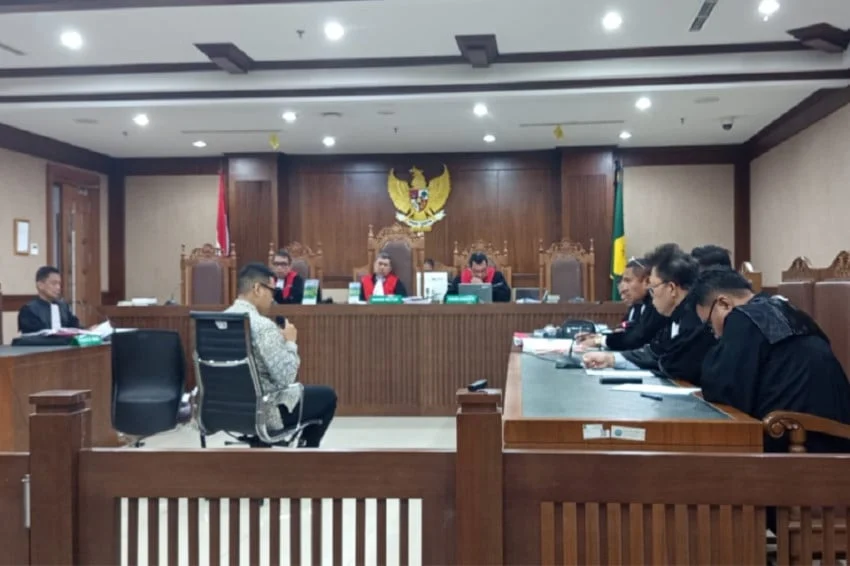
The legal proceedings surrounding high-profile extortion and criminal intimidation cases in Indonesia often capture public attention due to the intricate webs of evidence, conflicting testimonies, and high stakes involved in the country’s judicial system. A recent development in the Central Jakarta District Court has highlighted these complexities, as prosecutors handling the case against defendant Bangun Paulus Tudungta formally flagged stark contradictions between the accused’s statements and the testimonies provided by key witnesses during the trial phase.
The progression of this case has moved from initial investigations to the critical examination of the defendant, a stage where discrepancies in narratives frequently become the focal point for legal strategies on both sides. As the trial approaches its eventual conclusion, the evaluation of witness credibility against the defense’s narrative remains paramount in determining the trajectory of the prosecution’s final sentencing demands.
Main Facts of the Hearing and Prosecution’s Assessment
During the continuation of the trial at the Central Jakarta District Court on Wednesday, November 4, 2026, the evidentiary phase involving the examination of the defendant took center stage. Bangun Paulus Tudungta, facing serious allegations of extortion and criminal intimidation, took the stand to present his defense and answer inquiries from the panel of judges and the legal teams.
However, following the adjournment of the session, Public Prosecutor Andri Saputra publicly addressed the media regarding the prosecution’s initial assessment of the defendant’s testimony. According to Prosecutor Andri, multiple assertions made by Tudungta during the examination bore significant contradictions when cross-referenced with the depositions and courtroom statements of previously heard witnesses, including individuals identified as acquaintances of the defendant himself.
The prosecution highlighted that these discrepancies are not minor stylistic variations in memory, but rather fundamental divergences regarding core allegations of the crime. These include the methods of intimidation used, the nature of the interactions between the parties, and the explicit presence or absence of physical and psychological coercion. The state’s legal team has indicated that these contradictory points will be systematically compiled, analyzed, and integrated into the formal prosecution demands—known locally as the tuntutan—which will be presented during a subsequent court session.
Chronology and Background of the Case
To understand the weight of the current procedural developments, it is necessary to examine the broader timeline and contextual background of the legal battle. Extortion and intimidation cases prosecuted in major metropolitan courts like the Central Jakarta District Court typically originate from complex financial disputes, contractual disagreements, or predatory leveraging of perceived legal vulnerabilities.
In the case of Bangun Paulus Tudungta, the investigation commenced following formal complaints lodged by the victim, who asserted that systematic pressure, threats, and coercive tactics were deployed to extract compliance and financial concessions. According to the victim’s testimony—which formed the bedrock of the initial indictment—the psychological toll of the ordeal extended far beyond financial loss, resulting in severe trauma and a pervasive sense of fear for personal safety.
Following the initial police reports, the case wound its way through the standard investigative pipeline managed by law enforcement agencies, leading to the formal naming of Tudungta as a suspect. Case files were subsequently transferred to the Attorney General’s Office and the local prosecutor’s office, culminating in the filing of formal charges under the relevant articles of the Indonesian Criminal Code pertaining to extortion (pemerasan) and threats of violence (pengancaman).
The trial phase officially commenced months prior to the November 2026 hearings, involving standard procedural steps such as the reading of the indictment, the exception phase (eksepsi), and an extensive series of witness hearings. During the witness testimony phase, the court heard from the direct victim, expert witnesses, and associates of the defendant. These testimonies consistently pointed toward a pattern of aggressive behavior and intimidation designed to subjugate the victim’s will. The culmination of this evidentiary process brought the court to the defendant examination stage, setting the stage for the recent clashes in testimony.
Contrasting Narratives: Coercion Versus Denial
The crux of the prosecution’s critique centers on the diametrically opposed accounts regarding the use of physical and psychological force. During earlier sessions, the victim provided harrowing details of the encounters, describing an environment charged with explicit threats and acts of physical intimidation that left deep psychological scars. The victim maintained that compliance was achieved solely under duress, driven by a genuine fear of immediate harm or severe repercussions orchestrated by the defendant.
Conversely, during his testimony on the witness stand, Bangun Paulus Tudungta categorically denied employing any form of violence or physical force against the complainant. The defense strategy appears anchored on refuting the elements of force and intimidation, attempting to reframe the interactions as routine disputes or negotiations devoid of criminal intent.
Prosecutor Andri Saputra pointedly emphasized this stark divide to journalists outside the courtroom. He noted that even when testimony was gathered from witnesses who maintained personal or professional ties to the defendant, their recollections frequently aligned more closely with the victim’s narrative of coercion than with the sanitized version presented by Tudungta himself. This internal inconsistency among defense-adjacent witnesses has significantly weakened the defendant’s credibility in the eyes of the state attorneys.
Broader Legal Context and Related Proceedings
The Central Jakarta District Court has recently been the venue for several high-profile trials involving allegations of extortion, abuse of authority, and white-collar crimes. The heightened public scrutiny surrounding these dockets underscores the judiciary’s role in addressing systemic corruption and predatory financial practices.
While each case is adjudicated on its own merits and distinct factual matrix, public interest in trials involving severe allegations of extortion—such as parallel proceedings involving high-ranking figures facing accusations of forced multi-billion rupiah payouts to evade legal status in major financial scandals—creates an environment of intense accountability for the judiciary. In this climate, prosecutors are under heightened pressure to demonstrate meticulous attention to detail, ensuring that every discrepancy between a defendant’s claims and established facts is rigorously documented for the judicial record.
Implications for the Trial and Potential Legal Consequences
As the trial of Bangun Paulus Tudungta progresses past the defendant examination phase, the identification of contradictory statements carries profound implications for the final outcome of the litigation. In Indonesian criminal procedure, the assessment of a defendant’s credibility during their testimony is a critical component for the panel of judges when deliberating on verdicts.
When a defendant’s narrative directly conflicts with objective evidence and corroborating witness statements, it typically diminishes their defense and can be interpreted by the court as a failure to demonstrate remorse or candor before the bench. For the Public Prosecutor’s Office, these inconsistencies provide a clearer roadmap for drafting the formal sentencing demand (tuntutan). A well-supported demand that effectively highlights the unreliability of the defendant’s testimony strengthens the state’s argument for a custodial sentence commensurate with the gravity of the charges.
Furthermore, the legal implications extend to the potential application of aggravating factors during sentencing. If the court ultimately concludes that the defendant not only committed the acts of extortion and intimidation but also attempted to mislead the judicial process through fabrications or contradictory statements on the stand, the judges possess the discretion to factor this behavior into the severity of the final punishment.
Next Steps in the Judicial Process
With the defendant examination concluded and the prosecution actively compiling its final arguments, the trial schedule moves toward its penultimate phases. In accordance with standard criminal court procedures in Indonesia, the immediate next steps will involve:
- Finalization of the Prosecution’s Demands (Tuntutan): The JPU will synthesize all evidence, witness testimonies, and the contradictions observed during the defendant examination into a comprehensive legal document outlining the recommended prison sentence and legal rationale.
- Ple الدفاع (Pledoi / Nota Pembelaan): Following the reading of the prosecution’s demands, the defendant and his legal counsel will be granted the opportunity to present their defense memorandum, responding to the state’s accusations and sentencing recommendations.
- Rebuttal and Response (Replik dan Duplik): The prosecution will have the opportunity to reply to the defense’s memo, followed by a final counter-response from the defense team.
- Verdict (Putusan): Ultimately, the panel of judges will weigh all arguments, evidence, and testimonies before rendering a final verdict and sentencing decision.
As these procedural milestones approach, the scrutiny on the Central Jakarta District Court remains intense. The ability of the judicial system to thoroughly parse contradictory statements and arrive at an equitable, fact-based decision will serve as another benchmark for the integrity and efficacy of criminal enforcement in complex extortion matters.