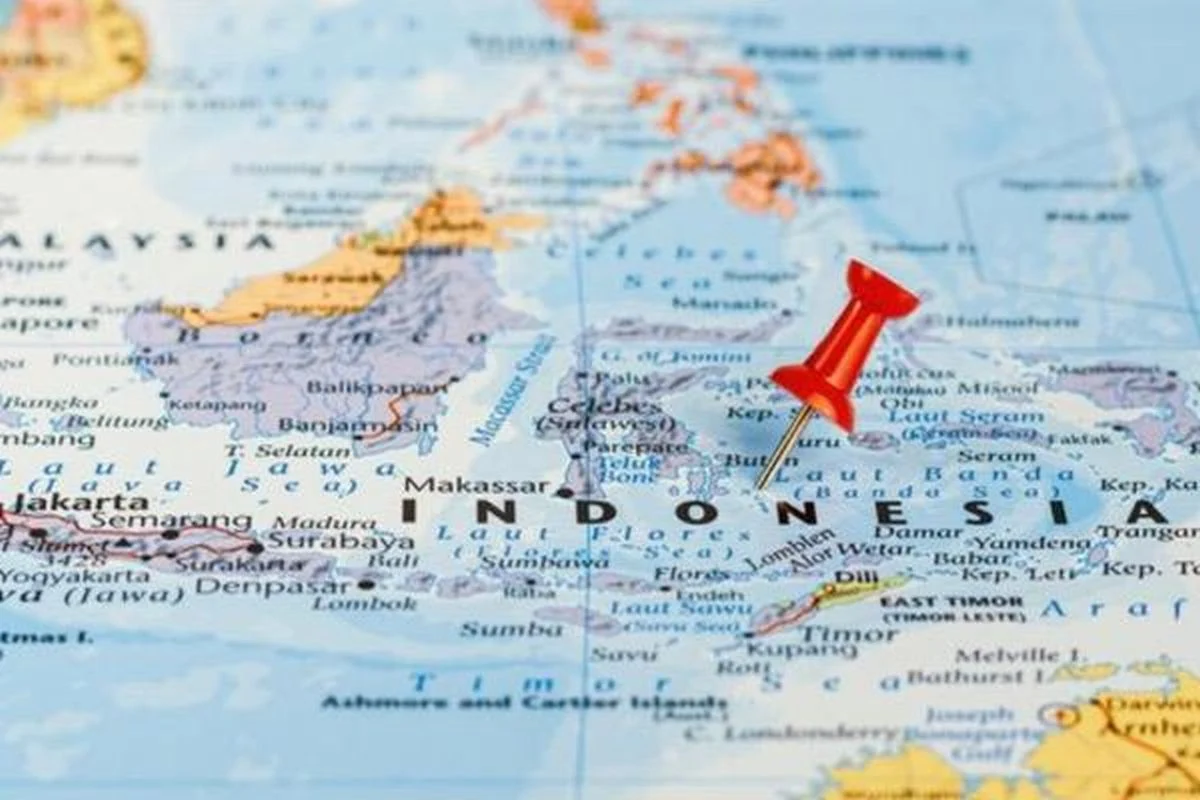
The archipelago now globally recognized as Indonesia has undergone a profound transformation in nomenclature over several millennia. Before the crystallization of the name "Indonesia" in the early 20th century, the region known today as the sovereign Republic of Indonesia was referred to by various titles, each reflecting the geopolitical, cultural, and colonial shifts that defined the Southeast Asian landscape. From ancient Sanskrit inscriptions to the administrative mandates of foreign occupiers, the naming of this vast territory serves as a historical barometer of its interaction with the wider world.
The Linguistic Evolution of the Archipelago
The identification of Indonesia as a singular political entity is a relatively modern phenomenon. Historically, the islands were categorized based on geographic proximity, religious influence, and maritime trade routes. The transition from local identities to a unified national consciousness required centuries of navigation through external pressures, ranging from Hindu-Buddhist influence to European mercantile colonialism and, ultimately, the military administration of the Second World War.
1. Dwipantara: The Ancient Sanskrit Designation
The oldest recorded conceptualization of the archipelago dates back to the influence of Indian civilization in Southeast Asia. The term "Dwipantara" is derived from Sanskrit, where "dwipa" signifies an island and "antara" denotes "other" or "beyond." Historically, this term was utilized in Indian literature to describe the islands located beyond the Indian subcontinent. It was not a political name in the modern sense but rather a cartographic description used by travelers and scholars to distinguish the maritime Southeast Asian region from the mainland. This designation highlights the early integration of the archipelago into the trans-oceanic trade networks of the ancient world.
2. Nusantara: The Majapahit Unification
Perhaps the most culturally resonant name in the history of the region is "Nusantara." Emerging during the 14th century, this term became synonymous with the expansive reach of the Majapahit Empire. The name is famously immortalized in the "Sumpah Palapa" (Palapa Oath), a vow taken by Patih Gajah Mada in 1336. The oath committed the Prime Minister to unite the fragmented islands of the archipelago under the Majapahit banner. Etymologically, "nusa" means island and "antara" means outer, reinforcing the idea of an interconnected maritime territory. In contemporary discourse, Nusantara is frequently invoked to represent the cultural unity and geographical vastness of the modern nation, serving as a symbolic reminder of a pre-colonial era of regional sovereignty.
3. The East Indies: A Colonial Cartographic Imposition
Following the arrival of European powers, specifically the Portuguese, Dutch, and British, the archipelago was colloquially and officially labeled the "East Indies" (Hindia Timur). This term was essentially a Western construct designed to facilitate colonial administration and trade. For the Dutch, the region became the "Nederlandsch-Indië" (Netherlands East Indies). This period marked the transition from independent kingdoms to a unified administrative unit under the Dutch East India Company (VOC) and later the Dutch colonial government. The term served as a tool for subjugation, erasing local identities in favor of an extractive colonial economy.
4. Insulinde: The Intellectual Romanticization
In the 19th century, particularly among European intellectuals and writers, the term "Insulinde" gained popularity. Derived from the Latin "insula" (island), the term was popularized by Eduard Douwes Dekker, writing under the pseudonym Multatuli. In his seminal work Max Havelaar, published in 1860, he referred to the region as Insulinde to emphasize its status as a majestic, island-based empire. While it never became an official state name, it provided a more dignified, romanticized alternative to the bureaucratic and cold "East Indies."

5. Malay Archipelago: A Geographic Categorization
Throughout the 19th and early 20th centuries, geographers and naturalists—most notably Alfred Russel Wallace—frequently referred to the region as the "Malay Archipelago." This term was rooted in the linguistic and ethnic prevalence of the Malay language and the Austronesian people across the islands. While scientifically descriptive, it was often used by Western powers to simplify the complex ethnic diversity of the region into a single, manageable category. It remains a term used in biological and geological contexts to describe the physical features of the region today.
6. Indonesia: The Emergence of a National Identity
The name "Indonesia" itself has a fascinating etymology that predates the declaration of independence. Coined by the German ethnologist Adolf Bastian in 1884, the term was derived from the Greek words "Indos" (India) and "nesos" (island). Initially, it was a purely academic term used by European scholars. However, it was later adopted by Indonesian nationalists in the early 20th century to provide a unifying identity that transcended regional and ethnic differences. By the 1928 Youth Pledge (Sumpah Pemuda), the name had become the rallying cry for the independence movement, solidifying the vision of a singular, sovereign state.
7. To-Indo: The Japanese Wartime Administrative Designation
During the brief but impactful Japanese occupation (1942–1945), the nomenclature shifted to accommodate Japanese military administrative needs. The Japanese government referred to the territory as "To-Indo" (East Indies). During this period, the Japanese authorities sought to replace Dutch terminology with Japanese equivalents to signal the end of European colonial rule. While the Japanese occupation was a period of extreme hardship, the dismantling of the Dutch colonial administrative structure and the use of the term "To-Indo" inadvertently paved the way for the emergence of the modern Indonesian state, as the Japanese encouraged the development of local language and administrative autonomy to secure support for their war effort.
Historical Analysis: The Significance of Naming
The progression of these seven names reveals a clear arc: from ancient geographic identification (Dwipantara) to political unification (Nusantara), colonial imposition (East Indies), intellectual nomenclature (Insulinde), scientific categorization (Malay Archipelago), nationalist adoption (Indonesia), and finally, administrative wartime transition (To-Indo).
This naming process was not merely cosmetic; it represented the evolving self-perception of the people within the archipelago. The shift from "Indies"—a term defined by outside observers—to "Indonesia"—a term defined by the people themselves—was a crucial psychological victory in the struggle for sovereignty.
Implications for the Modern Era
Today, the historical usage of these names continues to inform the national identity. The usage of "Nusantara" has seen a resurgence, particularly in government policy, as evidenced by the naming of the new capital city in East Kalimantan. This reflects a deliberate effort to reconnect with pre-colonial heritage while looking toward the future.
Historians argue that understanding these past names is essential for appreciating the complexity of the Indonesian state. Each name represents a layer of history—a testament to the resilience of a people who, despite centuries of foreign classification, successfully forged a unique, unified, and independent identity in the heart of Southeast Asia. As Indonesia continues to navigate its role on the global stage, these historical labels serve as a reminder of the nation’s long and multifaceted journey toward the unity it enjoys today.