The rapid acceleration of the global digital economy has placed unprecedented demands on emerging economies to cultivate a workforce capable of navigating complex technological landscapes. In response to this urgent national imperative, the Perhimpunan Putera Puteri Kebangsaan recently spearheaded a landmark initiative known as Digispace 2026. Hosted at the scenic SereS Springs Resort in Gianyar, Bali, the multi-day event served as a critical nexus for policymakers, educators, technology enthusiasts, and the younger generation to converge and address the multifaceted challenges of the digital age. With a primary focus on enhancing digital literacy, fostering homegrown talent, and driving the practical utilization of Artificial Intelligence (AI), the conference has emerged as a cornerstone for Indonesia’s long-term digital transformation strategy.
The overarching objective of Digispace 2026 centers on bridging the persistent digital divide that continues to characterize various segments of Indonesian society. While urban centers have largely kept pace with global technological advancements, peripheral regions and diverse demographic groups frequently encounter barriers to equitable internet access and advanced technical training. By organizing a structured environment for practical technological engagement, the initiative sought to demystify emerging tools such as machine learning, automated content creation, and data-driven decision-making systems. Through interactive workshops, panel discussions, and immersive technological exhibitions, attendees were provided with tangible opportunities to interact with state-of-the-art systems, transforming abstract theoretical concepts into actionable, real-world skills.
Strategic Vision and Institutional Objectives
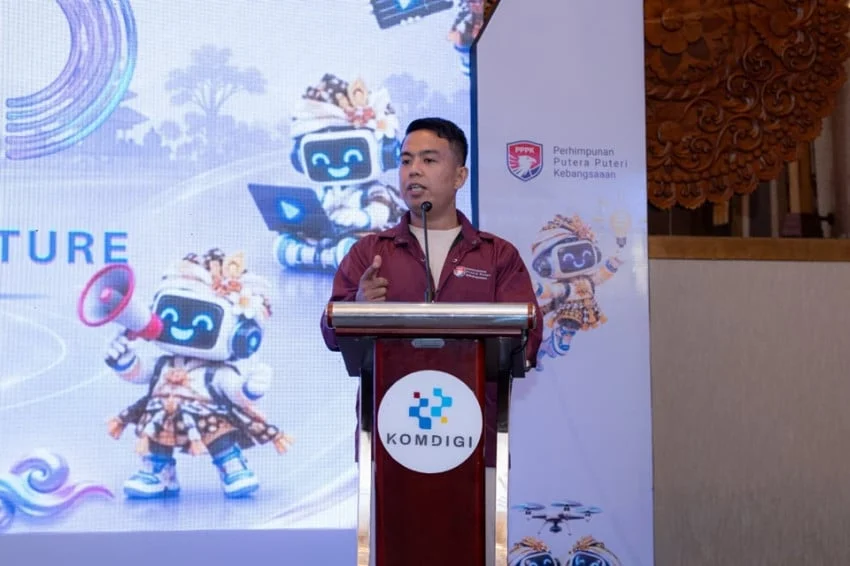
At the heart of the Digispace 2026 initiative lies a strategic vision articulated by key organizational leaders who recognize that technological proficiency is no longer a luxury, but a fundamental prerequisite for national competitiveness. Speaking on the sidelines of the event, Muhammad Risal, Secretary-General of the Perhimpunan Putera Puteri Kebangsaan, emphasized that the program was meticulously designed to align with broader state objectives aimed at fast-tracking national talent development.
"This program serves as a concrete manifestation of our ongoing contribution toward supporting government initiatives aimed at accelerating the development of Indonesia’s digital talent pool," Risal stated. He elaborated that the organization deliberately structured the event to foster inclusive participation across various societal strata. By engaging students, young professionals, and community leaders, the initiative successfully widened the educational umbrella, ensuring that the benefits of the digital economy are distributed equitably rather than concentrated among a privileged few.
Risal further underscored the necessity of cultivating a mindset of responsible and productive technology usage. As generative AI and automated systems become increasingly integrated into daily personal and professional workflows, users must be equipped with the critical thinking skills required to evaluate outputs, maintain ethical standards, and safeguard data privacy. Digispace 2026 dedicated substantial programming to addressing these ethical dimensions, ensuring that participants left with both the technical know-how and the moral framework needed to deploy AI solutions effectively.
Immersive Learning Through the AI Experience Zone
One of the standout features of Digispace 2026 was the dedicated AI Experience Zone, an interactive exhibition space that moved beyond traditional conference panel discussions to offer hands-on engagement. Rather than merely listening to theoretical presentations regarding the trajectory of automation, attendees were given direct access to cutting-edge software and hardware demonstrations. This experiential learning model was developed in response to educational research indicating that practical engagement significantly enhances retention rates and fosters innovative thinking among young learners.
Within this zone, participants explored a myriad of applications, ranging from natural language processing tools designed to assist in creative writing to predictive modeling platforms capable of solving localized logistical challenges. Facilitators guided attendees through the mechanics of prompt engineering, algorithmic bias recognition, and the integration of AI tools into standard business and creative workflows. For many young participants, this marked their first opportunity to experiment with enterprise-grade technology in a supportive, educational environment.
Industry observers noted that such initiatives are vital for shifting the mindset of Indonesian youth from passive consumers of digital content to active producers and innovators. By demonstrating how AI can function as an auxiliary tool for ideation, content creation, and problem-solving, Digispace 2026 effectively demystified the technology. Participants gained firsthand insight into how automation can streamline repetitive administrative burdens, thereby freeing up human capital to focus on higher-order creative and strategic endeavors.
Broader Context: The State of Indonesia’s AI Ecosystem and Infrastructure
The timing of Digispace 2026 is particularly significant when examined against the backdrop of Indonesia’s broader technological ecosystem. In recent years, national policy documents, including the Golden Indonesia 2045 vision, have consistently highlighted the digital economy as a primary engine for sustainable economic growth. Projections from various international economic forums suggest that the digital economy could contribute hundreds of billions of dollars to the Southeast Asian GDP over the next decade, with Indonesia positioned to capture a substantial share of this economic value due to its massive, tech-savvy demographic baseline.
However, industry analysts and academic researchers have frequently pointed out systemic bottlenecks that threaten to impede this trajectory. Among the most pressing challenges are the uneven distribution of robust telecommunications infrastructure, regulatory frameworks that struggle to keep pace with hyper-fast technological advancements, and a persistent skills gap in advanced technical disciplines such as data science, cybersecurity, and artificial intelligence engineering. While urban hubs like Jakarta, Bandung, and Denpasar boast high-speed fiber-optic networks and vibrant startup communities, remote regions often face connectivity deficits that hinder educational and economic parity.
Furthermore, the national discourse surrounding AI governance has intensified. Policymakers face the delicate task of crafting regulatory frameworks that protect citizens from the misuse of synthetic media, algorithmic discrimination, and data breaches without stifling the entrepreneurial dynamism that drives the local startup ecosystem. Initiatives like Digispace 2026 act as grassroots pressure valves, helping to build a ground-level foundation of digital literacy that makes formal top-down regulatory compliance and infrastructure rollout far more effective.
Chronology and Implementation Strategy of the Initiative
The realization of Digispace 2026 was the result of a rigorous, multi-month planning phase orchestrated by the Perhimpunan Putera Puteri Kebangsaan in collaboration with regional stakeholders, educational institutions, and corporate technology partners. The conceptualization phase began in the third quarter of the preceding year, driven by a growing recognition that regional youth required targeted interventions to prepare for shifting labor market dynamics.
- Preliminary Planning and Stakeholder Engagement (Q3–Q4): Organizers conducted extensive consultations with academic institutions, local government bodies in Bali, and technology sector representatives to identify the specific competency gaps most prevalent among the target demographic.
- Curriculum and Program Development (Early Q1): A multidisciplinary team designed the event itinerary, balancing macro-level policy discussions on digital transformation with micro-level, hands-on technical workshops.
- Venue Selection and Infrastructure Setup (Mid-Q1): The SereS Springs Resort in Gianyar was selected not only for its world-class conference facilities but also to spotlight Bali as an emerging hub for international remote workers, digital nomads, and technological innovation forums.
- Execution of Digispace 2026 (Early November): The multi-day event officially commenced, drawing diverse cohorts of participants through plenary sessions, breakout mentoring groups, and the immersive AI Experience Zone.
- Post-Event Evaluation and Scaling (Ongoing): Organizers initiated a comprehensive tracking framework to measure the long-term impact of the program on participant career trajectories and regional digital literacy metrics.
Implications for the National Workforce and Educational Reform
The implications of events such as Digispace 2026 extend far beyond the immediate participants in attendance at the Gianyar resort. As the structure of the global labor market undergoes a structural shift driven by automation and cognitive computing, educational institutions are under immense pressure to modernize curricula. Traditional rote-learning models are increasingly inadequate for preparing students for careers that require cross-disciplinary problem-solving, digital fluency, and adaptability.
By fostering public-private dialogues and providing direct technological exposure, the Perhimpunan Putera Puteri Kebangsaan has demonstrated how civil society organizations can act as effective catalysts for educational reform. The insights gathered from Digispace 2026 provide valuable qualitative data for policymakers striving to design vocational training programs that genuinely match the demands of modern employers. When young individuals are introduced to advanced tools in an accessible, collaborative setting, they develop the confidence required to pursue careers in STEM (Science, Technology, Engineering, and Mathematics) fields that were previously perceived as overly complex or inaccessible.
Moreover, the regional focus of the event—situated in Bali—underscores a crucial decentralized approach to digital empowerment. Rather than concentrating all technological capacity-building efforts within the capital city, decentralized initiatives ensure that talent outside the primary economic corridors is discovered, nurtured, and integrated into the national innovation pipeline. This geographic inclusivity is vital for unlocking the full demographic dividend of the nation, ensuring that talent from diverse backgrounds can contribute meaningfully to the digital economy.
Conclusion and Future Outlook
As Digispace 2026 concludes its current operational cycle, the focus among organizers and stakeholders shifts toward sustainability and scalability. The event has successfully established a benchmark for how civil society initiatives can effectively complement state-led efforts in digital talent development. By combining high-level strategic discourse with practical, hands-on technological exposure, the Perhimpunan Putera Puteri Kebangsaan has laid a robust foundation for future iterations of the program.
Moving forward, the challenge for Indonesia lies in institutionalizing the momentum generated by events like Digispace 2026. Translating episodic enthusiasm into sustained, systemic educational reform will require continuous collaboration between government regulators, academic institutions, industry leaders, and community organizations. If current trajectories are maintained and scaled responsibly, initiatives of this nature will play an indispensable role in transforming Indonesia into a resilient, highly skilled digital powerhouse capable of leading the region into a technologically empowered future.