The industrial landscape of Tuban in East Java played host to a high-profile presidential delegation on Wednesday, November 11, 2015. President Joko Widodo, widely known as Jokowi, led a strategic inspection of the long-dormant Trans Pacific Petrochemical Indotama (TPPI) refinery facility. This critical national asset, pivotal to domestic fuel security and the petrochemical supply chain, had experienced prolonged operational halts prior to government interventions aimed at revitalization. Accompanying the head of state were several key figures from the Indonesian cabinet and the energy sector, including State-Owned Enterprises (SOE) Minister Rini Soemarno, Pertamina President Director Dwi Soetijpto, Pertamina Vice President of Communication Wianda Pusponegoro, and the Director General of Oil and Gas at the Ministry of Energy and Mineral Resources, IGN Wiratmaja Puja.
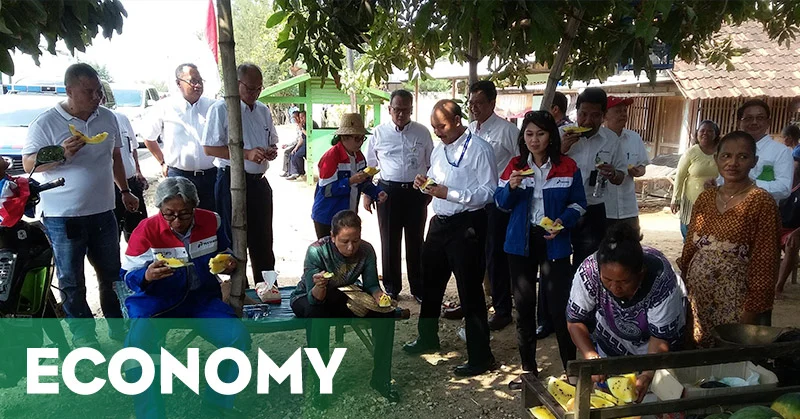
While the official agenda centered on evaluating energy infrastructure and assessing the readiness of strategic processing plants, the visit also featured a distinctly human moment. Before reaching the heavily secured gates of the TPPI complex, the high-level delegation paused to interact with local residents. The unexpected walkabout allowed community members to greet the president and corporate leaders, creating an impromptu scene of public engagement in the rural district. This lighthearted interlude before rigorous technical briefings underscored the administration’s characteristic populist approach to regional visits.
The Chronology of the Presidential Visit and Local Interaction
The morning of November 11, 2015, began with tight security protocols typical of a presidential working visit. However, upon arrival near the TPPI plant perimeter in Tuban, the entourage opted for a brief walking tour through the local neighborhood rather than driving straight into the industrial compound. As word spread of the president’s presence, residents gathered along the pathways, many seizing the opportunity to take photographs with national leaders and top energy executives.
Amidst the warm reception, the delegation paused at a modest local storefront operated by a resident who sold fresh fruit, prominently featuring locally grown watermelons harvested from nearby agricultural fields surrounding the TPPI facility. Recognizing an opportunity to support local commerce and engage directly with the agrarian community, SOE Minister Rini Soemarno invited the presidential party to sample the fresh produce.
"Come on, everyone, try the watermelon first. It is very sweet and delicious," Minister Rini Soemarno remarked to the surrounding officials and media personnel during the stopover.
After partaking in several slices of the Tuban-grown fruit, President Jokowi and the accompanying executives resumed their march toward the refinery. The brief interlude offered a stark contrast to the heavy economic and strategic weight of the destination, highlighting the intersection of local agrarian life and heavy industrial infrastructure in rural East Java.
Strategic Background of the TPPI Tuban Refinery
To understand the significance of the November 2015 presidential inspection, one must examine the tumultuous history of the Trans Pacific Petrochemical Indotama refinery. Situated in Tuban, East Java, the TPPI facility represents one of the largest petrochemical and refining complexes in Indonesia. Conceptualized to reduce the nation’s heavy reliance on imported refined petroleum products, the plant was designed to produce a wide array of petrochemicals alongside significant volumes of motor gasoline and diesel fuel.
However, for years prior to the 2015 revitalization efforts, the refinery struggled with severe financial distress, corporate governance disputes, and debt restructuring challenges. These hurdles ultimately led to suspended operations, leaving a massive processing capacity idle at a time when Indonesia’s domestic fuel consumption was steadily outpacing local production capabilities. The country’s increasing dependence on imported fuel placed immense pressure on the state budget and the current account deficit, making the revival of domestic processing facilities an absolute economic priority for the newly elected Jokowi administration.

In response, the government orchestrated a bailout and operational takeover scheme, primarily funneling the asset under the operational umbrella of state-owned energy giant PT Pertamina (Persero). By integrating TPPI into Pertamina’s supply chain, the state aimed to secure a steady domestic supply of fuel, reduce costly foreign imports, and optimize national refining margins. The November 2015 visit by President Jokowi served as a direct progress evaluation to ensure that the revitalization roadmap was proceeding according to schedule and that administrative hurdles were being systematically dismantled.
Key Figures and Institutional Roles in the Revitalization
The delegation accompanying President Jokowi on the Tuban inspection comprised the primary architects and operational leaders tasked with steering Indonesia’s energy independence agenda. Minister Rini Soemarno, heading the Ministry of State-Owned Enterprises, played a crucial supervisory role in aligning corporate restructuring strategies with broader state policy objectives. Her ministry oversaw the complex financial maneuvers required to integrate TPPI into Pertamina’s portfolio, transforming a troubled private-public venture into a state-controlled strategic asset.
Simultaneously, Pertamina President Director Dwi Soetijpto bore the direct operational responsibility of restarting the dormant processing units. Under his leadership, Pertamina mobilized technical teams to inspect piping, storage tanks, and cracking units to ensure safety and compliance before full-scale commercial operations resumed. The presence of Vice President of Communication Wianda Pusponegoro ensured that public relations narratives regarding energy security and state asset optimization were effectively communicated to the broader public.
Furthermore, IGN Wiratmaja Puja, serving as the Director General of Oil and Gas, represented the regulatory oversight of the Ministry of Energy and Mineral Resources. His involvement guaranteed that licensing, environmental compliance, and quota allocations adhered strictly to national statutory frameworks.
Economic Implications and Broader Energy Impact
The successful restart and integration of the TPPI Tuban refinery carried profound implications for the Indonesian macroeconomy. Historically, Indonesia transitioned from a net oil exporter to a net importer, forcing the nation to purchase massive quantities of refined fuel on international spot markets. This dynamic exposed the national budget to severe foreign exchange volatility and global crude price fluctuations.
By bringing the TPPI facility back online, Pertamina projected a substantial reduction in refined product imports, saving the country billions of dollars annually in foreign exchange reserves. The refinery’s capacity to process condensate into high-octane gasoline directly addressed domestic supply deficits, easing the burden on state finances and enhancing national energy resilience.
Moreover, the revitalization of the Tuban industrial zone stimulated local economic activity. Secondary and tertiary industries, ranging from transportation and logistics to local catering and small retail businesses like the watermelon vendor visited by Minister Rini, experienced indirect economic boosts from the influx of plant workers, engineers, and administrative staff.
Conclusion and Legacy of the 2015 Inspection
The presidential inspection of the TPPI Tuban refinery on November 11, 2015, encapsulated the dual nature of high-level state visits in Indonesia: the solemn execution of national economic strategy paired with spontaneous grassroots engagement. While the headlines captured the lighthearted moment of cabinet ministers and corporate titans tasting local fruit by the roadside, the underlying policy objective was monumental. The visit signaled the central government’s unyielding commitment to rescuing stalled national infrastructure, bolstering state-owned enterprise performance, and driving toward long-term energy independence. Years after this pivotal inspection, the operational recovery of TPPI remains a benchmark case study in how targeted state intervention can rescue strategic industrial assets from prolonged dormancy, ultimately securing a more stable and self-reliant economic future for the archipelago.