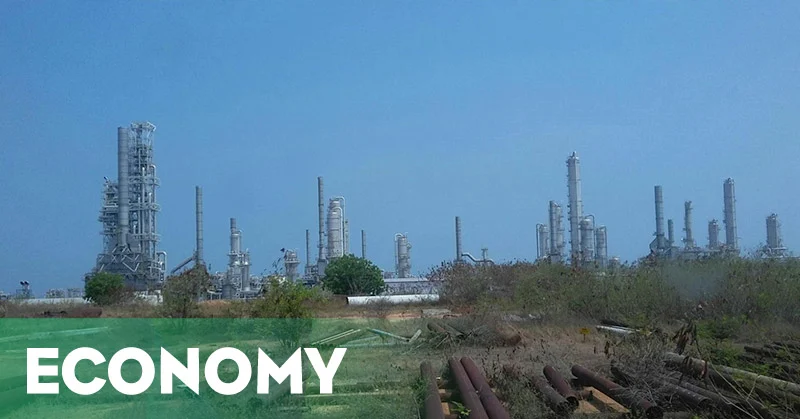
TUBAN — President Joko Widodo conducted a high-profile working visit to inspect the facilities of the Trans Pacific Petrochemical Indotama (TPPI) refinery located in Tuban, East Java. The inspection marked a critical milestone for Indonesia’s energy sector, as the strategically vital processing plant resumed commercial operations under the management of state energy giant PT Pertamina (Persero).
The presidential entourage accompanying the head of state included Minister of State-Owned Enterprises (BUMN) Rini Soemarno, Pertamina President Director Dwi Soetijpto, and Director General of Oil and Gas at the Ministry of Energy and Mineral Resources IGN Wiratmaja Puja. The high-level delegation underscored the federal government’s commitment to achieving national energy security, reducing structural dependency on foreign fuel imports, and stabilizing the domestic macroeconomic landscape through optimized state-owned enterprise assets.
Strategic Importance of the TPPI Tuban Facility
The revival of the TPPI Tuban refinery is widely regarded by energy economists and policymakers as a watershed moment for Indonesia’s downstream petroleum sector. For years, the country grappled with widening trade deficits driven largely by costly imports of refined petroleum products. By bringing the Tuban facility back online, Pertamina effectively unlocked domestic refining capacity capable of altering the nation’s energy supply equation.
According to official figures released by Pertamina, the refinery boasts a production capacity of approximately 61,000 barrels of fuel per day. This substantial output plays an instrumental role in fulfilling domestic demand, particularly for Premium-grade gasoline (RON 88).
Wianda Pusponegoro, who served as Vice President of Corporate Communication at Pertamina during the operational resumption, emphasized the monumental scale of the savings generated by the plant. "This refinery is capable of cutting imports of Premium-type fuel by up to 20 percent, with total production reaching 61,000 barrels per day," Wianda stated during a press briefing at the TPPI complex in East Java.
Financial implications of this production volume are vast. Based on conservative baseline oil price assumptions—such as USD 60 per barrel for gasoline—analysts estimate that the reactivation of the TPPI Tuban refinery translates to direct foreign exchange savings of roughly USD 1.2 billion annually. In local currency terms, this amounts to approximately IDR 16 trillion per year, providing much-needed relief to Indonesia’s current account balance and strengthening the national reserves against external market shocks.
Chronology and Background of the TPPI Restructuring
The journey toward the successful resumption of operations at the TPPI Tuban refinery was fraught with complex legal, financial, and operational hurdles spanning over a decade. Built in the late 1990s, the petrochemical and refining complex faced severe financial distress compounded by corporate governance challenges, fluctuating global crude prices, and debt restructuring negotiations that repeatedly stalled operations.
For years, the facility operated far below its design capacity or remained entirely dormant, representing a massive underutilization of national infrastructure. The prolonged closure forced Indonesia to rely heavily on imported refined products, exposing the domestic market to global price volatility and straining the financial health of Pertamina and the broader state budget through costly fuel subsidies.
Recognizing the strategic necessity of reclaiming control over vital energy infrastructure, the administration of President Joko Widodo prioritized the resolution of the TPPI impasse shortly after taking office in 2014. Through a concerted inter-ministerial effort involving the Ministry of BUMN, the Ministry of Energy and Mineral Resources, and regulatory bodies, a comprehensive rescue framework was formulated.
The strategy hinged on consolidating state control through PT Pertamina (Persero), which progressively acquired majority oversight and integrated the Tuban plant into its broader supply chain network. By leveraging Pertamina’s robust logistical capabilities, financial backing, and technical expertise, the long-idle processing units underwent extensive safety overhauls, mechanical testing, and feedstock synchronization.

Official Responses and Stakeholder Perspectives
The successful restart of the refinery drew widespread acclaim from government officials, industry experts, and labor representatives alike. President Joko Widodo’s administration positioned the event as tangible proof of the state’s capacity to rescue stalled strategic assets and redirect them toward public welfare and national economic independence.
During the site inspection, President Jokowi engaged directly with engineers, plant operators, and corporate leadership to evaluate the plant’s operational readiness and environmental compliance standards. The President stressed that downstream energy infrastructure must operate at maximum efficiency to shield domestic consumers from international price spikes and to ensure long-term energy self-sufficiency.
Minister Rini Soemarno echoed these sentiments, highlighting the tenacity required to navigate the complex corporate debt restructuring that preceded the takeover. Under her purview, the Ministry of BUMN facilitated the alignment between creditors, regulatory agencies, and Pertamina management to ensure a seamless transition of operational authority.
Pertamina leadership, led by then-President Director Dwi Soetijpto, viewed the integration of TPPI as a cornerstone of the company’s master plan to expand domestic refining capacity. By doubling down on infrastructural investments—such as the Refinery Development Master Plan (RDMP) and Grass Root Refineries (GRR)—Pertamina aimed to transform Indonesia from a net importer of petroleum products into a self-sustaining regional energy hub.
Broader Economic Implications and Macro Impact
The reintegration of the TPPI Tuban refinery into Indonesia’s active energy grid extends far beyond immediate balance-of-sheet savings. The broader economic implications touch upon macroeconomic stability, industrial supply chain resilience, and regional development in East Java.
First, the reduction in refined fuel imports directly alleviates pressure on the Indonesian Rupiah. By decreasing the volume of foreign currency demanded to purchase overseas petroleum products, the central bank and the government gain greater monetary policy flexibility. This stabilization of the current account deficit is a critical metric monitored closely by international rating agencies and foreign investors assessing Indonesia’s macroeconomic fundamentals.
Second, the petrochemical output of the TPPI complex serves as a crucial raw material feedstock for downstream domestic manufacturing industries. Beyond gasoline production, the facility generates aromatics and other petrochemical derivatives essential for the plastics, packaging, and textile sectors. Ensuring a stable, locally sourced supply of these inputs shields Indonesian manufacturers from global supply chain disruptions and enhances their international competitiveness.
Third, the operational revival of the Tuban plant stimulated regional economic activity. Employment opportunities—both direct and indirect—surged across the surrounding Tuban regency and broader East Java province. Ancillary service providers, logistics firms, equipment maintenance contractors, and local small-and-medium enterprises (SMEs) benefited from the increased commercial footprint of a fully functioning industrial mega-facility.
Conclusion and Future Outlook
The inspection of the TPPI Tuban refinery by President Joko Widodo and Minister Rini Soemarno stands as a landmark event in Indonesia’s modern industrial history. It crystallized a political and corporate will to reclaim stalled strategic assets and align them with national development priorities.
By eliminating billions of dollars in unnecessary import expenditures, bolstering local manufacturing supply chains, and reinforcing national energy sovereignty, the rehabilitated refinery proved to be a transformative asset. As Indonesia continues to navigate the complexities of global energy transitions and market volatility, the success of the TPPI Tuban turnaround serves as a blueprint for future infrastructure optimization and state-led economic stewardship.