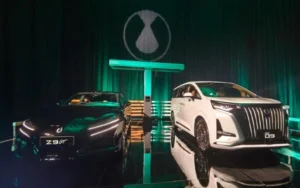
The automotive landscape in Indonesia is undergoing a profound transformation as iCAR, the burgeoning electric vehicle (EV) brand, accelerates its market penetration with the launch of the iCAR V23. Positioned as a fusion of high-performance engineering and sophisticated computational intelligence, the V23 represents a strategic pivot toward "smart mobility." By integrating the Qualcomm Snapdragon 8155 chipset into its core architecture, iCAR is setting a new benchmark for how digital interfaces and mechanical traction control systems interact to optimize driving dynamics across the diverse and often challenging terrains of the Indonesian archipelago.
The Technological Backbone: Snapdragon 8155
At the heart of the iCAR V23’s digital ecosystem lies the Qualcomm Snapdragon 8155, a powerhouse in automotive-grade silicon. Traditionally used in high-end luxury EVs to manage complex infotainment systems, its deployment in the V23 signals a move to democratize high-performance computing in the mid-size SUV segment.
The 8155 chip acts as the central nervous system for the vehicle’s cabin, enabling near-instantaneous processing of inputs. This allows for a seamless user experience, where navigation, climate control, and entertainment systems operate without the latency typically associated with older automotive hardware. Beyond mere entertainment, the chip serves a critical role in the vehicle’s drive-mode management. Drivers can toggle between ECO, Comfort, Sport, Slippery, Off-Road, and Individual settings, with the processor ensuring that the powertrain’s response curve is adjusted in real-time to match the selected profile.
Engineering for All-Terrain Performance
While the digital cockpit is a standout feature, the real-world application of the Snapdragon 8155 extends to the vehicle’s handling capabilities. In the context of the Indonesian market, where infrastructure varies from smooth metropolitan toll roads to rugged, unpaved provincial routes, the vehicle’s ability to manage traction is paramount.
The integration of the chip allows for real-time data processing from the vehicle’s wheel speed sensors and stability control modules. When the V23 enters the "Off-Road" mode, the computational speed of the Snapdragon chip enables the vehicle to monitor individual wheel slip at a microsecond scale. It then commands the electric motors to redistribute torque instantly, ensuring that power is directed to the wheels with the most grip. This level of precision is typically reserved for high-end off-road vehicles, making the V23 a unique proposition for buyers who require both urban agility and utilitarian durability.
Official Perspectives on Smart Mobility
Tommy Hermansyah, Product Planning Manager at iCAR Indonesia, emphasizes that the V23 is not merely a tool for transportation, but a mobile platform designed for a digital-native generation. "Through the iCAR V23, we are bridging the gap between raw mechanical capability and intuitive software," Hermansyah stated. "The Qualcomm Snapdragon 8155 is the enabler. It ensures that every interaction—from the driver’s input on the steering wheel to the digital display—is processed with high fidelity. Our goal is to create a symbiotic relationship between the driver and the machine, making the vehicle feel like a natural extension of the user’s digital lifestyle."
Hermansyah further noted that the commitment to this technology is a response to the evolving expectations of Indonesian consumers. As EV adoption increases in the country, buyers are looking for vehicles that offer more than just battery range; they are demanding smart connectivity and reliable performance in unpredictable road conditions.
Strategic Context: The Road to Wuhu and Beijing
The launch of the iCAR V23 is part of a broader, long-term roadmap for the brand. iCAR has confirmed its participation in the upcoming iCAR International Business Summit in Wuhu, which is scheduled to coincide with the Beijing Auto Show 2026. This summit is expected to serve as a global stage where the company will outline its strategy for the next five years, focusing on the "Born to Play" philosophy.
The brand’s presence at the Beijing Auto Show is significant, as it represents one of the world’s most influential automotive events. By aligning its technological narrative with international summits, iCAR is signaling its intention to be a serious contender in the global EV race, rather than just a regional player. The 2026 timeline also suggests that the company is preparing to scale its production capacity and software updates globally, leveraging the data gathered from markets like Indonesia to refine its autonomous and driver-assistance features.
Market Implications and Competitive Landscape
The introduction of the iCAR V23 places significant pressure on established competitors in the Indonesian EV market. Currently, the local market is dominated by a mix of Japanese hybrids and entry-level Chinese EVs. The V23 enters a "sweet spot" of the market, offering a rugged design aesthetic reminiscent of classic off-roaders, combined with the tech-heavy interior of a high-end smartphone.
Industry Impact Analysis:
- Software-Defined Vehicles (SDVs): The reliance on the Snapdragon 8155 suggests that iCAR is moving toward a software-defined vehicle model. This allows for Over-the-Air (OTA) updates, meaning the vehicle can potentially improve its performance or add new features after it has been purchased.
- Standardization of Luxury Tech: By bringing premium chips to a more accessible price point, iCAR is forcing competitors to reconsider their hardware specs. Future mid-range vehicles will likely need to match this level of computing power to remain relevant.
- Infrastructure Adaptation: As more vehicles like the V23 hit the roads, the demand for smart, connected infrastructure in Indonesia will grow, potentially pushing for more integrated traffic management systems that can "talk" to vehicles equipped with similar processing power.
Future Outlook: Challenges and Opportunities
While the technical specifications of the iCAR V23 are impressive, the brand’s long-term success in Indonesia will depend on several external factors. The availability of reliable EV charging infrastructure, the training of local service technicians to handle high-performance electronics, and the ability to maintain consistent software support are hurdles that iCAR must navigate.
However, the shift toward electric mobility in Indonesia is supported by aggressive government incentives and a growing national desire to reduce dependence on fossil fuels. The V23’s focus on versatility—being equally at home in the gridlocked streets of Jakarta as it is on the mountainous paths of Java or Sumatra—positions it well to capture a diverse demographic of consumers.
Conclusion
The iCAR V23 is a testament to the ongoing evolution of the electric vehicle from a simple mode of transport to an integrated digital environment. By prioritizing the Snapdragon 8155 chipset, iCAR has successfully created a vehicle that balances the rigors of mechanical off-roading with the fluid responsiveness of a modern digital interface.
As the brand approaches the 2026 Beijing Auto Show and the accompanying International Business Summit in Wuhu, the industry will be watching closely to see how the "Born to Play" philosophy translates into further innovations. For now, the V23 stands as a clear signal that the future of the Indonesian automotive market is not just electric, but inherently smart, connected, and capable of conquering any terrain with the aid of high-performance computing. Whether the brand can sustain this momentum remains to be seen, but the initial technical offering suggests that iCAR is well-prepared for the challenges of the modern, tech-driven automotive landscape.