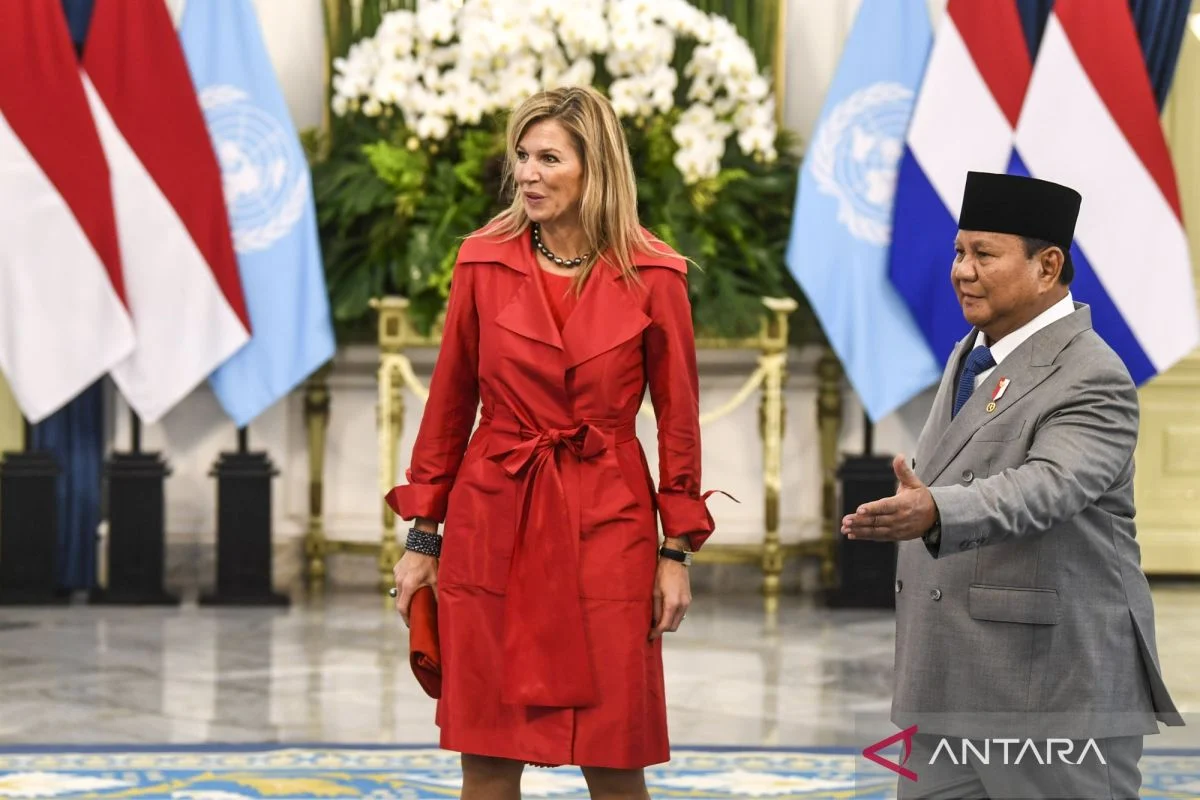
Jakarta (ANTARA) – Her Majesty Queen Máxima of the Netherlands successfully concluded a pivotal working visit to Indonesia, spanning from Monday, November 24, to Thursday, November 27, 2025. The visit, undertaken not in her capacity as Queen of the Netherlands but as the United Nations Secretary-General’s Special Advocate (UNSGSA) for Inclusive Finance for Development, underscored a robust commitment to advancing financial health and resilience across Indonesian society. Her comprehensive agenda focused on strategic meetings and on-the-ground engagements directly addressing financial inclusion and the broader financial well-being of communities. Over three intensive days of promoting financial resilience and prosperity, from Tuesday, November 25, to Thursday, November 27, 2025, Queen Máxima traversed various key regions, including Sragen and Solo in Central Java, Jakarta, and Bekasi in West Java, engaging with diverse stakeholders from policymakers to local entrepreneurs and underserved communities.
This latest visit marked Queen Máxima’s fifth engagement with Indonesia, a nation she has consistently highlighted as a crucial partner in the global financial inclusion agenda. Her previous visits in the capacity of UNSGSA occurred in 2012, 2016, and 2018, each time contributing significantly to national dialogues and policy advancements. Beyond her role as the UNSGSA, Queen Máxima also accompanied King Willem-Alexander during their State Visit to Indonesia in 2020, solidifying the enduring bilateral ties between the two nations. Born on May 17, 1971, Queen Máxima married King Willem-Alexander in 2002 in Amsterdam, the Netherlands, embarking on a life of dedicated public service that now prominently includes her impactful work with the United Nations.
The Mandate of Financial Inclusion: Queen Máxima’s UNSGSA Role
Queen Máxima’s role as UNSGSA, appointed by former UN Secretary-General Ban Ki-moon in 2009, is to advocate globally for universal access to affordable, effective, and safe financial services. This mandate is rooted in the understanding that financial inclusion is not merely about access to banking but about empowering individuals and small businesses to manage their finances, invest in their futures, and build resilience against economic shocks. It encompasses savings, credit, insurance, and payment systems, all tailored to meet the diverse needs of populations, especially those at the base of the economic pyramid. Her work is crucial for achieving several of the UN Sustainable Development Goals (SDGs), particularly SDG 1 (No Poverty), SDG 2 (Zero Hunger), SDG 5 (Gender Equality), SDG 8 (Decent Work and Economic Growth), and SDG 10 (Reduced Inequalities). By fostering environments where financial services are accessible and useful, Queen Máxima champions economic growth that is both inclusive and sustainable, ensuring that marginalized populations, including women, youth, and rural communities, are not left behind.
Indonesia, with its vast archipelago, diverse demographics, and significant proportion of unbanked and underbanked populations, presents both substantial challenges and immense opportunities for financial inclusion. The nation’s rapid digital transformation, coupled with proactive government policies, has positioned it as a key learning ground and a critical partner for the UNSGSA’s global initiatives. Queen Máxima’s repeated visits underscore the strategic importance of Indonesia’s progress in developing a robust and inclusive financial ecosystem. The country’s commitment to reaching an ambitious financial inclusion target, such as 90% by 2024, as outlined in its National Strategy for Financial Inclusion (SNKI), demonstrates a clear alignment with the UNSGSA’s objectives.
Indonesia: A Strategic Partner in Financial Health
Indonesia’s journey towards comprehensive financial inclusion has been marked by notable progress, yet significant hurdles remain. Despite rapid economic growth and widespread mobile phone penetration, a substantial segment of the population, particularly in rural areas and among women, still lacks access to formal financial services. The challenge extends beyond mere access to effective usage, requiring sustained efforts in financial literacy and consumer protection. The Indonesian government, through institutions like the Financial Services Authority (OJK), Bank Indonesia (BI), and the Ministry of Finance (Kemenkeu), has spearheaded numerous initiatives, including agent-based banking (Laku Pandai), digital payment platforms, and microfinance programs, to bridge this gap. These efforts have seen the financial inclusion rate steadily climb, reaching approximately 83% by 2023, up from 76% in 2019. However, the qualitative aspect of financial health – ensuring individuals can manage daily expenses, cope with emergencies, and plan for future goals – remains a critical area for development. This is precisely where Queen Máxima’s advocacy provides invaluable support, offering global best practices and facilitating multi-stakeholder collaborations. Her focus on financial health, rather than just inclusion, highlights a more holistic approach to empowering individuals to achieve financial stability and well-being.
Chronology of Engagement: A Four-Day Agenda for Impact
The detailed itinerary of Queen Máxima’s visit was meticulously designed to showcase Indonesia’s innovative approaches to financial inclusion and to identify areas for further collaboration and support. Each stop was chosen for its strategic relevance to the UNSGSA’s mission, blending high-level policy discussions with grassroots engagement.
Day 1: Empowering Local Economies (Tuesday, November 25, 2025)
Queen Máxima commenced her intensive working visit in Central Java, a region celebrated for its vibrant local economies and significant potential for inclusive growth. Her first destination was a garment factory in Sragen, a crucial hub for Indonesia’s textile industry. The visit aimed to understand the financial realities of factory workers, many of whom are women, and to explore how access to formal financial services could enhance their financial health. During her tour, Queen Máxima engaged directly with employees, inquiring about their wages, savings habits, and challenges in accessing credit or insurance. She observed firsthand how digital payment systems for wages could not only increase efficiency but also serve as a gateway for workers to open bank accounts, access micro-loans for emergencies, or enroll in health insurance schemes. "Ensuring that hard-working individuals have the tools to manage their earnings effectively is fundamental to their financial security and overall well-being," Queen Máxima reportedly remarked, emphasizing the potential for employers to play a greater role in facilitating financial literacy and access to suitable products for their workforce.
Following her engagement in Sragen, Queen Máxima traveled to Solo, specifically to the renowned Kampung Batik Laweyan. This historic batik village is a microcosm of Indonesian micro, small, and medium-sized enterprises (MSMEs), where traditional craftsmanship meets modern entrepreneurship. Here, the discussion centered on the financial health of artisans and small business owners. Many batik producers, while culturally rich, often struggle with limited access to capital, market linkages, and financial planning. Queen Máxima explored how digital financial services, such as mobile payment platforms and online lending, could help these entrepreneurs expand their businesses, manage cash flow more effectively, and access broader markets. She interacted with several batik artisans, listening to their experiences with informal lending practices versus the benefits of formal credit, and the role of digital literacy in adopting new financial technologies. The UNSGSA highlighted the importance of tailored financial products that understand the unique business cycles and needs of traditional crafts.
The day concluded with a significant event hosted by Women’s World Banking at the majestic Pura Mangkunegaran in Solo. This gathering brought together a diverse group of young people, university students, and burgeoning entrepreneurs. The focus was a dynamic dialogue on their experiences with various financial products and services, from digital wallets and peer-to-peer lending to traditional savings accounts. Participants shared insights into the opportunities and challenges they face in navigating the financial landscape, particularly in accessing capital for startups or managing personal finances in a digital age. Queen Máxima actively participated in these discussions, underscoring the critical role of financial literacy and responsible innovation in empowering the next generation. "The energy and ingenuity of Indonesia’s youth are remarkable," she stated, "and equipping them with sound financial knowledge and accessible tools is paramount for their future and the nation’s economic vitality." The event served as a platform for ideation, with many participants expressing a desire for more user-friendly digital financial tools and educational resources.
Day 2: Policy Dialogue and Community Impact (Wednesday, November 26, 2025)
Wednesday’s agenda began in Jakarta with a crucial roundtable discussion at the local United Nations office. This high-level meeting convened representatives from various development organizations, NGOs, and UN agencies operating in Indonesia. The discussion delved into the strategic coordination of efforts to advance financial inclusion, focusing on key themes such as digital transformation, regulatory frameworks, and gender-lens investing. Participants exchanged views on leveraging technology to reach underserved populations, strengthening consumer protection mechanisms, and integrating financial inclusion into broader development programs. Queen Máxima emphasized the importance of a coordinated approach to maximize impact and avoid duplication of efforts, calling for greater synergy among all stakeholders.
Later in the morning, Queen Máxima visited the International Finance Corporation (IFC), a member of the World Bank Group, in Jakarta. The discussions with IFC representatives revolved around the pivotal role of the private sector in driving economic growth and enhancing financial health. Specific topics included the development of innovative lending products that cater to MSMEs, infrastructure financing that benefits local communities, and the integration of environmental, social, and governance (ESG) criteria into investment decisions. The IFC’s commitment to supporting sustainable development projects and expanding access to finance for businesses was a central theme. Queen Máxima commended the IFC’s efforts in mobilizing private capital towards inclusive and green economic initiatives, highlighting how such investments can significantly contribute to long-term financial resilience.
The afternoon took Queen Máxima to the Gran Harmoni Cibitung subsidized housing complex in Bekasi, West Java. This visit provided a concrete example of how financial inclusion can directly impact the lives of low- and middle-income families by enabling access to affordable, low-emission housing. The complex, developed with support from institutions like Bank Tabungan Negara (BTN), offers an innovative model for homeownership. Queen Máxima was warmly welcomed into a resident’s home, where she engaged in a personal conversation about the challenges and triumphs of first-time homebuyers. She interacted with representatives of the homeowners, learning about their experiences with mortgage applications, financial planning, and the unique waste-to-mortgage payment system. This pioneering initiative, allowing residents to pay a portion of their monthly installments by depositing sorted waste at a community bank sampah (waste bank), captivated the UNSGSA. She lauded the innovative approach, stating, "This model not only promotes financial inclusion by making homeownership more accessible but also fosters environmental sustainability and community engagement. It is a brilliant example of integrated development." She then observed the process of signing sales and purchase agreements for dozens of prospective homeowners, a testament to the program’s success.
Concluding her day in Jakarta, Queen Máxima visited Deloitte Indonesia in the late afternoon. Her engagement with corporate leaders and employers focused on the crucial role businesses can play in contributing to the financial health of their employees and clients. Discussions explored various strategies, including workplace financial literacy programs, access to employee benefits that include financial planning services, and responsible lending practices for corporate clients. Queen Máxima highlighted that a financially healthy workforce is a more productive and resilient workforce, emphasizing the business case for investing in employee financial well-being. "Companies have a unique opportunity to positively impact the financial lives of thousands," she noted, "by integrating financial wellness into their corporate social responsibility frameworks and employee benefit packages."
Day 3: High-Level Policy Engagement (Thursday, November 27, 2025)
The final day of Queen Máxima’s visit was dedicated to high-level policy engagement in Jakarta, culminating in a significant meeting with the President of Indonesia. The morning began with her participation in a crucial financial literacy agenda alongside key Indonesian financial authorities: the Otoritas Jasa Keuangan (OJK), Bank Indonesia (BI), and the Ministry of Finance (Kemenkeu) RI. This session focused on reviewing the progress of Indonesia’s National Strategy for Financial Inclusion, discussing regulatory advancements in digital finance, and strategizing on how to enhance financial literacy programs nationwide. Discussions included the acceleration of digital payment adoption, the expansion of micro-insurance, and the development of robust consumer protection frameworks. Queen Máxima emphasized the need for continuous innovation in financial education, particularly for vulnerable groups, and reiterated the importance of a well-coordinated policy environment to foster a truly inclusive financial ecosystem. "The collaboration among OJK, BI, and Kemenkeu is exemplary," she observed, "creating a strong foundation for sustainable financial inclusion that benefits all segments of society."
The crescendo of her visit was a meeting with His Excellency President Prabowo Subianto at the Istana Merdeka in Jakarta. This private audience, followed by a luncheon, provided Queen Máxima with the opportunity to present her findings, observations, and key impressions from her extensive engagements across the country. She shared insights gleaned from her interactions with local communities, entrepreneurs, and various stakeholders, highlighting successful initiatives and identifying areas where international support and collaboration could further accelerate progress. President Subianto reportedly expressed his appreciation for Queen Máxima’s dedicated advocacy and the invaluable contributions of the UNSGSA’s office to Indonesia’s financial inclusion agenda. The meeting served to reaffirm Indonesia’s commitment to fostering a financially inclusive society, aligning national priorities with global sustainable development goals. Discussions likely touched upon future bilateral cooperation in financial technology, green finance, and capacity building, underscoring the mutual desire to deepen the partnership between the Netherlands and Indonesia in areas of shared strategic importance.
Key Themes and Observations from the Visit
Queen Máxima’s four-day visit meticulously wove together several critical themes that define the modern landscape of financial inclusion and sustainable development:
- Digitalization as a Catalyst: Throughout her journey, the transformative power of digital financial services was a recurring motif. From mobile payments for garment workers and batik artisans to online platforms for housing payments and financial literacy, technology emerged as a key enabler for reaching previously unserved populations. The visit highlighted the potential for Indonesia to leapfrog traditional banking models through robust digital infrastructure and innovative fintech solutions.
- Women’s Economic Empowerment: Many of the initiatives Queen Máxima observed, particularly in Sragen and Solo, demonstrated a strong focus on empowering women. Providing women with access to savings, credit, and insurance not only improves their financial health but also has a ripple effect on household well-being, child education, and community development. The Women’s World Banking event explicitly underscored this commitment.
- Youth Engagement and Financial Literacy: The dialogue with youth and students at Pura Mangkunegaran emphasized the necessity of equipping the younger generation with financial knowledge and tools. As digital natives, they are uniquely positioned to leverage new technologies, but require guidance to make responsible financial decisions and build long-term wealth.
- Sustainable and Green Finance: The Gran Harmoni Cibitung housing project, with its low-emission design and waste-to-mortgage system, showcased the crucial intersection of financial inclusion and environmental sustainability. This model demonstrates how financial products can be designed to support both individual well-being and broader ecological goals, aligning with global climate action initiatives.
- Public-Private Partnerships: The engagements with the UN, IFC, OJK, BI, Kemenkeu, and Deloitte illustrated the indispensable role of multi-stakeholder collaboration. Effective financial inclusion strategies require synergy between government policy, private sector innovation, and the advocacy of international bodies.
Implications and Future Outlook
Queen Máxima’s visit to Indonesia carries significant implications for the nation’s ongoing financial inclusion efforts and its standing in the global development community. Firstly, it provides a powerful validation of Indonesia’s progress and commitment, reinforcing the hard work undertaken by its government and private sector partners. The high-profile nature of the UNSGSA’s visit brings international attention and potential for increased foreign investment and technical assistance in key areas of financial technology and sustainable finance.
Secondly, the visit is expected to catalyze further innovation and policy reforms. By highlighting successful models such as the waste-to-mortgage system and corporate financial wellness programs, Queen Máxima’s advocacy can inspire wider adoption and adaptation of these practices across the archipelago. Her detailed discussions with OJK, BI, and Kemenkeu are likely to inform future regulatory frameworks, ensuring they remain conducive to responsible innovation while safeguarding consumer interests.
Thirdly, the visit strengthens the narrative that financial inclusion is not an isolated goal but an integral component of broader sustainable development. By linking access to finance with housing, environmental protection, gender equality, and economic growth, Queen Máxima underscored a holistic vision that can guide Indonesia’s development trajectory for years to come. The emphasis on financial health, beyond mere access, encourages a shift towards qualitative impact, focusing on the actual benefits and resilience gained by individuals and communities.
In the long term, the insights and recommendations generated during this visit are poised to contribute to enhanced financial literacy rates, increased adoption of digital financial services among underserved populations, and a more robust and resilient financial ecosystem in Indonesia. It reinforces the nation’s role as a leader in innovative financial inclusion strategies within the ASEAN region and on the global stage, paving the way for continued international cooperation and shared prosperity.
The visit of Queen Máxima, in her capacity as UNSGSA, thus transcends a mere diplomatic engagement. It represents a strategic intervention aimed at empowering millions of Indonesians to achieve greater financial stability and unlock their full economic potential, thereby contributing significantly to the nation’s journey towards sustainable and inclusive development.