The administration of President Joko Widodo has signaled a decisive shift toward strengthening Indonesia’s energy security through the revitalization of strategic national assets, a commitment underscored by the President’s high-profile inspection of the PT Trans Pacific Petrochemical Indotama (TPPI) refinery in Tuban, East Java. Accompanied by a cohort of top-tier officials and energy executives, the visit served as both a technical assessment of the facility’s operational readiness and a symbolic gesture of the government’s intent to reduce the nation’s chronic dependence on imported refined petroleum products. The delegation included Minister of State-Owned Enterprises (BUMN) Rini Soemarno, Pertamina President Director Dwi Soetijpto, Pertamina Vice President of Corporate Communication Wianda Pusponegoro, and Director General of Oil and Gas at the Ministry of Energy and Mineral Resources, IGN Wiratmaja.
The inspection occurred at a critical juncture for the Indonesian economy in late 2015, as the government sought to narrow the current account deficit and stabilize the rupiah by optimizing domestic production capabilities. The TPPI refinery, which had faced years of operational dormancy and complex legal entanglements, represents a cornerstone of the national strategy to achieve energy sovereignty. By bringing such facilities back to full capacity, the administration aims to transform Indonesia from a major fuel importer into a more self-reliant energy producer, thereby insulating the domestic market from the volatility of global oil prices.
A Moment of Local Engagement: The Tuban Watermelon Stop
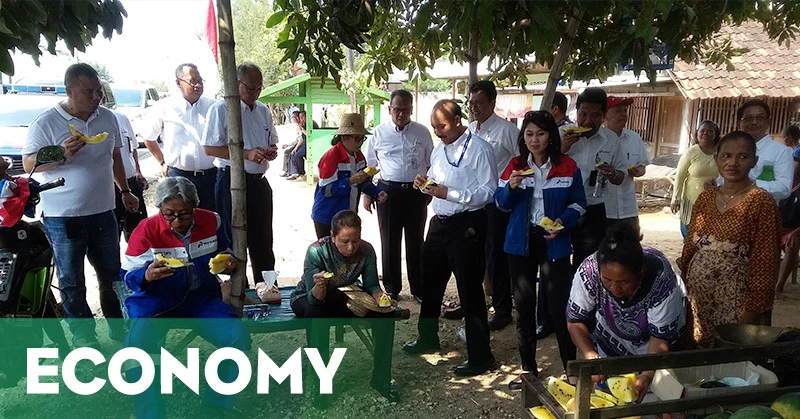
Before delving into the technical complexities of the refinery, the presidential entourage engaged in a moment of informal diplomacy that has become a hallmark of President Widodo’s "blusukan" (impromptu visit) style of governance. As the motorcade traversed the coastal roads of Tuban toward the industrial zone, the group paused their official schedule to interact with the local community. This stop highlighted the human dimension of large-scale industrial projects, bridging the gap between high-level policy and the everyday lives of the citizens living in the shadow of the refinery.
During the stop, Minister Rini Soemarno and Pertamina chief Dwi Soetijpto were seen mingling with residents, many of whom seized the opportunity to take photographs with the officials. The highlight of this brief interlude was a stop at a local residence where a vendor was selling fresh watermelons harvested from nearby fields. Minister Rini Soemarno, demonstrating a rapport with the locals, invited the entire delegation to sample the fruit. "Come on, try the watermelon first. This watermelon is delicious," the Minister remarked, emphasizing the quality of the local agricultural produce in the Tuban region. This interaction served as a reminder of the symbiotic relationship between the massive TPPI industrial complex and the surrounding agricultural community, suggesting that the success of the refinery should ideally translate into broader economic benefits for the local populace.
The Strategic Significance of PT Trans Pacific Petrochemical Indotama (TPPI)
The PT Trans Pacific Petrochemical Indotama (TPPI) refinery is one of the most sophisticated petrochemical facilities in Southeast Asia, yet its history has been marred by financial instability and underutilization. Located on a 230-hectare site in Tuban, the facility was designed to produce both refined fuels and high-value aromatic chemicals, such as paraxylene, benzene, toluene, and orthoxylene. These chemicals are essential raw materials for various industries, including textiles, plastics, and pharmaceuticals.
For the Widodo administration, the revival of TPPI is not merely an industrial project but a matter of national security. In 2015, Indonesia was grappling with a significant gap between domestic refinery capacity and national fuel demand. With the country consuming approximately 1.6 million barrels of oil per day while domestic refineries produced significantly less, the reliance on imports—often managed through third-party traders—created vulnerabilities. The TPPI facility, with its capacity to process approximately 100,000 barrels of condensate or light crude per day, offers a direct solution to this imbalance. By converting light crude into high-octane motor spirit (RON 92 and above) and diesel, the refinery can significantly offset the volume of finished fuel products that Indonesia must purchase from international markets.
Historical Context: From Financial Turmoil to National Asset
To understand the weight of the President’s visit, one must look at the checkered history of TPPI. Established in the mid-1990s, the project was initially a private venture that became ensnared in the 1997-1998 Asian Financial Crisis. Over the following decade, the company struggled with massive debts to various state entities, including SKK Migas (the upstream oil and gas regulator) and Pertamina. Legal disputes over ownership and debt restructuring kept the facility in a state of flux, often leading to prolonged shutdowns that deprived the state of much-needed refining capacity.
The 2015 push to restart the refinery was a bold move by the BUMN Ministry and Pertamina to consolidate control over the asset. By converting debt into equity and streamlining the management structure, the government sought to bypass the legal quagmires that had historically paralyzed the facility. The presence of Minister Rini Soemarno and Director Dwi Soetijpto at the site signaled that the era of indecision was over. The government’s approach was clear: strategic assets must serve the public interest, and the technical hurdles to operationalizing TPPI would be met with political will and financial restructuring.
Technical Capabilities and Economic Impact
The TPPI refinery is unique because of its flexibility. Unlike many older refineries in Indonesia that are configured to process specific types of heavy crude, TPPI is optimized for light crude and condensate. This allows it to produce a higher yield of premium products like Mogas (Motor Gasoline) and LPG, which are in high demand across the Indonesian archipelago.

According to data discussed during the inspection, the full operation of TPPI could potentially reduce fuel imports by up to 15 percent. In financial terms, this translates to savings of billions of dollars in foreign exchange reserves annually. Furthermore, the aromatic platform of the refinery provides a domestic supply of chemicals that were previously imported, supporting the growth of Indonesia’s downstream manufacturing sector. The integration of TPPI into Pertamina’s broader refinery development master plan (RDMP) is seen as a catalyst for transforming East Java into a premier industrial hub, creating thousands of jobs and stimulating local service industries.
Addressing the Current Account Deficit and Fuel Imports
One of the primary economic challenges facing Indonesia during this period was the Current Account Deficit (CAD), largely driven by the oil and gas trade balance. As a former member of OPEC that became a net oil importer, Indonesia faced constant pressure on its currency whenever global oil prices spiked or domestic demand surged. The President’s focus on TPPI was a direct response to this macroeconomic vulnerability.
By maximizing the output of TPPI, the government aimed to keep more of the value-added process within the country. Instead of exporting raw condensate and importing expensive refined gasoline, the "TPPI strategy" allows the nation to capture the refining margin domestically. This shift is estimated to improve the trade balance by several hundred million dollars per month when the facility operates at peak efficiency. During the visit, Director General of Oil and Gas IGN Wiratmaja noted that the technical audit of the facility showed that with minor investments in maintenance and optimization, the refinery could reach a throughput level that would fundamentally alter the national energy landscape.
The Policy Framework: Dismantling the "Oil Mafia"
The revival of TPPI also carries significant political weight regarding the "Oil Mafia" (Mafia Migas)—a term used in Indonesia to describe entrenched interests that profit from the nation’s reliance on fuel imports. For years, critics argued that certain actors intentionally hindered domestic refining capacity to ensure that lucrative import contracts remained necessary.
President Widodo’s administration made the dismantling of these networks a cornerstone of its reform agenda. The liquidation of Petral, Pertamina’s former trading arm based in Singapore, was the first step. The second step was the physical and operational takeover of refineries like TPPI. By ensuring that the state-owned Pertamina has direct control over refining assets, the government reduces the influence of intermediaries and increases transparency in the energy supply chain. The inspection in Tuban was a clear message to stakeholders that the government would no longer tolerate the underutilization of national assets for the benefit of external interests.
Stakeholder Perspectives and Future Outlook
Following the inspection, Pertamina’s leadership expressed optimism about the refinery’s trajectory. Dwi Soetijpto emphasized that the synergy between BUMN and the Ministry of Energy was at an all-time high, allowing for faster decision-making regarding technical upgrades at the Tuban site. He noted that the goal was to integrate TPPI with the nearby Grass Root Refinery (GRR) project, creating a massive energy complex that could serve as the backbone of Indonesia’s fuel supply for decades.
Vice President of Communication Wianda Pusponegoro highlighted the importance of community support, noting that the "watermelon moment" was reflective of the company’s commitment to social responsibility. "We are not just building machines; we are building a future for the people of Tuban," she stated in a follow-up briefing. The local government of Tuban also welcomed the revitalized focus on the refinery, anticipating increased tax revenues and infrastructure development in the surrounding districts.
Conclusion: Toward National Energy Independence
The visit of President Joko Widodo to the TPPI refinery in Tuban stands as a landmark event in Indonesia’s journey toward energy independence. It represented a confluence of populist engagement, strategic economic planning, and bold political reform. By choosing to walk through the local neighborhoods and share a simple meal of watermelon with the residents before inspecting one of the nation’s most complex industrial assets, the President reinforced the narrative that the "Big Policy" of energy sovereignty is ultimately for the "Small People" of Indonesia.
As the TPPI refinery continues its journey toward full operational capacity, it remains a symbol of the challenges and opportunities inherent in Indonesia’s industrial sector. The successful management of this facility will require ongoing vigilance, technical excellence, and a steadfast commitment to the national interest. However, the 2015 inspection provided the necessary momentum to turn a dormant liability into a strategic powerhouse, paving the way for a more resilient and self-sufficient Indonesian economy. The road to energy sovereignty is long and fraught with technical and political hurdles, but the foundations laid in the coastal sands of Tuban suggest that the nation is finally moving in the right direction.