
The automotive industry has turned its collective attention toward China following the official disclosure of design sketches for the second-generation BYD Seagull. As the global electric vehicle (EV) landscape continues to pivot toward more accessible, high-efficiency compact cars, BYD’s decision to elevate the status of its most affordable model marks a significant strategic shift. Known in various international markets as the Great Seagull (Da Haiou) or, in the Indonesian context, the Atto 1, this vehicle has served as a cornerstone of the manufacturer’s entry-level strategy. The unveiling of the next-generation sketches by Zhang Zhuo, General Manager of the Ocean Series sales division, confirms that the automaker is moving to solidify its dominance in the urban mobility sector with a vehicle that is physically larger, more aggressive in its aesthetic, and technologically superior to its predecessor.
The Evolution of the Seagull Design Philosophy
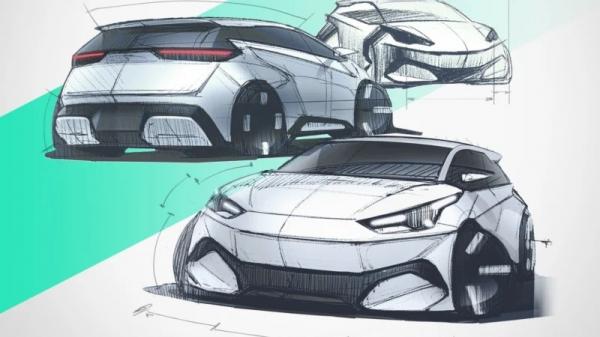
The original BYD Seagull was lauded for its pragmatic approach to electric mobility, offering a functional, budget-friendly solution for city dwellers. However, the second generation represents a departure from the "utility-first" design language toward a more emotive and dynamic identity. According to the design sketches released by BYD, the new model adopts an aggressive frontal fascia, characterized by large, trident-shaped headlights that dominate the vehicle’s "face." This departure from the more muted look of the current iteration suggests that BYD intends to position the vehicle not merely as an economy car, but as a lifestyle-oriented hatchback capable of competing with premium offerings in the segment.
Beyond the front end, the sketches reveal a vehicle with sharper body surfacing and significantly wider wheel arches, which communicate a sense of stability and road presence. The lower beltline, or glass line, is designed to enhance visibility while contributing to a sleeker, more aerodynamic profile. This design language is consistent with the "Ocean Aesthetics" philosophy that BYD has applied to its entire Ocean series, including the Dolphin and the Seal. By integrating these design elements into a compact hatchback, BYD is effectively narrowing the gap between its entry-level products and its higher-tier performance models.
Technical Upgrades and Interior Spatial Optimization
One of the primary criticisms of the first-generation Seagull—and indeed many cars in the A-segment—has been the constraints on interior space. With the second generation, BYD is addressing these concerns through a completely redesigned platform architecture. Although full technical specifications have not been finalized for public release, the company has confirmed that the vehicle’s dimensions will be significantly larger.
This increase in size is not merely cosmetic. It allows for a more versatile interior layout that prioritizes legroom and cargo capacity, two critical factors for consumers in emerging markets like Indonesia, where the vehicle is marketed as the Atto 1. Furthermore, the inclusion of 16-inch alloy wheels featuring an intricate eight-spoke design signals an upgrade in ride quality and visual appeal. The rear of the vehicle, as depicted in the sketches, features a slender, horizontal light bar that spans the width of the tailgate. This modern design choice serves a dual purpose: it improves rear-end visibility while creating a cohesive, high-tech aesthetic that aligns with contemporary global automotive trends.
The Strategic Importance of the Seagull Platform
To understand the weight of this announcement, one must examine the role the Seagull has played in BYD’s global expansion. The Seagull was originally engineered to utilize BYD’s proprietary sodium-ion or LFP (Lithium Iron Phosphate) "Blade Battery" technology, which provides a high degree of safety and cost-efficiency. By keeping the manufacturing costs low, BYD was able to undercut competitors, effectively democratizing electric vehicle ownership in China and beyond.
The decision to launch a "second generation" rather than a mere facelift indicates that BYD is satisfied with the market performance of the Seagull but recognizes the need for continuous iteration to maintain its competitive edge. As legacy automakers in Europe and Japan scramble to develop affordable EVs, BYD is already two steps ahead, refining its product to ensure it remains the benchmark for the segment.

Market Implications and Regional Impact
For markets such as Indonesia, where the transition to electric mobility is supported by government incentives and a growing network of charging infrastructure, the introduction of an upgraded, larger Seagull/Atto 1 could prove transformative. In many developing nations, the barrier to entry for EV adoption is the high price point of mid-to-large-sized SUVs. A larger, more premium-looking hatchback that retains the low cost-of-ownership associated with the BYD brand is likely to accelerate the adoption rate among middle-class consumers.
Analysts suggest that this move could force local competitors to reassess their pricing strategies. If BYD can maintain its aggressive pricing while offering a vehicle that is objectively larger and more stylish, the domestic competition may face significant pressure. Furthermore, the timing of this launch—coinciding with increased global scrutiny of Chinese EV manufacturing—highlights BYD’s confidence in its supply chain resilience and technological independence.
Chronology of the BYD Seagull Development
- Initial Launch: The BYD Seagull was first introduced to the Chinese domestic market, quickly becoming one of the best-selling electric vehicles in the country due to its value proposition.
- International Expansion: Following its domestic success, the vehicle was rebranded for international markets, including Southeast Asia and South America, where it gained popularity for its efficiency and compact dimensions.
- Announcement of Gen 2: In September 2026, Zhang Zhuo, through official channels, confirmed the development of the second generation, initially referencing it as the "Great Seagull" before formalizing it as the next iteration of the model line.
- Design Disclosure: The release of the official sketches in late September 2026 marked the first concrete look at the aesthetic changes, focusing on the trident headlights and enhanced dimensions.
Fact-Based Analysis: Challenges and Opportunities
While the design sketches paint a promising picture, BYD faces several hurdles. The first is the challenge of production scaling. Transitioning from one platform architecture to another requires significant retooling of factory lines. Given BYD’s vertical integration, where the company produces a large percentage of its own components—including semiconductors and batteries—the company is better positioned than most to manage this transition.
However, global trade dynamics remain a factor. With various nations implementing protective tariffs on Chinese-manufactured vehicles, the "Great Seagull" may need to be localized in foreign markets through Complete Knock-Down (CKD) operations to remain competitive. In Indonesia, for instance, BYD’s commitment to building a domestic manufacturing base is a strategic move that aligns with the government’s goal of making the country a hub for EV production.

Moreover, the shift toward a larger vehicle size may slightly increase the energy consumption of the unit compared to the original, hyper-efficient model. Balancing the desire for a "larger, more premium" vehicle with the need for high efficiency will be the primary engineering challenge for the development team.
Future Outlook and Consumer Expectations
As the automotive sector moves toward 2027, the unveiling of the second-generation BYD Seagull serves as a bellwether for the industry. Consumers can expect a vehicle that feels less like an entry-level "budget" car and more like a core product in the BYD lineup. The emphasis on aggressive, sporty aesthetics suggests that BYD is no longer content with being the "affordable choice"; it is now competing on design and desirability as well.
The automotive community now awaits further details regarding the powertrain, charging speeds, and official release dates for international territories. If the performance metrics match the promise of the design, the second-generation Seagull is poised to disrupt the A and B-segment hatchback market on a global scale. By bridging the gap between affordability and advanced, modern design, BYD is effectively redefining what a entry-level electric vehicle can—and should—be.
In conclusion, the evolution of the BYD Seagull is a testament to the rapid maturation of the electric vehicle market. By listening to consumer feedback and continuously iterating on its platform, BYD is not only maintaining its current market share but actively expanding its reach into new segments of the population. As the vehicle moves toward production, it will be closely watched by competitors and regulators alike, serving as a primary indicator of where the mass-market EV segment is headed in the coming decade.