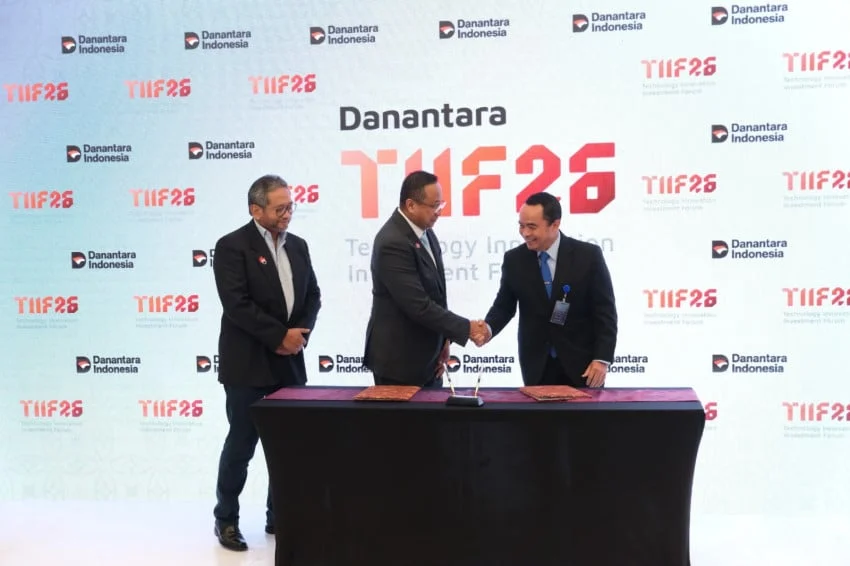
In a move designed to fortify Indonesia’s digital infrastructure against the looming threats of the quantum computing era, Perum Peruri (Peruri) and PT Telkom Indonesia (Persero) Tbk (Telkom) have officially entered into a strategic partnership. The signing of a Memorandum of Understanding (MoU) took place on Tuesday, October 27, 2026, during the Danantara Technology Innovation Investment Forum (DTIIF) held at the Fairmont Jakarta. This high-level collaboration marks a critical milestone in the nation’s journey toward securing its digital ecosystem, as both state-owned enterprises (SOEs) prepare for the paradigm shift necessitated by Post-Quantum Cryptography (PQC).
The agreement was formalized by Peruri’s President Director, Teguh Arief Indratmoko, and Telkom’s President Director, Nanang Hendarno. The partnership is a foundational pillar of the broader "Quantum-Safe Indonesia" initiative, a cross-sectoral effort supported by the National Cyber and Crypto Agency (BSSN) and Danantara Indonesia. By pooling resources, technical expertise, and infrastructure, the two entities aim to establish a robust framework capable of safeguarding critical digital assets against future computational breakthroughs.
The Quantum Threat: A Paradigm Shift in Cybersecurity
To understand the gravity of this collaboration, one must first recognize the nature of the challenge posed by quantum computing. Traditional cybersecurity, which protects everything from personal banking credentials to sensitive government data, relies on mathematical problems—such as integer factorization and discrete logarithms—that are computationally infeasible for classical computers to solve within a reasonable timeframe. However, quantum computers, utilizing the principles of quantum mechanics, possess the potential to solve these problems exponentially faster.
The threat, often referred to by cryptographers as "Harvest Now, Decrypt Later," involves malicious actors collecting encrypted data today with the intention of decrypting it once sufficiently powerful quantum computers become available. Consequently, the urgency for "Quantum-Safe" or "Quantum-Resistant" algorithms is not a distant concern but an immediate priority for nations aiming to maintain sovereign digital integrity. Post-Quantum Cryptography refers to cryptographic algorithms that are thought to be secure against a quantum computer, providing a necessary layer of defense for the next generation of digital infrastructure.
Chronology of the Strategic Initiative
The path to the DTIIF 2026 announcement did not occur in a vacuum. It represents the culmination of months of preparatory work and an evolving national strategy regarding digital sovereignty.
- Q1 2026: Initial discussions between Peruri and Telkom were catalyzed by the acceleration of global quantum research, prompting Indonesian policymakers to seek an assessment of national vulnerability.
- Q2 2026: The Danantara Indonesia framework was established to consolidate investment in strategic technologies, identifying cybersecurity as a priority area for national investment.
- Q3 2026: Pilot studies were conducted by both Peruri and Telkom regarding the integration of current digital trust services—such as electronic signatures and certificates—with potential quantum-resistant standards.
- October 27, 2026: The formalization of the MoU at the Danantara Technology Innovation Investment Forum (DTIIF), setting a clear roadmap for collaborative research and development.
The Role of Peruri in the Digital Trust Ecosystem
Peruri, as the designated national authority for digital trust, has been instrumental in the digitalization of public services. Its core mandate includes the provision of secure digital identities, electronic certificates, and blockchain-based authentication. In the context of this partnership, Peruri’s role is to ensure that the standards of trust it provides—which are currently the backbone of many government-to-citizen interactions—remain uncompromised in a post-quantum world.
Teguh Arief Indratmoko, President Director of Peruri, underscored that the company’s involvement is a proactive measure to maintain public confidence. "As part of the national digital trust ecosystem, Peruri views readiness for the post-quantum era as a critical component in reinforcing the integrity of our digital services," Teguh stated during the forum. "This collaboration provides a platform to integrate our expertise in digital trust, cybersecurity, and cryptographic science to develop solutions tailored to Indonesia’s specific requirements."
Telkom’s Contribution: Infrastructure and Connectivity
As Indonesia’s primary telecommunications provider, Telkom brings the necessary network depth and infrastructure to the table. Securing the nation’s data is not only about the algorithms themselves but also about the channels through which data flows. Telkom’s involvement allows for the potential implementation of Quantum Key Distribution (QKD) and other hardware-level security enhancements across its vast network footprint.
The synergy between Peruri’s application-level security and Telkom’s infrastructure-level capabilities creates a holistic approach to defense. By synchronizing these efforts, the partnership aims to create a seamless security layer that can be deployed across both private enterprise networks and public sector systems.
National Implications and Economic Context
The implications of this partnership extend far beyond technical specifications. For Indonesia, a nation that has rapidly digitized its economy—from the widespread adoption of QRIS payments to the implementation of the National Digital Identity (IKN)—the stability of the digital economy is paramount.
- Economic Resilience: Financial institutions, which rely heavily on current cryptographic standards, represent a significant portion of the digital economy. The development of PQC solutions will protect these institutions from systemic cyber risks, preserving investor and consumer confidence.
- Sovereignty of Data: By developing indigenous capabilities in PQC, Indonesia reduces its reliance on foreign cryptographic standards, ensuring that its critical infrastructure is not vulnerable to external exploitation.
- Regulatory Leadership: The involvement of BSSN suggests that the output of this partnership will likely influence future national regulations regarding cybersecurity, setting a benchmark for other industries, including healthcare, defense, and manufacturing.
Expert Perspectives on the Quantum Transition
Industry analysts observing the DTIIF 2026 noted that while the transition to quantum-safe standards is a multi-year project, the early start is crucial. "The transition to PQC is perhaps the most significant upgrade to global cybersecurity infrastructure in the last 40 years," noted a cybersecurity expert participating in the forum. "By initiating this partnership, Peruri and Telkom are moving ahead of the curve. The challenge is not just the development of new algorithms, but the migration of existing, deeply embedded legacy systems to these new standards without disrupting daily operations."
The partnership is expected to involve intensive knowledge exchange, joint research laboratories, and the testing of "quantum-resistant" proofs of concept. Furthermore, the collaboration will focus on building human capital—training a new generation of Indonesian cryptographers capable of navigating the complexities of post-quantum mathematics.
Future Outlook: Building a Quantum-Resistant Roadmap
Looking ahead, the collaboration between Peruri and Telkom is expected to produce a series of white papers and technical standards that will guide the national implementation of quantum-safe measures. The success of this initiative will be measured by its ability to integrate into existing digital architectures, such as the digital signatures used in official government documents and the secure transmission of sensitive data across Telkom’s fiber-optic backbones.
As the DTIIF 2026 concluded, the consensus among stakeholders was clear: the era of quantum computing is an inevitable evolution of technology. While it presents a formidable challenge, it also offers a unique opportunity for Indonesia to define its own standards of digital excellence. By prioritizing the integration of PQC now, the Indonesian government is signaling that its commitment to digital sovereignty is backed by forward-thinking, technically sound, and strategically aligned investments.
The partnership represents a significant leap forward in ensuring that as Indonesia embraces the potential of the quantum age, it does so with the necessary safeguards in place to protect the privacy, security, and trust of its citizens and institutions alike. As the project unfolds, the focus will remain on scalability, ensuring that these high-level cryptographic solutions can eventually be applied to the everyday digital interactions of millions of Indonesians.