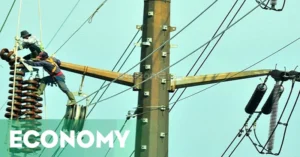
The leadership of PT PLN (Persero), Indonesia’s state-owned electricity monopoly, expressed strong confidence regarding the approval of state capital injection funds from the central government. Speaking from the State Palace in Jakarta, then-President Director Sofyan Basir projected that the utility firm would secure approximately Rp10 trillion through the forthcoming state budget revision. This financial backing was slated for submission to the legislative branch in the early months of the following year, forming a cornerstone of the administration’s broader infrastructure acceleration agenda.
The optimism voiced by the corporate leadership highlighted the delicate interplay between state-owned enterprise financing and legislative oversight in Indonesia. As the nation grappled with massive electrification deficits across its archipelago, securing capital injection—locally known as Penyertaan Modal Negara (PMN)—remained vital for bridging the development gap between urban economic hubs and isolated frontier regions.
Background Context on State Capital Injections and Electrification
State Capital Injection (PMN) serves as a direct financial mechanism wherein the Government of Indonesia strengthens the capital structure of state-owned enterprises (SOEs). For utility providers like PT PLN (Persero), these capital infusions are rarely treated merely as corporate subsidies; rather, they function as strategic fiscal instruments designed to execute public service obligations (PSO) that might otherwise be commercially unviable.
Historically, Indonesia’s electrification ratio faced severe regional disparities. While Java and Bali enjoyed near-universal grid connectivity, outer islands, border zones, and remote interior territories—particularly in regions like Eastern Indonesia, Kalimantan, and Papua—relied on costly, diesel-powered microgrids or lacked formal electricity access entirely.
To resolve these disparities, the administration of President Joko Widodo launched an ambitious 35,000-megawatt (MW) power plant development program alongside a massive transmission and distribution expansion. Achieving nationwide electrification required staggering capital expenditure, placing immense pressure on PLN’s balance sheet. Consequently, corporate leadership consistently lobbied the government and the House of Representatives (DPR) for direct equity participation through PMN to fund non-commercial, developmental infrastructure.
Strategic Rationale and Legislative Alignment
During his interaction with the press at the State Palace on Wednesday, November 4, 2015, Sofyan Basir underscored that the projected Rp10 trillion funding request carried intrinsic political and social alignment with the legislative branch. He argued that the allocation directly served the interests of lawmakers’ constituents residing in underserved regions.
"If you ask me, PLN will certainly be approved because this is for the DPR’s constituents," Sofyan stated at the time. "It is for the common people if PLN acts directly, ensuring that electricity in remote areas and in their constituents’ regions turns on."
Sofyan elaborated that the corporate strategy involved presenting a transparent, project-specific breakdown to members of Parliament. The proposed infrastructure blueprint focused heavily on targeted geographical zones: the outermost islands, deep interior provinces, border regions, and isolated archipelagic communities. By framing the capital injection as a direct social welfare and equity measure, PLN sought to secure bipartisan backing within parliamentary commissions overseeing state-owned enterprises and energy policy.
Financial Resilience and Subsidy Reallocation
Despite expressing firm confidence in the eventual disbursement of the funds, the utility executive maintained that corporate operations would remain insulated even if administrative delays occurred. PLN possessed a sufficiently robust cash flow to sustain ongoing capital works in the interim period.
Furthermore, Sofyan pointed to a significant structural shift in the national energy fiscal landscape: the reduction of energy subsidies. Earlier in the fiscal year, the government successfully curtailed electricity and fuel subsidies, saving the state approximately Rp30 trillion. Because PLN played a pivotal role in absorbing and distributing these policy adjustments—effectively returning fiscal space to the state treasury—corporate leadership felt justified in pressing for commensurate reinvestment through equity participation.
"We are asking and insisting, because subsidies have been reduced by Rp30 trillion this year, and we haven’t received it yet. We returned the money to the state, so we are asking for it back," Sofyan asserted.
Chronology of the 2015–2016 Fiscal Cycle
The maneuvering around the 2016 State Budget (APBN) and its subsequent revision (APBN-P) unfolded across several critical milestones:
- Late 2014 to Early 2015: The newly inaugurated administration of President Joko Widodo initiated sweeping reforms in energy governance, prioritizing infrastructure acceleration and the reduction of consumptive energy subsidies in favor of productive capital expenditure.
- Mid-2015: PLN formulated its long-term development framework, mapping out transmission and distribution lines for thousands of remote villages across the archipelago, highlighting the necessity of state capital participation.
- November 4, 2015: PT PLN (Persero) leadership publicly articulated its expectation of securing roughly Rp10 trillion in PMN during the upcoming 2016 state budget revision cycle, emphasizing direct engagement with parliamentary stakeholders.
- Early 2016: The formal submission of the revised state budget proposal took place, wherein executive agencies and ministries negotiated infrastructure financing allocations with the House of Representatives.
- Throughout 2016: Subsequent disbursement of approved capital injections enabled PLN to accelerate procurement, land acquisition, and construction contracts for isolated microgrids and regional transmission backbones.
Broader Economic Implications and Analyst Perspectives
The pursuit and eventual allocation of state capital injections to utility monopolies carry profound implications for macroeconomic stability, fiscal policy, and regional development in emerging markets.
From a fiscal perspective, channeling state funds into infrastructure through SOEs represents a deliberate trade-off. While it expands the public debt-to-GDP ratio or alters deficit trajectories, it simultaneously generates multiplier effects. Access to reliable electricity in remote regions stimulates local economic activity, reduces reliance on expensive industrial diesel fuel, enhances educational and healthcare delivery, and integrates marginalized local economies into the national market.
Energy economists generally view PMN allocations to PLN as a necessary intervention, provided governance and transparency standards are rigorously enforced. Without state equity, utility providers face a difficult dilemma: either delay rural electrification projects due to negative commercial returns or raise tariffs to levels unaffordable for lower-income rural populations. State capital injections absorb the initial capital expenditure burden, allowing infrastructure to be built without imposing immediate tariff shocks on consumers.
However, analysts also caution against structural moral hazard. Sustained reliance on state capital injections requires stringent performance monitoring to ensure that funds are deployed efficiently without cost overruns or project delays. The alignment strategy pursued by PLN management—tying capital requests directly to tangible constituency benefits in remote districts—proved effective in navigating the political economy of parliamentary approvals, yet it also underscored the deep intersection between public utility management and national legislative politics.
Ultimately, the events of late 2015 marked a critical chapter in Indonesia’s ongoing quest for universal electrification. By leveraging fiscal savings from subsidy reform and framing capital injections as an engine for regional equity, PT PLN (Persero) secured the financial pathways necessary to illuminate the nation’s most isolated frontiers, laying the groundwork for long-term socio-economic integration.