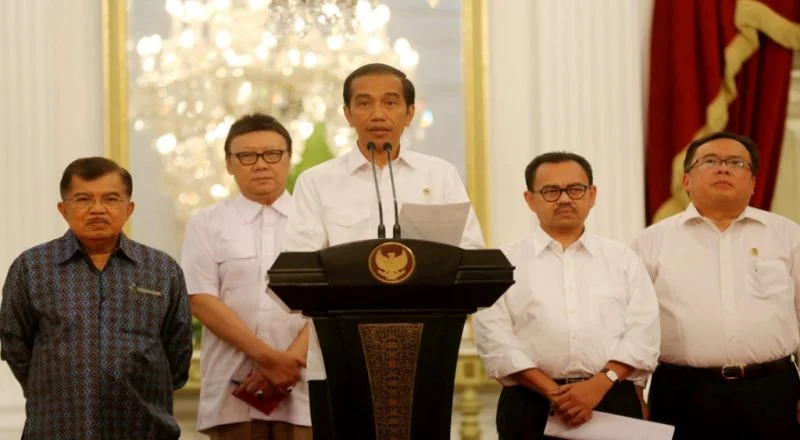
JAKARTA — President Joko Widodo issued a firm directive to his cabinet and state utility executives, emphasizing that energy pricing and structural adjustments must not become a burden to the general public. Speaking from the Presidential Office in Jakarta on Wednesday, November 4, 2015, President Widodo explicitly instructed then-Minister of Energy and Mineral Resources (ESDM) Sudirman Said and the Board of Directors of PT PLN (Persero) to exercise rigorous caution regarding the nation’s electricity tariff policies. The directive underscored the administration’s overarching priority: protecting vulnerable socioeconomic demographics from the immediate shocks of energy subsidy reforms.
The presidential intervention was prompted by complex deliberations surrounding the planned rationalization of electricity subsidies slated for the following fiscal year. Specifically, the government was preparing to implement a major policy shift involving the restructuring and eventual removal of state financial support for approximately 23 million electricity customers deemed financially capable, thereby reallocating those state resources toward more targeted infrastructure and social assistance programs.
Background Context of Indonesia’s Energy Subsidy Reform
For decades, energy subsidies formed a cornerstone of Indonesia’s fiscal policy, designed to keep the cost of living manageable for a population recovering from historical economic instabilities. However, these subsidies placed a staggering burden on the state budget (APBN). Billions of dollars were funneled annually into fossil fuel and electricity subsidies, frequently benefiting middle- to upper-income households rather than the impoverished populations they were originally intended to protect.
When President Joko Widodo assumed office in late 2014, one of his administration’s primary macroeconomic objectives was fiscal consolidation. This necessitated a courageous, albeit politically sensitive, overhaul of the national subsidy regime. The administration began by redirecting fuel subsidies toward infrastructure development and social welfare programs in late 2014. Building on this momentum, the government turned its attention toward the electricity sector, regulated by state-owned electricity monopoly PT PLN (Persero).
The primary challenge facing policymakers was identifying and separating subsidized consumers based on actual economic capacity. PLN data indicated that millions of households utilizing the 450-Volt-Ampere (VA) and 900-VA power tiers—historically designated for low-income families—included a substantial percentage of middle- and upper-class consumers. The planned policy for the upcoming year aimed to transition these misallocated subsidies, affecting roughly 23 million subscribers, to ensure that state funds reached only those genuinely in need.
The Presidential Directive and Calculations
Recognizing the immense political and social sensitivities associated with utility pricing, President Widodo convened a high-level cabinet meeting at the Presidential Office. During the session, he stressed that while structural fiscal reforms were mandatory for long-term national economic health, the execution must be handled with utmost precision to prevent widespread public discontent.
"So that the impact of this subsidy reallocation can be minimized to the greatest extent possible," President Widodo stated at the Presidential Office in Jakarta on Wednesday, November 4, 2015.
The President instructed Minister Sudirman Said and PT PLN leadership to conduct exhaustive calculations and meticulous modeling of the options available for subsidy reallocation. The directive mandated that any tariff adjustments or adjustments to the Tariff Dasar Listrik (TDL) must be phased in gradually, accompanied by robust communication strategies to prevent panic and misinformation among the populace. The administration wanted to ensure that the transition did not trigger inflationary spirals in consumer goods and services, which would disproportionately hurt working-class families.
Chronology of the 2015-2016 Electricity Tariff Adjustments
To understand the weight of the President’s warning, it is essential to trace the chronology of energy policy developments during this period:
- Late 2014: The Jokowi administration successfully executes a historic fuel subsidy reform, freeing up vital fiscal space in the state budget.
- Early 2015: The Ministry of Energy and Mineral Resources, in coordination with PT PLN, initiates a comprehensive census and database audit to identify electricity subsidy recipients across the 450 VA and 900 VA tiers.
- Mid-2015: Preliminary findings reveal that millions of households utilizing lower-tier connections possess modern electronic appliances and income levels exceeding the poverty threshold, confirming widespread subsidy leakage.
- November 4, 2015: President Joko Widodo issues his direct warning during a cabinet meeting, instructing Minister Sudirman Said and PLN to carefully calculate the 23 million customer subsidy transition to protect the public from undue hardship.
- Late 2015 to 2016: The government rolls out phased adjustments, introducing systematic verification processes and introducing targeted social safety nets to cushion the impact of the policy implementation.
Official Responses and Institutional Alignment
Following the President’s directive, the Ministry of Energy and Mineral Resources and PT PLN initiated immediate technical reviews to comply with the mandate. Minister Sudirman Said acknowledged the complexity of the task, noting that adjusting tariffs for millions of households required seamless coordination between economic ministries, data agencies such as Statistics Indonesia (BPS), and local administrations to verify recipient eligibility accurately.
PT PLN, as the sole state-owned electricity distributor, bore the operational responsibility of implementing the changes. Company executives emphasized that the utility was committed to balancing corporate financial sustainability with social responsibility. PLN representatives assured the public that the transition would not happen abruptly and that customer service centers would be fully prepared to handle inquiries, grievances, and data verifications from households affected by the reclassification.
Economic analysts and industry observers largely praised the administration’s cautious approach. While fiscal reform was universally recognized as necessary to reduce the deficit and fund capital expenditure, the gradual implementation framework mitigated the risk of social unrest. Experts pointed out that transparent communication regarding why the subsidies were being shifted was just as important as the mathematical calculations behind the tariff adjustments.
Economic Implications and Broader Impact
The policy to rationalize electricity subsidies carried profound implications for Indonesia’s macroeconomic stability and social fabric:
- Fiscal Health: By curtailing misdirected subsidies, the government successfully preserved billions of rupiah in the state budget. These funds were subsequently redirected toward infrastructure projects—such as roads, ports, and power plants—and targeted social programs like the Family Hope Program (PKH) and health insurance for the poor (PBI).
- Energy Efficiency and Investment: Rationalizing tariffs encouraged more rational energy consumption among middle- and upper-class households, reducing peak-load pressures on PLN’s generation and distribution networks. Furthermore, a financially healthier PLN was better positioned to attract investment for the ambitious 35,000-megawatt power plant development program championed by the administration.
- Inflationary Control: By heeding the President’s warning to minimize the shock of the transition, the government successfully prevented sudden spikes in the Consumer Price Index (CPI). Controlled utility pricing ensured that micro, small, and medium-sized enterprises (MSMEs)—which form the backbone of the Indonesian economy—did not face crippling operational cost increases.
Conclusion
The events of November 2015 mark a critical juncture in Indonesia’s ongoing struggle to balance fiscal discipline with social equity. President Joko Widodo’s intervention served as a vital check against administrative overreach, ensuring that bureaucratic reform did not outpace human realities. By demanding meticulous calculations and deliberate pacing from the Ministry of Energy and Mineral Resources and PT PLN, the administration successfully navigated a politically perilous reform, laying the groundwork for a more sustainable, targeted, and equitable energy ecosystem in Indonesia for years to come.