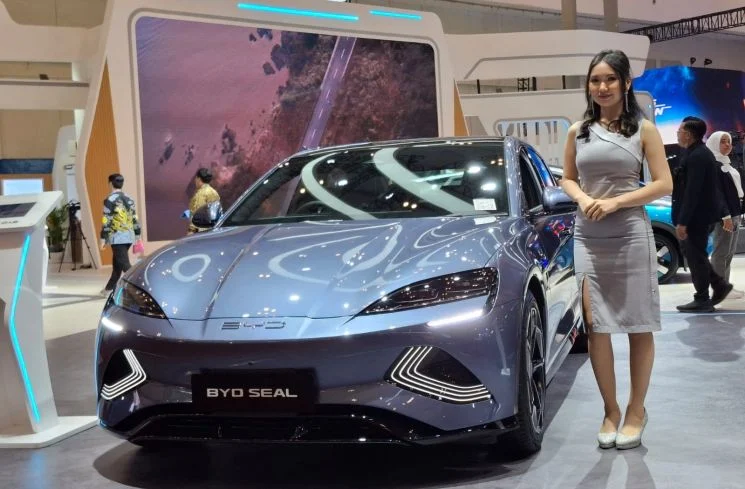
The Indonesian government has officially set an ambitious and strategic roadmap to transform the nation into a global hub for electric vehicle (EV) production. At the heart of this policy is a rigorous mandate to increase the Domestic Component Level (TKDN) of electric vehicles, with the government aiming to reach an 80 percent local content threshold by 2030. This policy is designed to ensure that Indonesia evolves beyond a mere assembly base for foreign manufacturers, instead fostering a robust, self-sustaining industrial ecosystem that integrates local suppliers into the global EV supply chain.
Minister of Industry Agus Gumiwang Kartasasmita, speaking during the recent inauguration of a new BYD manufacturing facility in Subang, West Java, emphasized that this transition is critical for the long-term industrial health of the country. By mandating higher local content, the government aims to force a "deepening" of the industrial structure, encouraging global automakers to localize not just final assembly, but also the production of high-value components such as battery packs, electric motors, and power electronics.
The Road to 80 Percent: A Staged Regulatory Framework
The government’s strategy is built upon a tiered implementation schedule that provides manufacturers with a clear, predictable timeline to adjust their supply chains. The regulation stipulates that EVs must meet a minimum of 40 percent local content by the end of 2026. This initial phase is intended to build the foundational capacity for domestic parts manufacturing.
Following this, the requirement will escalate to 60 percent for the 2027–2029 period. This mid-term target is designed to incentivize investments in secondary manufacturing processes, such as component casting and sophisticated electronic sub-assemblies. The final phase, which commences in 2030, mandates that 80 percent of an electric vehicle’s value must be derived from domestic sources. This move effectively compels manufacturers to source nearly all core components—ranging from vehicle chassis to advanced telematics—within Indonesia, thereby shielding the domestic market from supply chain volatility and reducing dependence on imports.
Impact on Investment and Industrial Capacity
The government’s proactive stance has already yielded tangible results in the automotive sector. To date, 14 major manufacturers have committed significant capital to the Indonesian EV market, with total cumulative investments reaching IDR 24.131 trillion. This surge in capital has translated into an annual production capacity of approximately 409,860 units, positioning Indonesia as a burgeoning powerhouse in the Southeast Asian automotive landscape.
The manufacturing sector’s performance remains a pillar of national economic stability. In the second quarter of 2026, the non-oil and gas processing industry recorded a robust growth rate of 5.32 percent year-on-year, successfully outpacing the national economic growth rate of 5.29 percent. This performance highlights the critical role of industrialization in buffering the national economy against the unpredictability of global market trends.
Manufacturing as the Economic Engine
The broader implications of this industrial policy are reflected in national macroeconomic indicators. The manufacturing sector currently contributes 16.83 percent to Indonesia’s Gross Domestic Product (GDP), amounting to a value of IDR 1,102.88 trillion. Furthermore, it accounts for 0.97 percentage points of the national economic growth, proving that the government’s investment in EV infrastructure is yielding dividends across the wider industrial spectrum.
Investment sentiment remains highly favorable. In the second quarter of 2026 alone, the manufacturing sector attracted IDR 199.48 trillion in new investments, representing 38.98 percent of total national investment. This influx of capital is not merely inflating numbers; it is fueling job creation. Official government data indicates that the non-oil and gas processing industry currently employs approximately 19.99 million workers, serving as a primary source of employment and economic mobility for the Indonesian workforce.
International Trade and Global Competitiveness
Indonesia’s pivot toward electric mobility is also reshaping its international trade profile. Between January and June 2026, the export value of non-oil and gas manufactured commodities reached USD 115.50 billion. These goods account for a staggering 82.03 percent of Indonesia’s total export volume, underscoring the shift from a commodity-dependent economy to one focused on value-added manufactured exports.
On the global stage, Indonesia’s industrial footprint is expanding rapidly. According to World Bank data from 2025, Indonesia’s Manufacturing Value Added (MVA) reached USD 275.61 billion. This achievement propelled the nation to the 12th position in the global MVA rankings, up from 13th the previous year. Within Southeast Asia, Indonesia stands unrivaled, with an MVA more than double that of Thailand, which holds the second position in the region. Globally, Indonesia has solidified its standing as the fifth-largest manufacturing power in Asia, trailing only industrial giants China, Japan, India, and South Korea.
Strategic Implications and Challenges Ahead
While the progress is undeniable, the journey toward an 80 percent TKDN target is not without challenges. Industry analysts note that achieving such high local content levels requires a massive expansion of the Tier-2 and Tier-3 supplier base—the small and medium enterprises that produce the nuts, bolts, wiring harnesses, and specialized materials required by EV manufacturers.
The government’s strategy of utilizing "affirmative policies" is intended to bridge this gap. By requiring major OEMs (Original Equipment Manufacturers) to partner with local firms, the government is facilitating a transfer of technology and technical expertise. This "knowledge spillover" is essential for domestic firms to meet the rigorous quality control standards required for global automotive components.
Furthermore, the integration of battery production is the ultimate hurdle. Indonesia, possessing the world’s largest nickel reserves, is well-positioned to dominate the battery supply chain. Integrating this raw material advantage into the domestic manufacturing process will be the primary driver for meeting the 2030 TKDN targets. If successful, Indonesia will not only achieve its goal of localizing production but will also become a critical node in the global transition to renewable energy and clean transport.
Looking Toward 2030
As the roadmap progresses, stakeholders will be watching for the consistency of regulatory support and the availability of infrastructure. The success of the EV industry in Indonesia hinges on a delicate balance: maintaining an attractive environment for foreign direct investment while ensuring that the domestic industrial base receives sufficient protection and support to grow.
The Minister of Industry’s commitment suggests that the government views the EV industry as the centerpiece of Indonesia’s "Golden Indonesia 2045" vision. By forcing the localization of the supply chain, the government is essentially building a new, high-tech industrial base from the ground up. The transition from internal combustion engines to electric powertrains provides a unique, once-in-a-generation window for Indonesia to leapfrog traditional industrial limitations and establish itself as a leader in the next era of global transportation.
With the current trajectory, the 2030 goal of 80 percent TKDN appears ambitious but increasingly attainable. As more companies follow the lead of firms like BYD and commit to deep integration within the Indonesian economy, the multiplier effect on employment, GDP growth, and technological advancement is expected to accelerate. For now, the policy framework provides a stable, long-term roadmap that invites global partners to grow alongside Indonesia’s rapidly maturing industrial ecosystem.