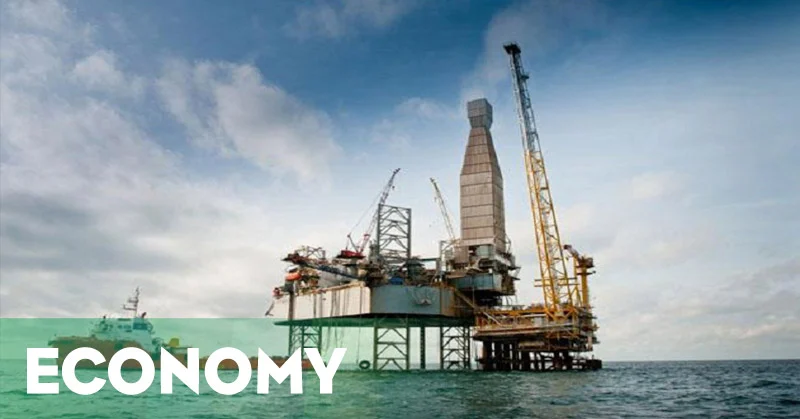
The Indonesian government faces the alarming prospect of significant financial forfeiture as administrative gridlocks, regulatory indecision, and protracted debates surrounding development schemes threaten to stall the multi-billion-dollar Abadi gas field project in the Masela Block, located in the deep waters of the Arafura Sea, Maluku. Industry projections indicate that any delay in bringing this colossal energy asset into production could result in a staggering opportunity loss of USD4 billion annually. For an emerging economy reliant on steady energy revenues and foreign direct investment to fuel regional infrastructure development, such losses underscore the high stakes of bureaucratic efficiency in the upstream oil and gas sector.
The Masela Block represents one of the largest single natural gas reserves in Indonesia, holding strategic importance not only for national energy security but also for the economic transformation of the eastern region of the archipelago. However, the path toward commercialization has been fraught with complex policy debates, technological disagreements between floating versus onshore processing facilities, and shifting regulatory frameworks. As stakeholders grapple with these competing visions, the clock ticks on a project designed to inject massive capital into the domestic economy without direct financial outlays from the state budget.
Comprehensive Financial Architecture and Investment Scope
To understand the magnitude of the potential losses, one must examine the baseline financial commitments outlined in the official Plan of Development (PoD) submitted by INPEX Corporation, the primary operator of the Masela Block, in partnership with Royal Dutch Shell. According to data compiled by Satuan Kerja Khusus Pelaksana Kegiatan Usaha Hulu Minyak dan Gas Bumi (SKK Migas)—the Indonesian upstream oil and gas regulatory task force—the consortium was slated to inject an estimated USD30 billion in capital expenditures (Capex) and operational expenditures (Opex) throughout the lifecycle of the project.
This massive capital injection was projected to generate a minimum baseline gross revenue of USD113 billion over the production period, an agreed-upon figure established through rigorous economic modeling between the operator and regulators. The core of this production capacity was centered on the Abadi Floating Liquefied Natural Gas (FLNG) facility, which, under the original timeline, was scheduled to come onstream by 2024.
At peak operational capacity, the facility was expected to yield 1,200 million standard cubic feet per day (mmscfd) of natural gas alongside 24,000 barrels per day (bpd) of condensate. Industry calculations confirmed that this output would translate directly into approximately USD4 billion in annual revenues for the state and project stakeholders. Crucially, this immense wealth generation would occur without the Indonesian government needing to allocate a single rupiah of state funds for the physical development of the gas field, as the financial burden rested entirely upon the shoulders of the Contractors of Cooperation Contracts (KKKS).
Chronology of the Masela Block Development
The historical trajectory of the Masela Block highlights the protracted nature of mega-projects in Indonesia’s resource sector. Discovered in 2000 by INPEX, the gas field quickly gained recognition as a world-class hydrocarbon discovery.
In 2008, the Indonesian government approved the initial Plan of Development (PoD) for the Masela Block, which stipulated the construction of an offshore FLNG facility. This pioneering engineering concept was chosen due to the extreme water depths and remote offshore location of the field, which made traditional pipeline transport to land economically and technically challenging.
Between 2009 and 2012, INPEX advanced front-end engineering design (FEED) studies and engaged in geological appraisal work to refine the reserve estimates, which were subsequently upgraded significantly. By 2014, as global liquefied natural gas markets shifted and technological advancements in offshore processing matured, the operator prepared to accelerate implementation.
However, by late 2014 and throughout 2015, political discourse surrounding the project intensified. Regional authorities in Maluku and various central government ministries began lobbying heavily for a revision of the development scheme—shifting away from the approved offshore FLNG concept toward a massive onshore pipeline and processing plant. Proponents of the onshore option argued that it would create a localized industrial hub and broader multiplier effects for the eastern provinces of Indonesia.

This policy pivot, however, required a complete overhaul of the engineering plans, fresh negotiations over cost recovery, and prolonged environmental impact assessments. It was during this critical juncture of policy indecision that upstream regulators and industry experts began issuing stern warnings regarding the financial opportunity costs of delay.
Regulatory Perspectives and Industry Frustration
The friction between maintaining operational momentum and bowing to shifting political and strategic priorities brought to light deep-seated frustrations within the regulatory apparatus. Aussie B. Gautama, who served as the Deputy for Planning at SKK Migas during the height of the 2015 policy debates, publicly emphasized the severe financial penalty associated with bureaucratic lag.
"Sesuai rencana, pada tahun 2024 FLNG Abadi mulai beroperasi (onstream) dan menghasilkan gas sebesar 1,200 mmscfd (juta kaki kubik per hari), dan kondensat 24,000 bpd (barrel per hari), yang akan menghasilkan sekitar USD4 milyar per tahun. Untuk mengembangkan lapangan gas ini Negara tidak mengeluarkan uang sepeser pun," Gautama stated in Jakarta. His remarks served as a direct caution to policymakers that delaying the project timeline would forfeit millions of dollars in daily revenue that could otherwise support national development.
Furthermore, Gautama expressed concern over the treatment of the Contractors of Cooperation Contracts (KKKS) involved in the project. He pointed out that INPEX had consistently demonstrated operational excellence and compliance with regulatory milestones, making them a model contractor within the Indonesian petroleum landscape. Subjecting such a cooperative and high-performing entity to sudden policy reversals and administrative penalties—colloquially referenced in industry vernacular as being unfairly reprimanded or pressured ("di-kepret")—risked eroding investor confidence. In an intensely competitive global energy market, arbitrary regulatory shifts can prompt multinational energy giants to reallocate capital to more stable and predictable jurisdictions.
Macroeconomic Implications and the Broader Energy Landscape
The implications of stalling the Masela Block extend far beyond immediate fiscal calculations. Natural gas is increasingly recognized as a vital transition fuel in the global push toward lower-carbon energy systems. By delaying the monetization of reserves as massive as those in the Abadi field, Indonesia risks missing critical market windows in the Asia-Pacific region, where demand for clean-burning liquefied natural gas remains robust.
From a macroeconomic standpoint, the loss of USD4 billion in annual revenues translates directly into reduced state tax receipts, lower profit-sharing distributions for regional governments, and a missed opportunity to foster domestic petrochemical and manufacturing industries tied to cheap gas feedstocks. Additionally, large-scale upstream projects typically catalyze secondary economic activities, including local employment, marine logistics development, vocational training, and infrastructure expansion in remote regions like Maluku. When a project of this scale stalls, the localized economic stagnation dampens broader regional growth targets.
Moreover, the Masela Block dilemma highlights a perennial challenge in resource-rich developing nations: balancing nationalist aspirations for direct onshore industrialization with the technical realities and economic efficiency of offshore engineering solutions. While the desire to maximize local content and regional spillovers is entirely valid from a public policy perspective, achieving these goals requires a delicate balancing act that does not inadvertently destroy project economics or drive away essential foreign investment partners.
Conclusion and Future Outlook
The financial warning issued regarding the Masela Block serves as a cautionary tale for energy governance in Indonesia. With potential annual losses mounting into the billions of dollars, the episode underscores the imperative for decisive, transparent, and consistent policymaking in the management of strategic natural resources.
As the global energy transition accelerates and capital markets demand greater predictability, future success in developing complex frontier fields like Abadi will depend heavily on the government’s ability to streamline regulatory processes, honor long-term contractual frameworks, and align national strategic goals with commercial realities. Only through such synchronization can Indonesia unlock the full economic potential of its vast offshore hydrocarbon wealth without falling victim to the costly paralysis of delay.