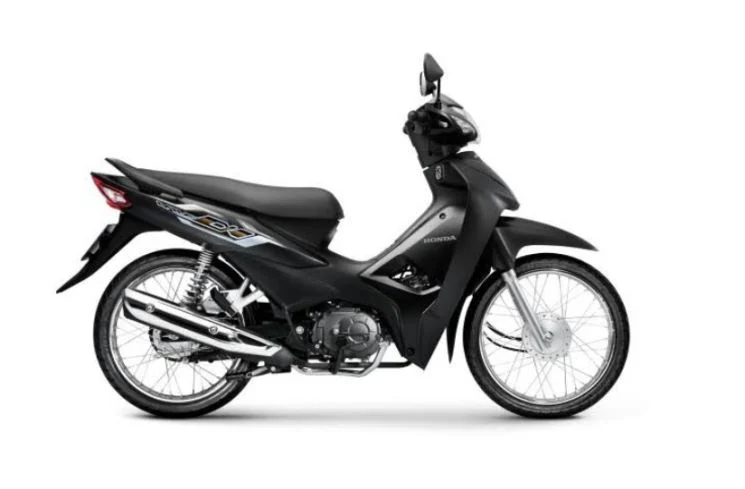
The landscape of small-to-medium enterprise (SME) logistics and daily operational transport in emerging markets is increasingly defined by the strategic acquisition of pre-owned machinery. For entrepreneurs and field workers, the high capital expenditure associated with purchasing brand-new vehicles—often compounded by high-interest financing schemes—can significantly impede cash flow and long-term financial stability. Consequently, the secondary market for underbone motorcycles, or "bebek" as they are colloquially known, has emerged as a vital pillar for economic productivity. These vehicles offer a compelling combination of mechanical simplicity, fuel efficiency, and robust structural integrity, making them the preferred choice for those who prioritize utility over aesthetics.
The Economic Case for Pre-Owned Utility Vehicles
In an era of rising operational costs, the decision to invest in a used motorcycle is not merely a cost-cutting measure but a calculated fiscal strategy. New motorcycles suffer from rapid depreciation in their first three years, losing a significant portion of their value immediately upon leaving the showroom. By purchasing a model that is ten to fifteen years old, the buyer avoids the brunt of this depreciation curve. Furthermore, the underbone architecture—characterized by a step-through frame and a horizontal engine layout—has been engineered for durability. Manufacturers like Honda, Yamaha, and Suzuki have spent decades refining these engines, resulting in powerplants that are notoriously difficult to kill, even under the duress of heavy daily usage.
For small business owners, the primary requirement is a machine that functions as an asset rather than a liability. An underbone motorcycle that costs less than 5 million rupiah (approximately $320 USD) provides a low barrier to entry, allowing the operator to allocate capital toward inventory, marketing, or business expansion. The ubiquity of spare parts for these legacy models ensures that repair costs remain low, as aftermarket parts are widely available and maintenance can be performed by virtually any local mechanic.
Analysis of Top Performers in the Under-5-Million Market
The secondary market is saturated with various models, but a select few have gained a reputation for being the "workhorses" of the industry. The following list identifies five motorcycles that have proven their reliability through years of intensive field service.
1. Honda Supra X 125 (2005–2010 Generation)
The Honda Supra X 125 is widely regarded as the gold standard for reliable utility transport. Its 124.8 cc SOHC engine is a marvel of engineering, providing 10.1 PS of power, which is sufficient for navigating both urban congestion and rural inclines. The engine is tuned for longevity rather than peak performance, ensuring that it remains operational for hundreds of thousands of kilometers with basic maintenance. Data indicates that these units can achieve 45 to 50 kilometers per liter, an essential metric for businesses managing delivery logistics. With a market price ranging from 3.5 to 5 million rupiah, the Supra X 125 offers the best balance of power and efficiency for the price point.
2. Honda Supra Fit (2004–2007 Generation)
For the budget-conscious operator, the Supra Fit represents the pinnacle of minimalist utility. While it possesses a smaller 100 cc engine, its primary advantage lies in its extreme fuel economy, often exceeding 50 kilometers per liter. In a logistics-heavy business, this translates to significant operational savings over time. Given its simple carbureted fuel system, the Supra Fit is remarkably easy to service, and replacement parts are among the cheapest in the market. Priced between 2 and 4.5 million rupiah, it is the ideal choice for short-distance, high-frequency transport tasks.
3. Yamaha Vega R (2005–2010 Generation)
Yamaha has long held a reputation for producing engines with high torque at low revolutions per minute (RPM). The Vega R is particularly popular among delivery personnel who carry heavy loads, as its engine provides immediate, responsive acceleration from a standing start. This agility is a significant advantage in dense traffic. Furthermore, the Vega R shares a high degree of component commonality with other Yamaha models, simplifying the sourcing of spare parts. It is a workhorse that rewards the rider with consistent performance and minimal downtime, typically found in the 3 to 5 million rupiah range.
4. Suzuki Smash (2007–2011 Generation)
The Suzuki Smash is frequently praised by mechanics for its exceptionally sturdy chassis. While other models might show signs of frame fatigue after years of heavy loading, the Smash remains structurally sound. Its 110 cc engine is designed for durability, making it an excellent candidate for long-distance, consistent operations. Despite its robust nature, it remains an overlooked gem in the used market, often allowing buyers to secure a well-maintained unit for 4.7 to 4.8 million rupiah. It is a testament to Suzuki’s engineering philosophy that prioritizes the "tahan banting" (durable) nature of the vehicle.
5. Yamaha Jupiter Z (2004–2010 Generation)
The Jupiter Z occupies a unique space in the market, bridging the gap between a utility vehicle and a performance-oriented machine. Its 110 cc to 115 cc carbureted engine is legendary for its reliability. While it offers a more spirited riding experience than the Supra or the Smash, it does not sacrifice efficiency, consistently achieving 40 to 45 kilometers per liter. Its transmission is noted for being smooth and responsive, which reduces rider fatigue during long shifts. With prices ranging from 2.5 to 4.2 million rupiah, it provides a high-performance option for those who also value the pleasure of a responsive machine.
The Critical Importance of Pre-Purchase Inspections
While these models are known for their reliability, the age of these vehicles makes a comprehensive inspection process non-negotiable. An expert in automotive logistics emphasizes that the "value" of a used vehicle is only as good as its current condition. Prospective buyers must adopt a structured approach to evaluation:
- Legal Verification: The first step is the reconciliation of the frame and engine numbers with the official vehicle registration documents (STNK and BPKB). Discrepancies in these numbers are a red flag for stolen property or severe mechanical "frankensteining," where parts from multiple bikes have been combined.
- Mechanical Integrity: A test ride is essential to gauge the state of the suspension, braking system, and the fluidity of the transmission. Listen for unusual "knocking" sounds in the engine, which could indicate a worn crankshaft or piston rings.
- Chassis and Body: Examine the frame for signs of rust, cracks, or misalignment, particularly around the steering head. A bent frame is a structural failure that is often not worth the cost of repair.
Broader Implications for the Small Business Sector
The reliance on these motorcycles has profound implications for the local economy. By utilizing affordable, pre-owned transport, small business owners effectively lower their "cost of sales." This enables them to offer more competitive pricing to their customers, thereby increasing their market share. Furthermore, the existence of a thriving secondary market for motorcycles supports an entire ecosystem of local mechanics, spare part retailers, and repair shops, creating a circular economy that benefits the community at large.
The shift toward sustainable, long-term asset management is a sign of a maturing business environment. Instead of chasing the latest technology or new models, successful small business operators are focusing on the fundamentals: reliability, repairability, and operational cost. As the demand for last-mile delivery services continues to grow, the role of these durable, affordable underbone motorcycles will remain central to the success of independent workers and entrepreneurs.
Conclusion
For those seeking to maximize their operational capacity on a limited budget, the underbone motorcycle remains an unparalleled asset. Whether it is the legendary durability of the Honda Supra X 125, the extreme economy of the Supra Fit, the agility of the Yamaha Vega R, the structural robustness of the Suzuki Smash, or the balanced performance of the Yamaha Jupiter Z, there is a solution for every need. By conducting diligent research, performing thorough inspections, and maintaining these machines with care, entrepreneurs can ensure that their vehicles remain reliable partners in their professional journey for years to come. The goal is clear: utilize the tools that work best, not just the ones that look newest, to build a resilient and profitable business foundation.