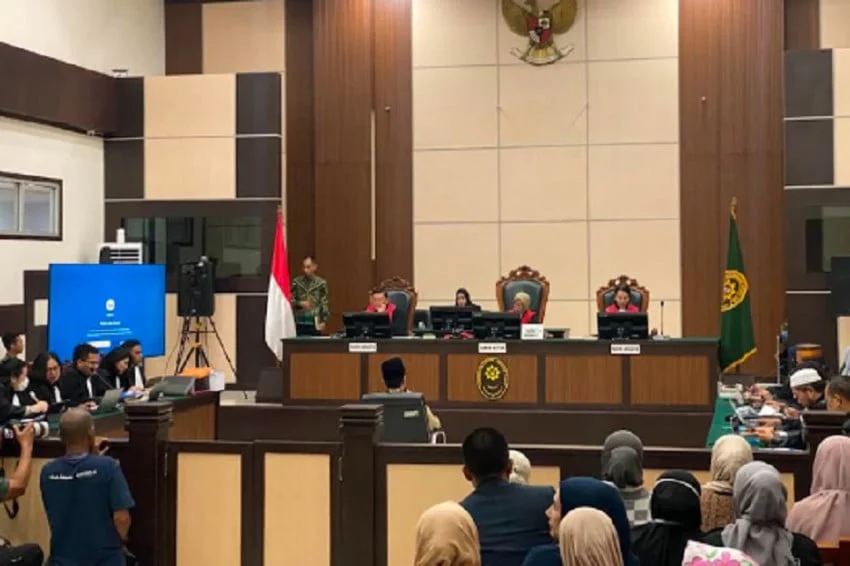
The legal proceedings surrounding the disputed educational credentials of Indonesia’s seventh president, Joko Widodo, reached a critical juncture at the East Jakarta District Court. Tifauzia Tyassuma, widely known as Doctor Tifa and one of the defendants in the ongoing trial concerning allegations of a fabricated university diploma, publicly outlined what she described as fundamental discrepancies in the academic history of the former head of state. The court session, which drew intense public scrutiny and massive media coverage, featured the direct testimony of Joko Widodo as a witness for the prosecution. Following the adjournment of the proceedings, Doctor Tifa addressed reporters outside the courtroom, focusing analytical attention on three primary points of contention regarding the former president’s undergraduate tenure at Universitas Gadjah Mada (UGM) in Yogyakarta.
The courtroom appearance of the former president and the subsequent counter-statements from the defense underscore a protracted controversy that has evolved from online discourse into a formal judicial battle. As both legal teams prepare for subsequent hearings, the evidentiary standards regarding historical academic records in Indonesia are being scrutinized under the strict purview of the criminal justice system.
Main Facts of the Courtroom Proceedings
The session at the East Jakarta District Court was convened to examine the factual basis behind allegations concerning the authenticity of Joko Widodo’s university degree, a narrative that has circulated across various digital platforms for several years. The prosecution presented physical documentation intended to substantiate the former president’s graduation from the Faculty of Forestry at UGM. However, the introduction of these documents sparked immediate procedural objections and subsequent public commentary from the defense camp.
According to Doctor Tifa, the primary evidentiary shortfall during the hearing centered on the distinction between a cumulative academic transcript and a semester-by-semester grade report. The defendant asserted that the documents presented by the public prosecutor failed to satisfy the legal and academic definitions of a comprehensive undergraduate transcript. Instead, she claimed the exhibits displayed in the courtroom were restricted to individual semester evaluation records.
Furthermore, the defense argued that this absence of a definitive transcript creates a substantive gap in the verifiable proof of graduation, contrasting these records with comparison materials purportedly held by the defense from contemporary alumni of the same institution and graduation cohort. The prosecution and representatives of the university have historically maintained the legitimacy of the credentials, pointing to institutional archives, alumni registries, and institutional governance protocols, though the courtroom debate has forced a granular examination of specific physical artifacts from the 1980s academic environment.
Chronology of the Diploma Controversy
The genesis of the dispute over Joko Widodo’s educational background dates back several years prior to the formal legal charges that brought the matter before the East Jakarta District Court. The timeline of events traces a trajectory from digital speculation to formal criminal indictments:
- Initial Online Accusations: Public skepticism regarding the educational history of the then-sitting president began appearing on social media platforms, questioning the veracity of his graduation from the Universitas Gadjah Mada Faculty of Forestry. Critics raised queries about yearbook photographs, thesis titles, and alumni directories.
- University Clarifications: In response to mounting public inquiries, officials from Universitas Gadjah Mada held official press conferences. University leadership formally verified that Joko Widodo graduated from the Faculty of Forestry in 1985, presenting archival data, student registration numbers, and historical faculty records to substantiate the claim.
- Escalation and Legal Action: Despite institutional affirmations, public challenges persisted, leading to legal interventions by authorities against individuals accused of disseminating unverified information and defamatory claims regarding public officials. This ultimately culminated in criminal charges filed against figures such as Doctor Tifa and other commentators under relevant provisions of the Indonesian Criminal Code and the Electronic Information and Transactions (ITE) Law.
- Courtroom Testimony: The judicial phase escalated when Joko Widodo agreed to appear in person at the East Jakarta District Court to testify as a witness, expressing personal grievances regarding the expansion of the allegations to involve his deceased parents and personal honor.
- The Recent Hearing: The session on November 5, 2026, marked a focal point where defense actors publicly dissected the physical evidence submitted by the prosecution, leading to the articulation of the three specific evidentiary concerns highlighted by Doctor Tifa.
Supporting Data and Context of Archival Verification
The evidentiary debate in the Jakarta courtroom highlights the complexities of verifying academic credentials issued prior to the widespread implementation of digitized national education databases in Indonesia. In the mid-1980s, record-keeping systems across most tertiary institutions relied heavily on physical ledgers, paper-based grade sheets, and manual archiving processes.
Universitas Gadjah Mada, as one of the country’s oldest and most prestigious state universities, operates under strict administrative statutes regarding alumni verification. Institutional records typically encompass:
- Student admission ledgers detailing matriculation numbers and entrance examination channels.
- Physical academic cards (Kartu Hasil Studi or KHS) issued to students at the conclusion of each academic term to record individual course grades.
- Comprehensive academic transcripts (Transkrip Nilai) summarizing the entirety of a student’s academic performance, credit accumulations, and final Grade Point Average upon graduation.
- University senate graduation decrees and physical diplomas bearing the signatures of authorized rectors and faculty deans.
The defense’s contention that the documents presented in court represent intermediate semester reports rather than a finalized, cumulative graduation transcript touches upon archival distinctions. Legal analysts note that while universities maintain multiple tiers of verification, the specific legal threshold required in a defamation or forgery-related criminal trial demands definitive evidentiary proof that satisfies both criminal law standards and institutional administrative norms.
Official Responses and Emotional Dimensions of the Trial
The emotional toll of the protracted controversy was notably evident during the court proceedings. In earlier and concurrent statements associated with the litigation, Joko Widodo expressed profound frustration and personal distress over the inclusion of his late parents in the public discourse surrounding his credentials. Speaking on the matter, the former president remarked on the pain inflicted by attacks that extended beyond his political career to target his family history, emphasizing that parental honor should remain outside the arena of political and legal disputes.
Legal representatives for the state and supporters of the former administration have consistently characterized the allegations as politically motivated disinformation campaigns designed to undermine the legacy of his presidency. They argue that the continuous recirculation of debunked claims despite repeated institutional clarifications from UGM demonstrates a disregard for established facts.
Conversely, the defense maintains that their inquiries are rooted in the fundamental right to public transparency and accountability, particularly concerning figures who have held the highest office in the land. They argue that rigorous examination of credentials in a court of law is a legitimate exercise of defense strategy when facing criminal allegations related to public speech and investigation.
Broader Impact and Implications for Public Discourse and Law
The ongoing trial involving Doctor Tifa and the scrutiny of presidential educational records carries significant implications for several facets of Indonesian public life, jurisprudence, and digital governance:
- Evidentiary Standards in the Digital Age: The case highlights the challenges courts face when adjudicating historical factual disputes that rely on analog-era documentation. As institutions transition to fully digital verification systems, historical gaps in paper archives can become focal points for legal contention.
- Freedom of Speech versus Defamation Law: The proceedings continue to fuel ongoing debates regarding the application of Indonesia’s Electronic Information and Transactions (ITE) Law and criminal defamation statutes. Legal scholars frequently analyze how courts balance the protection of personal reputation and institutional integrity against the boundaries of critical public discourse and investigative commentary by citizens.
- Institutional Credibility: For Universitas Gadjah Mada and other major academic institutions, the trial serves as an unexpected test of their archival robustness and institutional credibility. The university’s ability to withstand legal scrutiny regarding its historical graduates directly impacts public trust in higher education governance in Indonesia.
- Political Polarization: Long after the conclusion of Joko Widodo’s formal executive tenure, controversies surrounding his background continue to resonate within polarized segments of the electorate. Judicial resolutions of these disputes are closely watched by political observers gauging the lingering influence of populist narratives and information integrity in the country.
As the East Jakarta District Court schedules subsequent hearings, both the prosecution and the defense are expected to present further expert testimonies and legal arguments. The ultimate judicial determination will not only address the specific criminal charges leveled against the defendants but will also establish a legal precedent regarding the verification of historical credentials in Indonesian courts.