PT Pertamina (Persero) through its Marketing Operation Region (MOR) VI Kalimantan officially initiated a series of targeted market operations for subsidized 3-kilogram liquefied petroleum gas (LPG) cylinders in Balikpapan, East Kalimantan. The strategic intervention was deployed following widespread rumors and localized concerns regarding potential supply shortages and stockouts across various retail points within the municipality.
Despite public anxiety and queues observed at several distribution bases, energy officials and local government representatives strongly reiterated that the actual stock of the subsidized energy resource remained secure, sufficient, and fully controlled. The pre-emptive market operations were designed primarily to reassure consumers, stabilize local distribution channels, and suppress panic buying driven by unverified information circulating within the community.
Swift Response to Alleviate Public Anxiety
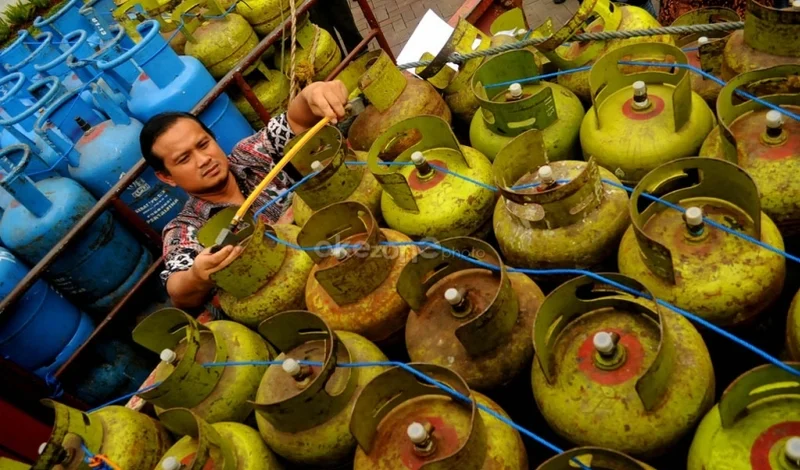
The decision to execute direct market operations came in the wake of mounting community unease regarding the availability of the iconic green-hued 3 kg gas canisters, colloquially known as "melon" tanks. Rumors regarding sudden empty shelves at traditional retail outlets had begun to trigger precautionary hoarding among certain segments of the population, which in turn threatened to artificially destabilize a stable supply chain.
Andar Titi Lestari, who served as the Public Relations representative for Pertamina MOR VI at the time, moved quickly to dispel notions of a structural energy crisis in the region. Speaking from Balikpapan, she underscored that the state-owned energy enterprise maintains rigorous oversight of its distribution networks to prevent genuine scarcity from taking root.
"This operation is primarily aimed at anticipating any sudden supply gaps triggered by circulating rumors. To ensure direct access for residents, we have allocated approximately 150 cylinders to each designated operational location," Lestari stated.
The initial phase of the deployment concentrated heavily on high-density neighborhoods where reports of tight supplies were most prominent. Specifically, teams established distribution points in Gunung Sari and Karang Jati, supplying each area with the designated quota of 150 cylinders. Interestingly, the on-the-ground reality reflected a much healthier inventory than anticipated by panicked buyers. By the conclusion of the primary daytime operations, notable surpluses remained unsold at the designated sites—specifically 80 lingering cylinders in Gunung Sari and 50 remaining units in Karang Jati. This quantitative evidence served as a clear indicator that local demand was not outstripping physical stock, but rather experiencing behavioral anomalies in purchasing patterns.
Expanding Distribution Through Sub-Agencies
Recognizing that localized bottlenecks can occur even when regional reserves are robust, Pertamina broadened the scope of its logistical intervention. Beyond the primary open-market locations, the corporation rolled out parallel operations across 15 strategic sub-agencies and authorized distribution bases throughout Balikpapan.
This multi-pronged approach ensured that neighborhoods on the periphery of the urban center had direct access to standard-priced fuel without needing to travel into congested commercial districts. However, this decentralized distribution model also underscored the critical need for consumer restraint.
Lestari issued a direct appeal to the public, urging residents to exercise moderation when purchasing essential fuels. She emphasized that inventory levels at depots and warehouses remained fully secure, removing any rational justification for hoarding. Furthermore, she directed a specific reminder toward middle-to-upper-income households, who legally fall outside the target demographic for state-subsidized energy products.
"Because our supply is fully secure, we strongly urge members of the public who belong to more affluent economic brackets to transition toward non-subsidized alternatives, such as the 12-kilogram LPG cylinders or the Bright Gas product line," Lestari noted. The subsidized 3 kg format is constitutionally and regulatory restricted to low-income households and micro-enterprises, making compliance with these demographic boundaries vital for long-term supply equity.

Local Government Perspective and the Psychology of Queues
Corroborating Pertamina’s operational assessments, the municipal government of Balikpapan stepped forward to confirm the absolute stability of the city’s energy reserves. Arzeadi, serving as the Head of the Economic Section (Kabag Ekonomi) for the Balikpapan City Government, delivered an authoritative assessment affirming that regional monitoring teams found zero evidence of a genuine deficit.
According to Arzeadi, municipal authorities cross-referenced field reports from district offices, independent consumer feedback, and official data provided directly by Pertamina. Every data stream converged on the same conclusion: the volume of subsidized gas entering Balikpapan met or exceeded historical consumption averages.
Addressing the optical illusion of scarcity—namely, the formation of persistent physical queues at retail stalls—Arzeadi provided critical context regarding consumer behavior. He explained that long lines observed by residents at specific pangkalan (distribution bases) were frequently misconstrued as evidence of a shortage, when they were actually the byproduct of standard regulatory safeguards and consumer maneuvering.
"If people witness queues forming at a distribution base, it does not automatically mean that gas is scarce. Standard operational procedures dictate that retailers must limit individual purchases to a maximum of two cylinders per consumer to ensure equitable distribution," Arzeadi explained.
However, this well-intentioned restriction inadvertently created a loop in consumer behavior. Investigators and local monitors discovered that individuals seeking to stockpile fuel would queue at one authorized base to purchase their maximum allotment of two cylinders, and subsequently travel to a completely different neighborhood base to repeat the process. This practice of multi-station purchasing manufactured artificial bottlenecks and visual congestion, giving casual observers the false impression of an acute regional shortage.
Structural Implications of Subsidized Energy Distribution
The events in Balikpapan during November 2015 reflect a perennial logistical challenge faced by emerging economies operating comprehensive subsidy frameworks. Subsidized 3 kg LPG cylinders represent a vital fiscal commitment by the Indonesian government designed to alleviate the cost-of-living burden on impoverished families and small-scale street vendors. However, maintaining a dual-pricing structure—where the subsidized product is significantly cheaper than its commercial counterpart—inherently creates market arbitrage opportunities and psychological pressures.
When rumors of potential shortages circulate via word-of-mouth or digital communication channels, the perceived cost of missing out on cheap fuel outweighs the inconvenience of queuing. Consequently, minor supply chain hiccups or temporary delivery delays can rapidly escalate into localized panic buying.
For Pertamina MOR VI, the rapid deployment of market operations serves as a tried-and-tested mitigation strategy. By flooding the market with transparent, directly monitored supplies at official retail prices, the state enterprise effectively calls the bluff of panic-driven demand. The residual stock observed in Gunung Sari and Karang Jati—where hundreds of cylinders went unpurchased simply because the panic subsided—demonstrates the psychological efficacy of visible state intervention.
Broader Economic Context and Policy Lessons
The Balikpapan incident highlights several broader lessons for energy governance and municipal coordination in Indonesia:
- The Power of Information Verification: Rumors travel faster than logistical data. In instances where social friction or unofficial messaging threatens essential supply chains, swift counter-messaging backed by physical market interventions is essential to restore consumer confidence.
- The Challenge of Target Accuracy: Subsidized goods universally struggle with leakage. When affluent consumers or commercial entities unauthorized to use 3 kg cylinders tap into the subsidized supply, genuine deficits can emerge. Events like the Balikpapan market operations reinforce the urgency of transitioning non-target demographics to commercial products like Bright Gas.
- Logistical Resilience: By utilizing existing networks of sub-agencies rather than relying exclusively on centralized points, distribution systems prove far more resilient against localized bottlenecks caused by hoarding or staggered delivery schedules.
Ultimately, the collaborative stance maintained between Pertamina MOR VI and the Balikpapan City Government successfully neutralized a nascent supply panic without escalating into systemic market failure. Through proactive communication, transparent inventory disclosures, and targeted on-the-ground interventions, authorities ensured that energy access remained uninterrupted for the rightful beneficiaries across the region.