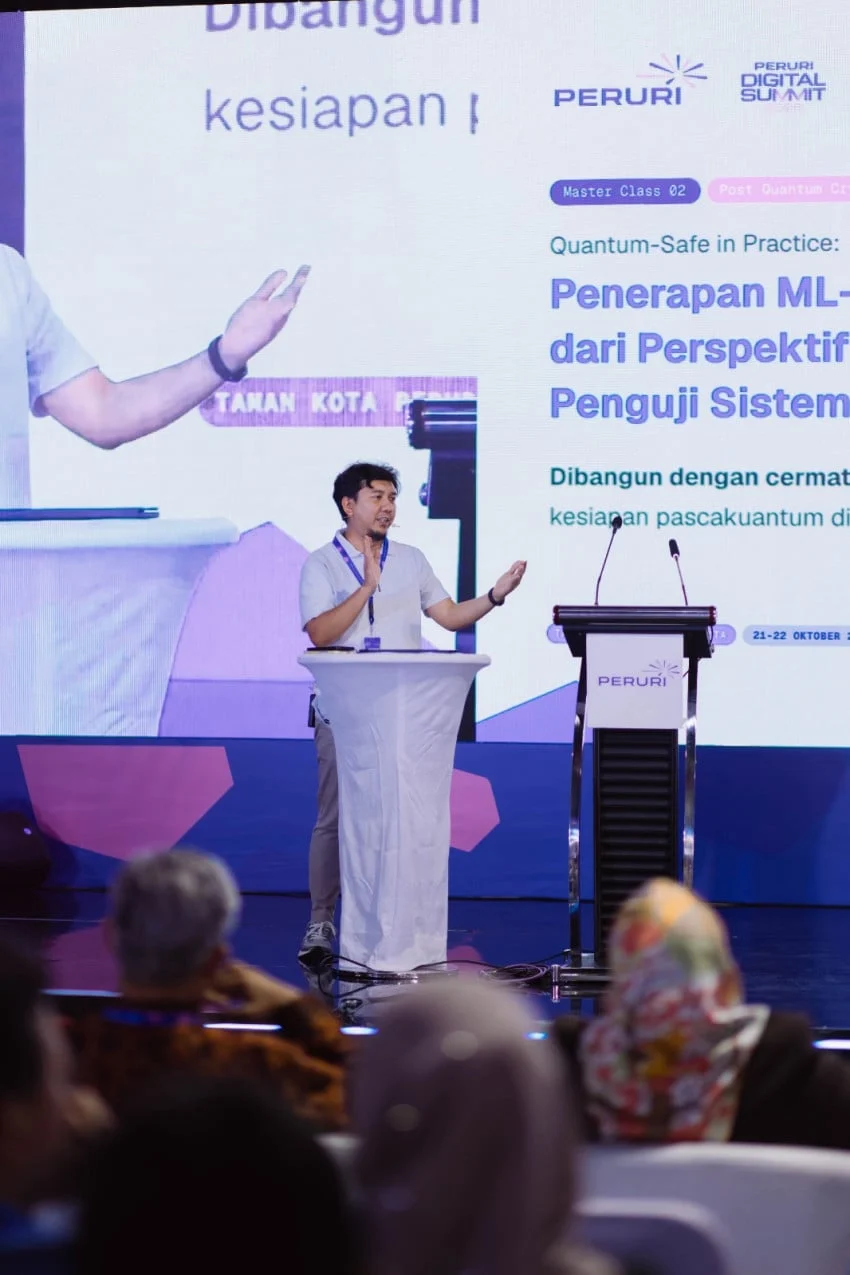
The rapid evolution of quantum computing, once a theoretical frontier, has transitioned into a tangible technological disruption that now threatens the bedrock of global digital security. As quantum processors achieve milestones in computational power, the current cryptographic standards—which serve as the gatekeepers of sensitive government data, financial transactions, and critical infrastructure—face an unprecedented existential risk. Recognizing the urgency of this paradigm shift, PERURI (Perum Percetakan Uang Republik Indonesia) convened the PERURI Digital Summit 2026 this past October at the Taman Kota PERURI in South Jakarta. The summit served as a high-level forum to address the integration of Post-Quantum Cryptography (PQC), a crucial evolution in digital defense designed to withstand the processing capabilities of future quantum machines.
The Quantum Threat: A New Era of Digital Vulnerability
At the heart of the summit’s discourse was the technical reality that quantum computers, leveraging the principles of superposition and entanglement, will eventually be able to solve mathematical problems that today’s classical computers find impossible. Current public-key cryptosystems, such as RSA and Elliptic Curve Cryptography (ECC), rely on the difficulty of factoring large integers or solving discrete logarithm problems. A sufficiently powerful quantum computer, utilizing algorithms like Shor’s algorithm, could theoretically crack these encryptions in a fraction of the time required by classical systems.
The vulnerability is not merely a distant concern. The summit highlighted the concept of "Harvest Now, Decrypt Later" (HNDL), an adversarial strategy where malicious actors systematically collect and store encrypted data today with the intent of decrypting it once quantum technology matures. This implies that sensitive data with long-term security requirements—such as medical records, national security intelligence, and legal documents—is already at risk. The urgency to transition to PQC is therefore not merely a technical upgrade; it is a defensive necessity to preserve the integrity of information that must remain confidential for decades to come.
PERURI Digital Summit 2026: Setting the Agenda
The PERURI Digital Summit 2026 gathered stakeholders from the public sector, cybersecurity experts, and technology leaders to discuss the roadmap for PQC adoption. The event underscored the role of PERURI as a pillar of national trust and security, particularly in its capacity as a provider of digital authentication and secure identification services.
During the opening sessions, experts emphasized that the transition to PQC is a multi-year effort that requires careful planning. The summit provided a structured approach to institutional readiness, moving beyond theoretical discussion toward actionable frameworks. For organizations, the initial phase involves a comprehensive audit of current cryptographic footprints. This includes mapping all digital assets, identifying which systems utilize vulnerable protocols, and categorizing data based on its lifespan and sensitivity.
Strategic Preparedness and Institutional Action
Edwin Purwandesi, Director of Digital Business at PERURI, provided critical insights into the organization’s proactive stance during the summit’s panel discussions. He noted that PERURI is actively participating in national working groups tasked with preparing for the post-quantum era. This involvement is part of a broader strategy to ensure that Indonesia’s digital infrastructure remains resilient against emerging threats.
"Our involvement in these working groups is focused on establishing a systematic mechanism for identifying the digital assets that are most vulnerable to quantum-enabled decryption," Purwandesi explained. He emphasized that the transition is not a "one-size-fits-all" process. Instead, it requires a risk-based prioritization approach, where systems governing financial integrity and state identity are upgraded first to mitigate the most significant national risks.
The summit outlined a clear progression for organizations seeking to become "quantum-ready":
- Inventory and Assessment: Mapping all hardware and software that utilize current cryptographic standards.
- Prioritization: Evaluating the "shelf-life" of data and the potential impact of a security breach.
- Agility Integration: Moving toward "cryptographic agility," which allows systems to easily swap out cryptographic algorithms as new standards—such as those currently being finalized by the U.S. National Institute of Standards and Technology (NIST)—become available.
Data Security in the Age of Quantum Supremacy
The summit featured sobering data regarding the projected growth of the quantum market. According to recent industry reports, global investment in quantum computing research is expected to grow at a compound annual growth rate of approximately 30% over the next five years. As the barriers to entry for quantum hardware decrease, the accessibility of these tools to state-sponsored actors increases.
For Indonesia, the implications are profound. The country’s push toward a "Digital Nation" involves the massive digitization of public services, including the expansion of the National Digital ID and integrated financial systems. If these systems are built on vulnerable foundations, the cost of retrofitting them later could be exponentially higher. The summit stressed that security must be "baked in" to the architecture of new digital products, rather than added as an afterthought.
Global Standards and the Path Forward
The transition to PQC is a global challenge. During the summit, participants reviewed the international standards currently being developed to replace vulnerable algorithms. NIST has already begun the process of standardizing quantum-resistant algorithms, focusing on lattice-based cryptography, hash-based signatures, and code-based cryptography.
The consensus at the PERURI Digital Summit was that Indonesia must align its internal standards with these international benchmarks to ensure interoperability and global trust. However, the summit also highlighted the need for localized implementation strategies that account for Indonesia’s unique regulatory environment and technological landscape.
Broader Implications for National Infrastructure
The transition to post-quantum security is not solely the responsibility of the IT department; it is a governance issue. The summit served as a clarion call for policymakers to integrate PQC readiness into national digital transformation strategies. The potential consequences of inaction include:
- Erosion of Public Trust: A single breach of national identity data could severely undermine the public’s confidence in digital governance.
- Economic Instability: The vulnerability of financial systems could lead to systemic risk in banking and e-commerce, sectors that rely heavily on the integrity of digital signatures.
- Compromise of National Intelligence: Long-term strategic secrets, once decrypted, could provide adversaries with leverage that could alter the geopolitical landscape.
A Coordinated Approach to Resilience
The summit concluded with a clear roadmap for the coming year. PERURI, in collaboration with its partners, intends to launch a pilot project focused on upgrading specific high-value digital services to quantum-resistant standards. This project will serve as a testbed for the broader national strategy, providing valuable data on the performance impacts and integration challenges associated with PQC.
The discourse at the Taman Kota PERURI venue underscored that while the quantum threat is formidable, it is not insurmountable. Through diligent preparation, rigorous assessment, and early adoption of new cryptographic standards, institutions like PERURI can safeguard the nation’s digital future.
The event marked a turning point in how Indonesia perceives the intersection of quantum physics and cybersecurity. By moving the conversation from the academic lab to the boardroom, the summit ensured that decision-makers understand that the "quantum clock" is ticking. The "Harvest Now, Decrypt Later" threat ensures that today’s security decisions are essentially tomorrow’s security outcomes.
Final Assessment: The Road to 2030
As we look toward 2030, the ability to protect digital assets against quantum interference will become a competitive advantage and a baseline requirement for sovereign security. The PERURI Digital Summit 2026 has successfully initiated a national dialogue, providing the framework for a shift that will likely define the digital security landscape for the next half-century.
The consensus among the attendees was unified: technology will continue to advance, and with it, the methods used to exploit that technology. The goal is not to reach a final, static state of security, but to build an ecosystem that is sufficiently agile to adapt to the unknown. Through the initiatives discussed in Jakarta, Indonesia is positioning itself to be among the nations that are not just reactive to the quantum revolution, but are actively preparing to harness its power while mitigating its inherent risks.
The journey ahead involves continued collaboration between academia, the private sector, and government agencies. As PERURI continues to refine its digital infrastructure, the focus remains on maintaining the trust that is central to its mandate. The summit was a testament to the fact that in the face of quantum uncertainty, the most effective defense is a clear strategy and a commitment to continuous, proactive evolution.