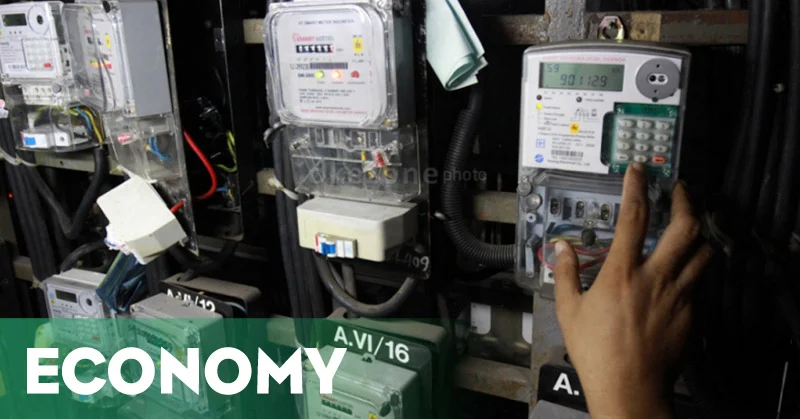
The Indonesian government’s ongoing policy deliberations regarding the potential restructuring and removal of electricity subsidies for the 450 VA and 900 VA household categories have sparked critical discourse among energy economists and public policy institutions. While fiscal consolidation experts view the rationalization of energy subsidies as a necessary step toward improving the state budget’s efficiency, academic bodies such as the Indonesian Institute of Sciences (LIPI) have emphasized that any reduction in broad consumer subsidies must be accompanied by an absolute government guarantee to achieve equitable electrification across the archipelago.
The debate highlights a structural paradox within Indonesia’s national energy landscape: while millions of urban and semi-urban households connected to the low-voltage grid have historically enjoyed heavily state-subsidized tariffs—often regardless of their actual economic wealth—tens of millions of citizens residing in remote, outermost, and underdeveloped regions remain entirely disconnected from the national electricity grid. Energy policy observers argue that the redirection of fiscal savings from untargeted consumption subsidies toward foundational infrastructure development represents a strategic opportunity to address long-standing regional disparities, provided that execution remains transparent and strictly targeted.
Background and Context of Energy Subsidy Reform in Indonesia
For decades, energy subsidies—encompassing both fuel and electricity—have constituted a massive burden on the Indonesian state budget (APBN). Historically implemented as a social welfare instrument to protect purchasing power and maintain price stability for low-income households, these subsidies frequently suffered from severe misallocation. Studies by various economic think tanks have consistently shown that a significant portion of energy subsidies for 450 VA and 900 VA electricity connections was enjoyed by non-poor or vulnerable households rather than the targeted indigent population.
The fiscal pressure prompted successive administrations to gradually reform the energy subsidy architecture. The transition shifted from open-ended, commodity-based subsidization toward targeted social assistance mechanisms, such as conditional cash transfers and direct household assistance. However, restructuring electricity tariffs has consistently been a politically sensitive endeavor, given its immediate impact on the cost of living and public sentiment. The proposition to recalibrate subsidies for low-tier power consumers—specifically targeting those whose consumption patterns or economic status no longer justified state support—aimed to free up fiscal space for productive capital expenditures, particularly infrastructure investment in lagging regions.
Academic Perspectives and the Equity Imperative
Weighing in on the policy direction, Maxensius Tri Sambodo, a senior researcher at the Research Center for Economics of the Indonesian Institute of Sciences (LIPI), expressed qualified support for the government’s wane of untargeted electricity subsidies, while firmly conditioning his endorsement on improved distributional equity.
"I think it is a positive move, and the logical consequence is that prices will rise for those previously subsidized," Sambodo stated during an interview at the LIPI Building in Jakarta. "However, what we expect is that once these subsidies are lifted, the resulting fiscal savings must be redirected and targeted toward helping communities that have not yet gained any access to electricity."
Sambodo underscored that energy justice cannot be realized merely by subsidizing the tariff of those already connected to the grid while leaving a substantial segment of the population in complete darkness. The fundamental principle of national energy policy, he noted, mandates that energy must be fair, accessible, and evenly distributed throughout the sovereign territory of the Republic of Indonesia.
The Scale of the Electrification Gap
Despite significant progress made by the state electricity corporation, PT Perusahaan Listrik Negara (Persero) or PLN, in raising the national electrification ratio over the preceding decade, deep structural divides persisted in 2015. According to institutional estimates cited during the policy discussions, approximately 60 million Indonesians still lacked reliable access to electricity, predominantly in rural, interior, and outer island regions.

This electrification deficit was driven primarily by severe infrastructural bottlenecks. The geographical fragmentation of the Indonesian archipelago—comprising thousands of inhabited islands with rugged terrain, dense forests, and vast marine expanses—makes centralized grid connection economically unviable and technically challenging.
Beyond the physical absence of generation plants and transmission networks, localized socio-economic barriers played a critical role. For many rural families, the physical availability of a nearby power line did not automatically translate to electrification. High connection fees—often ranging between IDR 2 million and IDR 3 million just to link a household to the nearest PLN distribution network—served as an insurmountable financial wall for impoverished rural communities. Furthermore, infrastructural mismatches, such as the construction of isolated generation units without adequate transmission and distribution lines, resulted in stranded assets and unutilized capacity, underscoring the necessity of massive, coordinated capital injections.
Strategic Realocation: From Consumption to Infrastructure
The core argument advanced by LIPI and aligned energy analysts centers on the principle of fiscal substitution. If the central government elects to phase out or restructure the 450 VA and 900 VA electricity subsidies, the funds saved—amounting to trillions of rupiah annually—must not simply be absorbed into general operational spending or non-targeted deficit financing. Instead, they must be legally and operationally earmarked for capital expenditure in remote electrification projects.
Such a transition aligns with broader macroeconomic objectives to enhance national productivity and reduce regional inequality. Access to electricity is a foundational catalyst for rural development, enabling local micro-enterprises, improving educational outcomes through nighttime lighting and digital access, enhancing healthcare storage and refrigeration, and modernizing agricultural processing. Without reliable power, regional economies remain trapped in low-productivity cycles, exacerbating urban migration and widening the development gap between western and eastern Indonesia.
Broader Implications and Long-Term Outlook
The discourse surrounding the removal of electricity subsidies and the simultaneous demand for equitable infrastructure development carries profound implications for Indonesia’s long-term fiscal and energy security.
First, on the fiscal front, successfully phasing out broad-based subsidies reduces the vulnerability of the state budget to global fluctuations in fossil fuel prices, which directly dictate the cost of thermal power generation. This creates a more resilient fiscal buffer that can be deployed during economic downturns or public health crises.
Second, regarding social welfare, the shift necessitates the perfection of social registry data—such as the Integrated Database (DTKS) managed by the Ministry of Social Affairs—to ensure that any compensatory social safety net programs reach genuinely vulnerable populations who genuinely require energy assistance, shielding them from inflationary shocks triggered by tariff adjustments.
Finally, in terms of infrastructure strategy, achieving total electrification requires diversifying beyond traditional fossil-fueled centralized grids. The capital redirected from urban subsidies can be leveraged to finance decentralized renewable energy projects—such as micro-hydro, solar photovoltaic systems, biomass, and wind energy—tailored to the geographical realities of Indonesia’s outermost and interior regions. By integrating subsidy reform with green energy transition goals, the government can simultaneously achieve fiscal sustainability, environmental stewardship, and absolute energy equity for all citizens.